Compound Guide
GHK-Cu: what it is, and what the research actually shows
A plain, cited explanation of GHK-Cu: what it is, what research has studied it for, and where it stands under UK law. Research use only. Nothing here is instruction for human use.
What GHK-Cu is
GHK-Cu, glycyl-L-histidyl-L-lysine copper, is a naturally occurring copper-binding tripeptide, a chain of three amino acids (glycine, histidine, lysine) with a strong, specific affinity for copper ions. It occurs naturally in human plasma, saliva, and urine, and its concentration is known to decline measurably with age, which is one of the specific observations that originally drove research interest in it as a compound worth studying in more depth.
Structurally, it's a much smaller molecule than BPC-157 or TB-500, and its research background is different too: rather than emerging from a single tissue-repair discovery, GHK-Cu's research history spans several decades and multiple, fairly distinct lines of investigation, from wound healing to dermal and connective-tissue research, making it one of the longer-studied compounds in this entire category.
What the research has actually studied
- Dermal and connective-tissue research. GHK-Cu is one of the more heavily studied copper-peptide complexes in skin-biology research, examined for effects on collagen and elastin production in laboratory work and some clinical cosmetic-research contexts specifically.
- Wound healing. Older research literature examines GHK-Cu's role in normal tissue-repair signalling, tied to its natural presence in wound fluid at higher concentrations than found in uninjured tissue nearby.
- Antioxidant and anti-inflammatory activity. Some laboratory research describes GHK-Cu influencing oxidative-stress and inflammatory pathways in cell models.
- Gene-expression research. More recent laboratory work has examined GHK-Cu's effect on broader patterns of gene expression in cell studies, an active but still-developing area of the literature.
- Hair-follicle research. A smaller strand of the literature has examined GHK-Cu in the context of hair-follicle biology in laboratory models, a research angle distinct from, and considerably thinner than, the skin and wound-healing work above.
Because this compound has been studied across such a wide span of time and several genuinely different research angles, it's worth being specific about which claim you're evaluating rather than treating "GHK-Cu research" as one undifferentiated body of evidence. The dermal and wound-healing literature is the most established strand, built up over multiple decades. The gene-expression and hair-follicle angles are newer, considerably thinner, and shouldn't be weighted the same as the longer-standing work, even though all of it concerns the same underlying molecule and its copper-binding properties.
GHK-Cu has a longer research history than many newer research peptides, including some published human-adjacent cosmetic-research use in topical formulations, which puts it in a slightly different evidentiary position than compounds like BPC-157 or TB-500. Even so, the specific injectable research-grade material sold in this category has not itself been through the kind of controlled human trials that would support a medical claim, and the general caution about anecdotal versus rigorous evidence still applies.
The copper-binding property itself is worth understanding, since it's central to why researchers study this specific tripeptide rather than a broader class of similar molecules. Copper is a genuine biological cofactor, meaning several enzymes involved in tissue remodelling and antioxidant defence require it to function. GHK's structure gives it an unusually high, specific affinity for copper ions, which is the basis for research interest in it as a delivery or signalling vehicle for copper at a cellular level, distinct from simply supplying copper as a mineral on its own. That specificity is what separates GHK-Cu research from generic copper-supplementation research, even though both involve the same underlying element.
This specificity distinction matters practically, not just academically. Simply increasing dietary or supplemental copper intake doesn't reliably deliver copper to the same cellular targets or in the same biologically available form that researchers studying GHK-Cu are actually interested in. The peptide backbone is what's thought to direct the copper to specific sites and hand it off in a particular way, which is a fundamentally different research question than asking whether more copper in the diet generally changes an outcome. Conflating the two, treating any copper-related finding as automatically applicable to GHK-Cu specifically, is a common but genuinely inaccurate simplification worth avoiding.
Why age-related decline drove research interest
One of the observations that originally shaped research into GHK-Cu is that its natural concentration in human plasma is measurably higher in younger adults and declines with age, a pattern documented in older biochemistry literature going back decades. That correlation is what first drew researchers toward asking whether restoring GHK-Cu levels, or supplying it exogenously, might influence any of the tissue-repair and cellular-maintenance processes it's involved in.
It's worth being precise about what a correlation like that does and doesn't establish. A naturally occurring molecule declining with age is a genuinely interesting observation and a reasonable basis for research, but it is not, by itself, evidence that restoring that molecule reverses or slows any specific age-related process in a controlled, measurable way in humans. Plenty of biological markers decline with age without their restoration having been shown to meaningfully change outcomes. GHK-Cu's research position sits closer to "an interesting, biologically plausible lead worth studying" than "a proven anti-ageing mechanism," and framing it as the latter would overstate what the correlational observation actually supports.
This is a useful case study in how research interest in a compound gets started in the first place, independent of GHK-Cu specifically. A correlational observation, a molecule that's lower in older tissue, higher in younger tissue, generates a hypothesis worth testing. It does not, on its own, constitute proof of the hypothesis. The gap between "here's an interesting pattern" and "here's a demonstrated causal effect we can act on" is exactly where a huge amount of the research literature across this entire product category currently sits, and GHK-Cu's age-decline observation is a clean, well-documented example of that gap rather than an exception to it.
Where GHK-Cu stands under UK law
GHK-Cu is not a controlled substance under the Misuse of Drugs Act 1971, so it's legal to buy, sell, and possess as a research-use-only laboratory material in the UK. Marketing or selling it for human consumption, cosmetic use, or any therapeutic benefit is prohibited under the Human Medicines Regulations 2012, the same framing every listing on this site follows. This applies even though GHK-Cu appears in some formulated cosmetic products elsewhere on the market; a cosmetic product with its own separate regulatory pathway is a different thing from an unformulated research-grade laboratory material sold under RUO framing, and the two shouldn't be conflated. Full detail is on our UK legal status page.
GHK-Cu in our catalogue
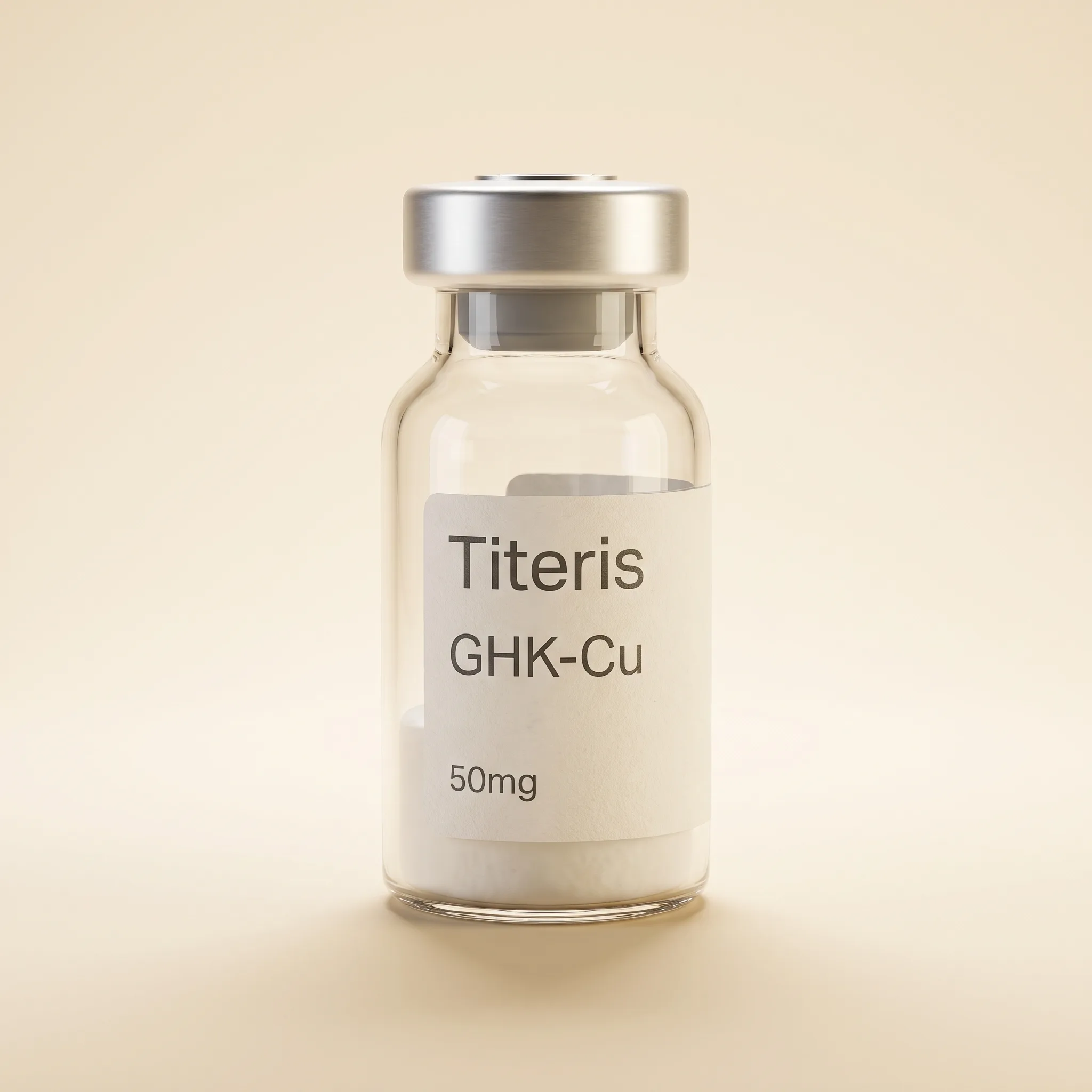 CU-50CU-100
GHK-Cu, 100mg
Supplied as a lyophilised vial for laboratory research use.
£42.99 Contact us to orderFrequently asked
Is GHK-Cu the same as copper peptide skincare products?
They're related but not automatically the same product. "Copper peptide" is used broadly in the cosmetics industry, sometimes referring to GHK-Cu specifically and sometimes to other copper-binding formulations at different concentrations, in different delivery vehicles, and under a different regulatory framework than a research-grade laboratory material. Our GHK-Cu is sold as an unformulated research compound, not as a finished, formulated cosmetic product ready for topical use.
Has GHK-Cu been tested in humans?
Some cosmetic-research literature includes human-adjacent testing of topical formulations, more than exists for several other compounds on this site. That's a different evidentiary category from a controlled clinical trial of an injectable research-grade material, which does not exist for what we sell, and the two shouldn't be treated as equivalent evidence just because they involve the same underlying molecule.
Do you test every batch?
We publish our supplier's own third-party documentation where it exists, credited to the lab, and state plainly when a batch lacks current documentation. We do not yet operate independent in-house testing ourselves. See our documentation policy for the full, current answer.