Compound Guide
TB-500: what it is, and what the research actually shows
A plain, cited explanation of TB-500: where it comes from, what animal research has studied it for, how it differs from BPC-157, and where it stands under UK law. Research use only. Nothing here is instruction for human use.
What TB-500 is
TB-500 is the common name for a synthetic version of a fragment of Thymosin Beta-4 (TB4), a protein naturally present throughout the body and involved in how cells move and organise their internal structure. TB-500 itself is a synthetic heptapeptide, a chain of seven amino acids, modelled on the active region of the larger TB4 protein rather than being a full copy of it.
Because TB4 plays a role in actin regulation, actin being a structural protein central to how cells migrate and rebuild themselves, research interest in TB-500 has focused heavily on cell-migration and tissue-repair processes, distinct from, but sometimes studied alongside, BPC-157's more gut-derived research background.
The name itself is worth clarifying, since it causes real confusion. "TB-500" and "Thymosin Beta-4" are related but not strictly identical terms in how they're used online. TB4 is the full, naturally-occurring protein. TB-500 is the name commonly used in the research-chemical market for a synthetic fragment representing what's considered the biologically active region of that protein, specifically the seven-amino-acid actin-binding sequence. Some sources use the names loosely interchangeably, which is imprecise; a full protein and a synthetic fragment of it are not automatically equivalent in every respect, even where the fragment is designed around the parent molecule's most studied active site.
What the research has actually studied
As with BPC-157, the TB-500 literature is dominated by animal and laboratory studies rather than human clinical trials. The main research threads include:
- Cell migration. TB4-derived peptides are studied for their role in helping cells move to an injury site, a foundational step in wound and tissue repair.
- Angiogenesis. Similar to BPC-157, TB-500 is studied for promoting the formation of new blood vessels, proposed as a mechanism supporting repair in tissue with limited native blood supply.
- Anti-inflammatory signalling. Some research describes TB-500 as dampening inflammatory pathways, including NF-kappa B signalling, in preclinical models.
- Neuroinflammation research. More recent laboratory work has examined Thymosin Beta-4-derived peptides in models of neuroinflammation and neuronal protection, an emerging and still limited area of the literature.
Real-world community and clinical-adjacent write-ups frequently discuss BPC-157 and TB-500 together, sometimes under the informal nickname "Wolverine Stack," because animal research suggests the two may act through complementary tissue-repair pathways. That community usage is a real, observable pattern worth naming honestly. It is not itself evidence that combining them is more effective than either alone in humans, since no controlled human trial has tested the combination either.
One more research thread worth naming specifically: a more recent line of laboratory work has looked at TB4-derived peptides, including SDKP, a shorter fragment related to the same parent protein, in models of neuroinflammation, examining effects on neurite health and microglial activation in cell and animal models of neurodegenerative processes. This is a genuinely newer and thinner area of the literature than the tissue-repair research above, worth flagging as such rather than folding into the main body of evidence as if it carried equal weight.
Human evidence versus animal evidence
As with BPC-157, large-scale, properly controlled human clinical trials for TB-500 simply do not currently exist anywhere. The FDA and TGA (Australia's regulator) have not approved TB-500 for any human medical use, and most safety information available comes from preclinical animal models or anecdotal reports rather than randomised trials. The World Anti-Doping Agency prohibits TB-500 as an unapproved substance, making its use a violation in professional and competitive sport regardless of the reason someone is using it.
The honest summary is the same shape as BPC-157's: real, published preclinical interest across several plausible mechanisms, and essentially no rigorous human safety or efficacy data to date. That shared shape is worth naming because it isn't a coincidence specific to these two compounds. It's the general pattern across nearly the entire research-peptide category: real, sometimes genuinely promising, laboratory and animal findings, sitting well ahead of the human evidence needed to translate a mechanism into a proven treatment. Understanding that pattern is more useful for evaluating any research peptide you read about, not just these two, than memorising any specific claim.
Where TB-500 stands under UK law
TB-500 is not a controlled substance under the Misuse of Drugs Act 1971, so it's legal to buy, sell, and possess as a research-use-only laboratory material in the UK, on the same basis as BPC-157. Marketing or selling it for human consumption or therapeutic use is prohibited under the Human Medicines Regulations 2012, and that's the line every listing on this site is written to respect. Full detail, including how the MHRA's April 2026 statement on peptide clinics relates to sellers like us, is on our UK legal status page.
TB-500 in our catalogue
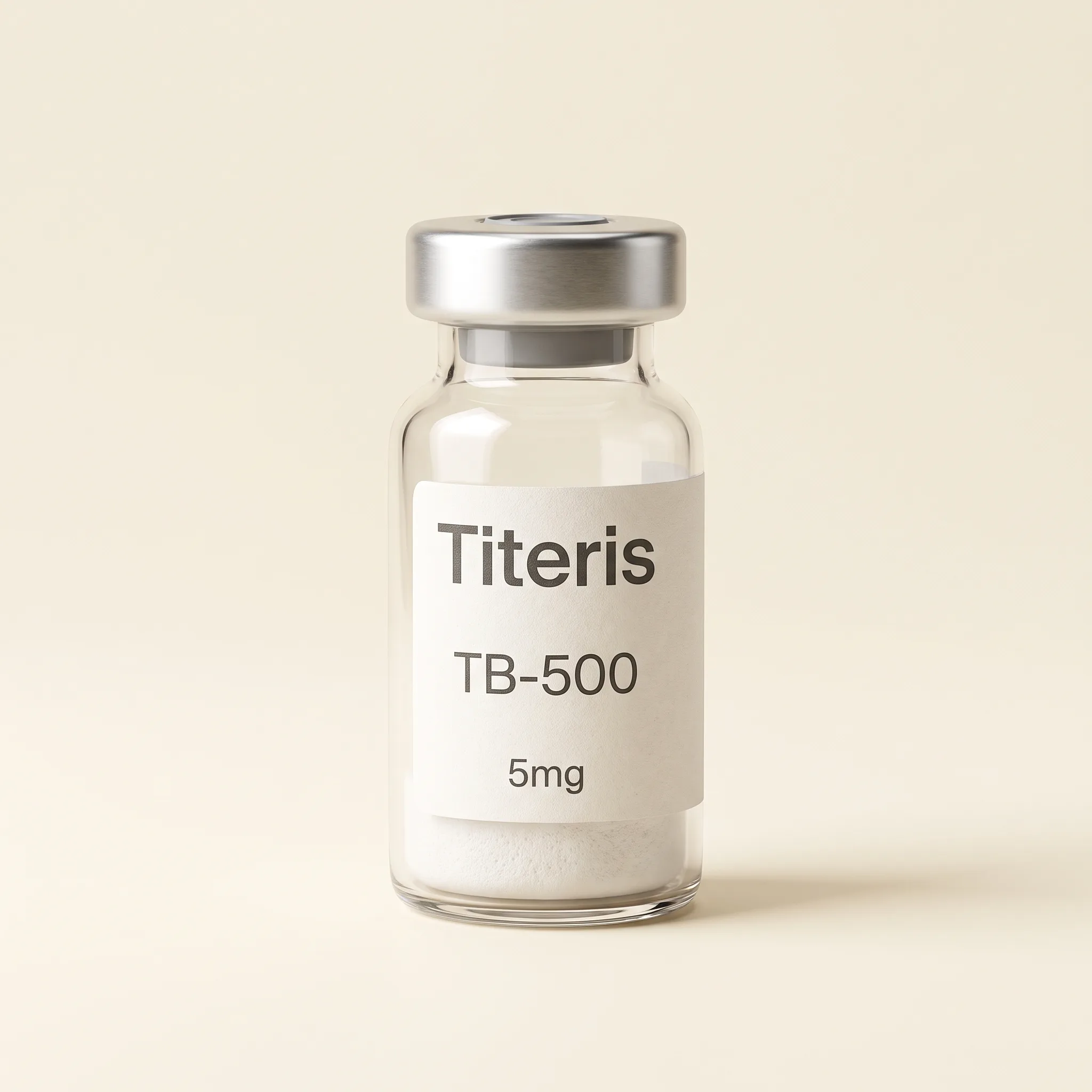 TB-5TB-10
See our documentation policy for what supplier batch documentation does and doesn't cover.
Frequently asked
What's the difference between TB-500 and BPC-157?
They're structurally unrelated compounds studied for overlapping but distinct reasons. TB-500 is derived from Thymosin Beta-4 and is studied mainly for cell-migration and actin-regulation effects. BPC-157 is derived from a gastric-juice protein fragment and is studied mainly for gut-lining and tendon-repair effects. Community interest in combining them comes from the idea that these mechanisms may complement each other, not from any evidence that they're the same thing or interchangeable in any way.
Has TB-500 been tested in humans?
Not in any large, controlled clinical trial. Available human-facing evidence is anecdotal and small-scale, the same real limitation that applies across most research peptides in this entire category.
Is TB-500 banned in sport?
Yes. The World Anti-Doping Agency prohibits TB-500 at all times for athletes subject to its code, independent of its UK legal status as a research material. Those are two separate systems: one governs sale and possession, the other governs what a competing athlete may have in their system.
Do you test every TB-500 batch you sell?
We publish our supplier's own third-party documentation for each batch where it exists, credited to the lab that produced it, and state plainly on the listing if a batch doesn't currently have one. We do not yet operate independent in-house testing, and we're not going to describe our documentation as something it isn't. See our documentation policy for the full, current answer.