Compound Guide
Semax: what it is, and what the research actually shows
A plain, cited explanation of Semax: its origin as a synthetic fragment of ACTH, what research has studied it for, and where it stands under UK law. Research use only. Nothing here is instruction for human use.
What Semax is
Semax is a synthetic heptapeptide developed in Russia, derived from a fragment of adrenocorticotropic hormone (ACTH), a hormone naturally involved in the body's stress response via the adrenal glands. Researchers isolated and modified a specific fragment of ACTH, one associated with effects on the central nervous system rather than ACTH's better-known adrenal-stimulating action, and added a short additional sequence to extend its stability once administered, since ACTH fragments break down quickly in unmodified form.
Like Selank, Semax was developed and studied primarily within Russian pharmacological research institutions, and the two compounds are frequently discussed together because of that shared research lineage and country of origin, even though they act through different mechanisms and were derived from different parent molecules entirely.
An important structural point: Semax is deliberately engineered to retain the central-nervous-system-related activity of its parent ACTH fragment while minimising the classic adrenal, cortisol-stimulating effects associated with full ACTH. That's the whole design logic behind isolating this particular fragment rather than using ACTH itself, and it's part of why Semax's research history focuses heavily on the brain and behaviour rather than adrenal or broader endocrine function.
What the research has actually studied
- Nootropic and cognitive research. The largest strand of Semax's published research history concerns cognitive performance and learning-related behaviour in animal models, and some Russian clinical research examining cognitive endpoints.
- Neuroprotective research. A significant body of preclinical work examines Semax in models of cerebral ischaemia (restricted blood flow to the brain), looking at neuroprotective effects following induced injury in animal studies.
- BDNF and neurotrophic factor research. Similar to Selank, part of the Semax literature examines effects on brain-derived neurotrophic factor expression, a protein central to neuronal growth, survival, and plasticity.
- Attention and focus-related behaviour. Some studies look specifically at attention-related behavioural endpoints in animal models, an area that overlaps with, but is distinct from, the broader cognitive-performance research above.
As with Selank, a meaningful share of the Semax literature originates from Russian-language research institutions and journals, with less international peer-review infrastructure and independent replication than is typical for Western biomedical publishing. That doesn't invalidate the findings, but it does mean the usual caution about replication applies with real weight here specifically, and it's worth reading any specific Semax claim with that context in mind rather than assuming it carries the same evidentiary weight as a finding independently replicated across multiple Western research institutions.
Human evidence versus animal evidence
Semax reportedly has a longer human-facing research and limited clinical-use history within Russia than many compounds discussed on this site, including as an intranasal formulation studied in the context of cognitive and neurological research. That gives it a somewhat different evidentiary position than a purely preclinical compound. It does not, however, hold approval from the MHRA, FDA, or EMA, and has not been through the kind of large-scale, internationally replicated, independently reviewed clinical trial process that supports regulatory approval in the UK, US, or EU. A limited clinical research history in one country's system is a real, relevant data point, and it is not equivalent to international regulatory approval, a distinction worth holding onto rather than letting the two blur together.
The neuroprotective research strand deserves a specific caveat of its own. Studies examining Semax following induced cerebral ischaemia in animal models are investigating a serious, specific medical scenario, restricted blood flow to brain tissue, and any findings from that research context describe outcomes in a controlled laboratory injury model, not a general cognitive-enhancement effect in an otherwise healthy person going about ordinary life. Extending a finding from an induced-injury animal model to an unrelated, healthy-population use case is exactly the kind of leap that turns a narrow, real research finding into a broader claim the underlying study never actually supported.
Why researchers focus on a fragment rather than full ACTH
Full-length ACTH is primarily known for stimulating the adrenal glands to produce cortisol, the body's central stress hormone, as part of the hypothalamic-pituitary-adrenal axis. That's a well-established, well-studied endocrine pathway, but it's not the effect researchers were pursuing when they developed Semax. Earlier research had identified that a specific short fragment of the ACTH molecule, separate from the region responsible for adrenal stimulation, appeared to have effects on the central nervous system independent of, and structurally separable from, the hormone's classic stress-response role.
Semax was engineered around that specific fragment, adding a short stabilising sequence to extend how long it remains active once administered, since fragments of larger proteins are typically broken down quickly by normal enzymatic processes in the body. The result is a compound designed to retain the central-nervous-system-related activity researchers were interested in, while deliberately excluding the adrenal-stimulating portion of the original ACTH molecule. This is the same broad engineering logic used across several stabilised-fragment peptides discussed elsewhere on this site, applied here to a hormone-derived starting point rather than to a peptide with a purely structural or signalling role.
Where Semax stands under UK law
Semax is not a controlled substance under the Misuse of Drugs Act 1971, so it's legal to buy, sell, and possess as a research-use-only laboratory material in the UK. Marketing or selling it for human consumption or therapeutic use is prohibited under the Human Medicines Regulations 2012, the same framing every listing on this site follows, regardless of any research or limited clinical history a compound has in its country of origin. Full detail is on our UK legal status page.
Semax in our catalogue
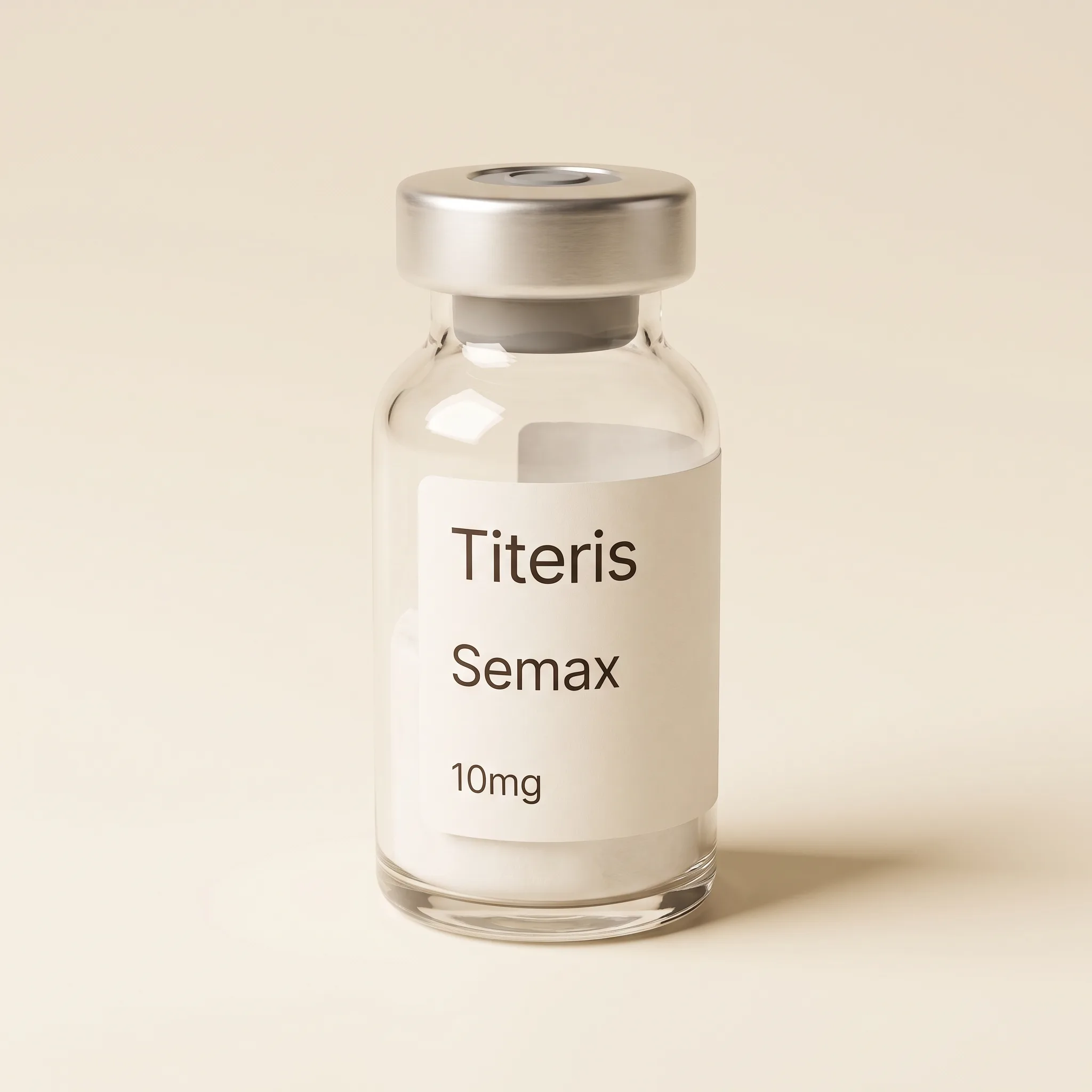 SM-10
SM-10Often discussed alongside Selank, another peptide from the same Russian research lineage.
Frequently asked
Is Semax related to ACTH the hormone?
Semax is a synthetic fragment derived from part of the ACTH molecule, specifically modified to retain effects associated with the central nervous system while reducing the adrenal-stimulating activity of full ACTH. It's a related but structurally and functionally distinct molecule from the naturally occurring hormone itself.
Has Semax been approved as a medicine anywhere?
It has a research and limited clinical-use history within Russia, but it does not hold approval from the MHRA, FDA, or EMA, and is not a licensed medicine in the UK, US, or EU.
What's the difference between Semax and Selank?
Both come from the same Russian research tradition and are frequently discussed together, but they're derived from different parent molecules and act through different mechanisms. Semax is derived from ACTH and is studied mainly for cognitive and neuroprotective effects; Selank is a tuftsin analogue studied mainly for anxiolytic and immunomodulatory effects.
Do you test every batch?
We publish our supplier's own third-party documentation where it exists, credited to the lab, and state plainly when a batch lacks current documentation. We do not yet operate independent testing ourselves. See our documentation policy for the full, current answer.