Compound Guide
ARA-290: what the erythropoietin-derived protective peptide is and what the research actually shows
A plain, factual explanation of ARA-290: how the peptide was derived from erythropoietin, which receptor complex is the focus of research interest, and what the literature has actually examined. Erythropoietin-derived non-haematopoietic peptide. Research use only. Nothing on this page is instruction for human use.
ARA-290 sold here is a research reference compound for in vitro and laboratory research purposes only. It is an erythropoietin-derived non-haematopoietic peptide supplied strictly for research use only. It is not licensed for human administration, is not a pharmaceutical product, and has not been approved by the MHRA for any clinical or therapeutic use. The research applications discussed on this page are from published literature referenced for scientific context only. If you have health concerns, consult a registered healthcare professional.
What ARA-290 is
ARA-290 is an 11-amino acid peptide derived from a helical region of the erythropoietin (EPO) protein structure. Erythropoietin is best known as the hormone that stimulates red blood cell production (erythropoiesis). Less widely known is that EPO also binds a separate receptor complex: the so-called Tissue Protective Receptor (TPR), a heterodimer formed from the beta-common receptor subunit and the EPO receptor.
ARA-290 is designed to selectively engage this TPR without replicating EPO's haematopoietic activity. This is important because the haematopoietic effects of EPO in non-anaemic individuals carry risks including increased blood viscosity. ARA-290 bypasses this side-effect axis and targets only the tissue-protective signalling pathways of the EPO system. This selective mechanism is the primary reason ARA-290 appears in research literature examining tissue protection independent of red blood cell production.
ARA-290 is not a medicine, not an EPO replacement, and not a doping agent. It is a defined research compound for laboratory experiments examining the Tissue Protective Receptor system. It must not be used for human or veterinary administration. All available data derives from preclinical laboratory studies and early clinical trials conducted with pharmaceutical-grade investigational products.
The Tissue Protective Receptor mechanism
The Tissue Protective Receptor is a heterodimeric complex distinct from the classical EPO receptor homodimer responsible for haematopoiesis. It consists of the EPO receptor paired with the beta-common receptor (also known as CD131), a subunit shared with the IL-3 and IL-5 receptor complexes. This structural difference from the haematopoietic EPO receptor homodimer is the basis for the pharmacological selectivity of ARA-290.
Signalling through the Tissue Protective Receptor activates pathways associated with cell survival, inflammation modulation, and tissue repair in a range of cell types. The beta-common receptor component is expressed in a wide range of non-haematopoietic tissues including neurons, pancreatic beta-cells, kidney tubular cells, and cardiomyocytes, which explains why ARA-290 has attracted research interest across multiple tissue contexts.
The 11-amino acid sequence of ARA-290 corresponds to a surface-exposed helical region of EPO that contacts the beta-common receptor. This structural basis for selectivity is an area of structural biology research interest: understanding how a short peptide fragment of a larger protein can selectively engage one receptor complex over another provides mechanistic insight relevant to drug design research more broadly.
Downstream signalling from the TPR involves phosphoinositide 3-kinase (PI3K) and Akt pathways, among others. These are well-characterised cell survival and anti-inflammatory pathways studied across many research contexts. ARA-290 provides a tool for activating these pathways specifically through the TPR in cell-based experiments.
What the research has examined
ARA-290 has a comparatively broad literature for a research peptide, having progressed through multiple phases of preclinical investigation and into early clinical trials conducted with pharmaceutical-grade investigational products.
Small fibre neuropathy models
In animal models of neuropathic pain, ARA-290 was studied for effects in small fibre neuropathy systems. Early clinical investigations with elamipretide (the clinical name used in some trials) examined patients with sarcoidosis-associated small fibre neuropathy. Those trials used pharmaceutical investigational products under controlled clinical conditions. The clinical trial data characterises the pharmaceutical investigational compound, not a research reference material from the laboratory supply chain.
Metabolic and pancreatic research
Some studies have examined ARA-290 in models relevant to type 2 diabetes and insulin resistance, based on the expression of beta-common receptor components in pancreatic cells. Pancreatic beta-cell survival and function are areas of research interest in diabetes biology, and the Tissue Protective Receptor has been investigated in this context using in vitro cell models.
Ischaemia and tissue protection models
In preclinical ischaemia models involving the heart, kidney, and brain, tissue-protective effects via the EPO system have been a research focus. ARA-290's selective engagement of the TPR without haematopoietic activity makes it a useful tool for isolating the tissue-protective component of EPO signalling from its erythropoietic effects in laboratory models.
Inflammation research models
ARA-290 has been examined in various preclinical inflammation models for effects attributed to TPR-mediated signalling. Anti-inflammatory properties through this receptor system are an area of active investigation in basic research, using cell culture models including macrophages, neuronal cells, and endothelial cells.
UK regulatory status
ARA-290 is not a licensed medicine in the UK. There is no MHRA-approved pharmaceutical product containing ARA-290 for any indication. Clinical investigations have been conducted with pharmaceutical-grade investigational products, but no marketing authorisation has been granted. ARA-290 is not EPO; it lacks haematopoietic activity and has a different structure from the EPO molecule itself.
As a research reference compound for in vitro laboratory use, ARA-290 cannot be marketed or supplied for human use. Titeris operates strictly within the research-use-only framework. Every listing on this site is for research use only, and nothing here is an instruction or invitation to administer ARA-290 to a human or animal.
Our UK legal status page provides an overview of the applicable regulatory framework. Specific legal questions should be addressed with a solicitor specialising in medicines regulation.
Laboratory context: how ARA-290 is used in basic research
In the laboratory, ARA-290 is used as a research reference compound for controlled in vitro experiments. Common applications include receptor binding studies examining TPR engagement in cell lines co-expressing the EPO receptor and beta-common receptor, downstream signalling pathway investigations examining PI3K/Akt activation and anti-inflammatory transcription factor modulation, and comparative studies contrasting TPR-mediated signalling with classical EPO receptor homodimer signalling.
The availability of a defined synthetic peptide that selectively engages the TPR without activating the haematopoietic EPO receptor homodimer allows researchers to dissect the two receptor systems independently. This is methodologically useful because isolating the contribution of each receptor complex is difficult when using full-length EPO, which activates both systems simultaneously.
Proper storage maintains the chemical integrity of the lyophilised reference material. Storage at -20°C in the dry state is appropriate. Reconstitution in bacteriostatic water or another appropriate laboratory solvent, followed by storage at 4°C and prompt use, is the standard approach. Avoid repeated freeze-thaw cycles of the reconstituted compound.
Standard laboratory safety protocols apply: gloves, lab coat, and appropriate eye protection. Disposal follows institutional chemical waste guidelines. ARA-290 as a research reference compound is not subject to pharmaceutical manufacturing standards, and pharmaceutical safety data sheets are not available.
ARA-290 in our catalogue
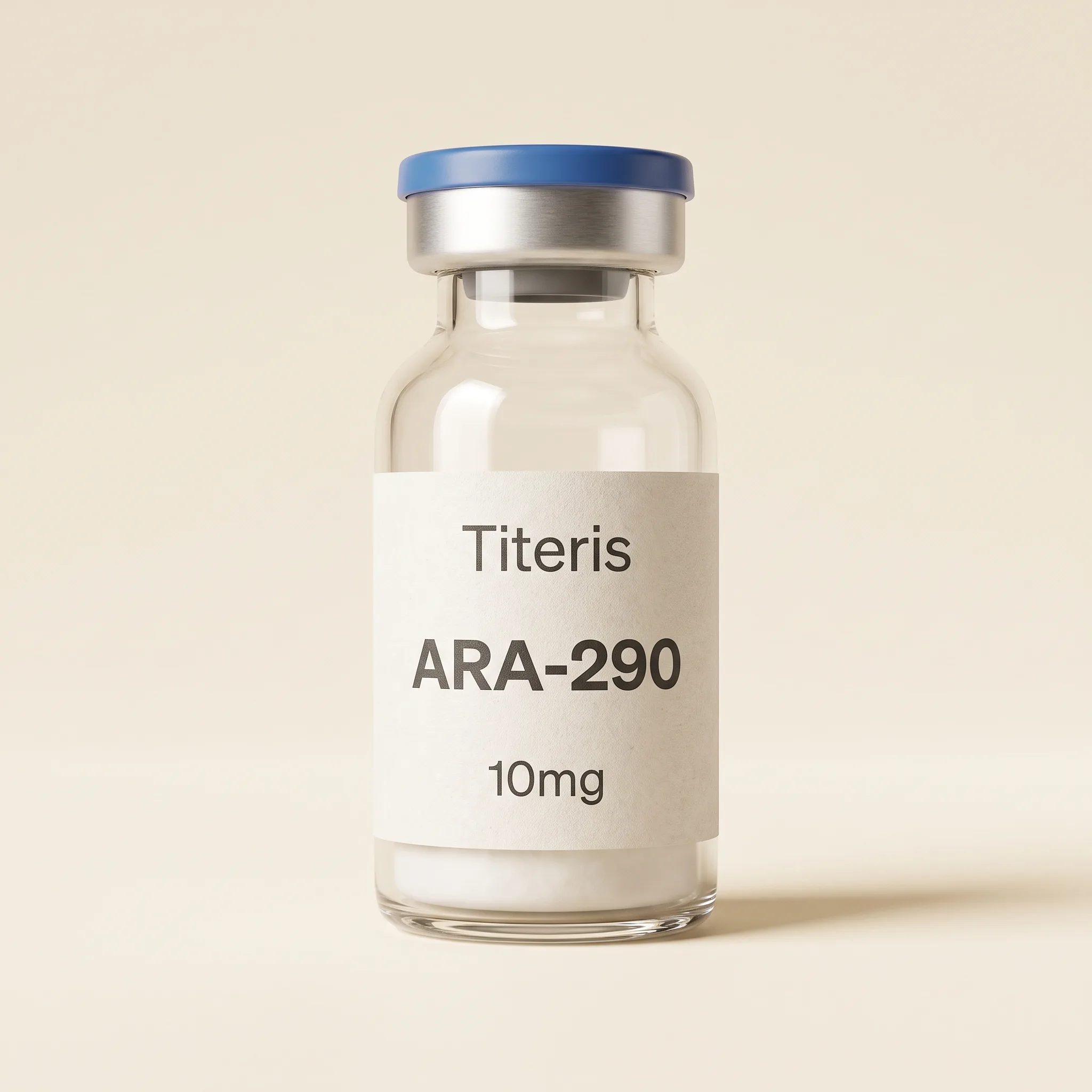
ARAARA-290, 10mg
Supplied as a lyophilised vial for laboratory research use only.
£29.99 Contact us to orderSee our documentation policy for what supplier batch documentation covers, and our UK legal status page for the regulatory framing every listing follows.
Frequently asked
Is ARA-290 the same as EPO?
No. ARA-290 is a short 11-amino acid peptide derived from a helical surface region of EPO. It does not stimulate erythropoiesis and has no haematopoietic activity. The research focus is on the Tissue Protective Receptor, a heterodimeric complex distinct from the classical EPO receptor homodimer responsible for red blood cell production. ARA-290 and EPO are structurally unrelated for practical purposes as research compounds.
Is ARA-290 on the WADA prohibited list?
EPO is on the WADA prohibited substances list (S2 Peptide Hormones) due to its erythropoietic activity. ARA-290 lacks haematopoietic activity and is structurally distinct from EPO. The precise sports regulatory classification of ARA-290 should be verified with the relevant sporting authorities for any specific application. This site does not provide sports regulatory advice.
What is the Tissue Protective Receptor?
The Tissue Protective Receptor is a heterodimeric complex formed from the EPO receptor and the beta-common receptor subunit (CD131). It is structurally distinct from the EPO receptor homodimer that drives red blood cell production. The TPR is expressed in a wide range of non-haematopoietic tissues and is associated with cell survival, inflammation modulation, and tissue repair signalling pathways. ARA-290 is designed to selectively engage this complex.
How is ARA-290 supplied?
As a lyophilised powder in a sealed glass vial, in 10mg size. Supplied without solvent; reconstitution for laboratory use requires bacteriostatic water or another appropriate diluent for the specific research application. This is a research reference compound, not a pharmaceutical product.