Compound Guide
Semaglutide: what it is, and what the research actually shows
A plain, cited explanation of semaglutide: its mechanism as a GLP-1 receptor agonist, what the STEP and SUSTAIN clinical trials actually studied, how a research reference compound differs from a licensed medicine, and where it stands under UK law. Research use only. Nothing here is instruction for human use.
Semaglutide sold here is a research reference compound for in vitro and laboratory research purposes only. It is not licensed for human administration, is not a pharmaceutical product, and has not been approved by the MHRA for any clinical or therapeutic use. The clinical applications discussed on this page are from published peer-reviewed research literature and are referenced for scientific context only. They are not an endorsement of human use of this compound. If you have questions about weight management or metabolic health, consult a registered healthcare professional.
What semaglutide is
Semaglutide is a GLP-1 receptor agonist: a synthetic peptide designed to mimic glucagon-like peptide-1, a hormone the gut releases in response to food. The molecule is a 31-amino-acid peptide with a fatty acid chain attached to extend its half-life in circulation. That attachment is what distinguishes it from native GLP-1, which clears the bloodstream in minutes. The extended half-life makes once-weekly dosing possible in pharmaceutical formulations.
The compound was developed by Novo Nordisk and has reached the market as Ozempic (subcutaneous, 0.5-2mg weekly for type 2 diabetes) and Wegovy (subcutaneous, 2.4mg weekly for obesity management). Those brand names refer to licensed pharmaceutical products. The molecule itself, synthesised for laboratory research, is a separate category for regulatory purposes.
GLP-1 receptors are expressed in the pancreas, brain, gastrointestinal tract, heart, and kidney. Activation in the pancreas increases insulin secretion in a glucose-dependent way, meaning it only drives insulin when blood glucose is elevated, which explains part of its safety profile relative to older diabetes medications. The CNS component is relevant to appetite regulation: GLP-1 receptor activation in hypothalamic areas reduces hunger signalling.
What the clinical research has studied
Semaglutide has an unusually large body of Phase 3 clinical trial data for a peptide compound. Most research peptides are assessed predominantly in animal models. Semaglutide has been evaluated in large, randomised, double-blind, placebo-controlled human trials, which puts its human evidence base in a different class from compounds like BPC-157 or Semax.
The SUSTAIN trials (type 2 diabetes)
The SUSTAIN programme (SUSTAIN 1 through 10) assessed semaglutide 0.5mg and 1mg weekly against placebo and active comparators in people with type 2 diabetes. Headline findings included HbA1c reductions of 1.0 to 1.8 percentage points versus placebo and weight reductions of 3 to 6kg across trials. SUSTAIN-6 added cardiovascular outcome data, showing a significant reduction in major adverse cardiac events versus placebo in a high-risk T2D population.
The STEP trials (obesity)
The STEP programme (STEP 1 through 8) evaluated semaglutide 2.4mg weekly in people with obesity or overweight with at least one weight-related condition. STEP 1, published in the New England Journal of Medicine in 2021, is the most widely cited: 1961 participants, 68 weeks, mean weight reduction of 14.9% from baseline versus 2.4% for placebo. STEP 2 assessed people with obesity and type 2 diabetes and found a 9.6% mean weight reduction. STEP 3 paired semaglutide with intensive behavioural therapy, finding 16% mean reduction. STEP 5 ran for 104 weeks and reported sustained weight loss through that period.
These are real, large, peer-reviewed trials. They're also trials of a specific pharmaceutical dosing protocol, in a clinical population, under a licensed medicine framework. Referencing them as evidence about the molecule's mechanisms is accurate. Treating them as a protocol guide is a different matter entirely.
Mechanism: why the weight effect is different from older treatments
Earlier GLP-1 receptor agonists like liraglutide work on the same pathway. Semaglutide's particular profile comes from the combination of a higher receptor-binding affinity, the extended half-life from its fatty acid modification, and, at the higher doses used in the STEP programme, a more pronounced effect on central appetite regulation than the lower doses used in diabetes management.
The central mechanism matters because it explains why the effect isn't simply slowing digestion. Animal studies and human neuroimaging data both suggest GLP-1 receptor activation in the hypothalamus and brainstem changes the reward valuation of food, not just the rate at which the stomach empties. Researchers studying the CNS pathways have proposed this as a reason the appetite suppression is more durable than with interventions that operate only peripherally.
Gastric emptying is also affected: semaglutide slows the rate at which food moves from the stomach to the small intestine, which extends the sensation of fullness and blunts postprandial glucose peaks.
UK regulatory status
Semaglutide is a prescription-only medicine (POM) in the UK when supplied as a pharmaceutical product for clinical use. Wegovy received MHRA approval for obesity management in 2023; Ozempic has been approved for type 2 diabetes. Those approvals apply to the pharmaceutical formulations supplied by Novo Nordisk under those brand names.
A research reference compound containing the same molecule, synthesised for in vitro laboratory research and supplied strictly under a research-use-only framework, is regulated differently. It's not a licensed medicine, isn't subject to prescribing requirements in the same way, and cannot be marketed for human use. The MHRA has been clear that it takes action against businesses blurring this line, and it's a line Titeris does not blur. Every listing here is for research use only, and nothing on this site is an instruction or invitation to administer semaglutide to a human or animal.
Semaglutide in our catalogue
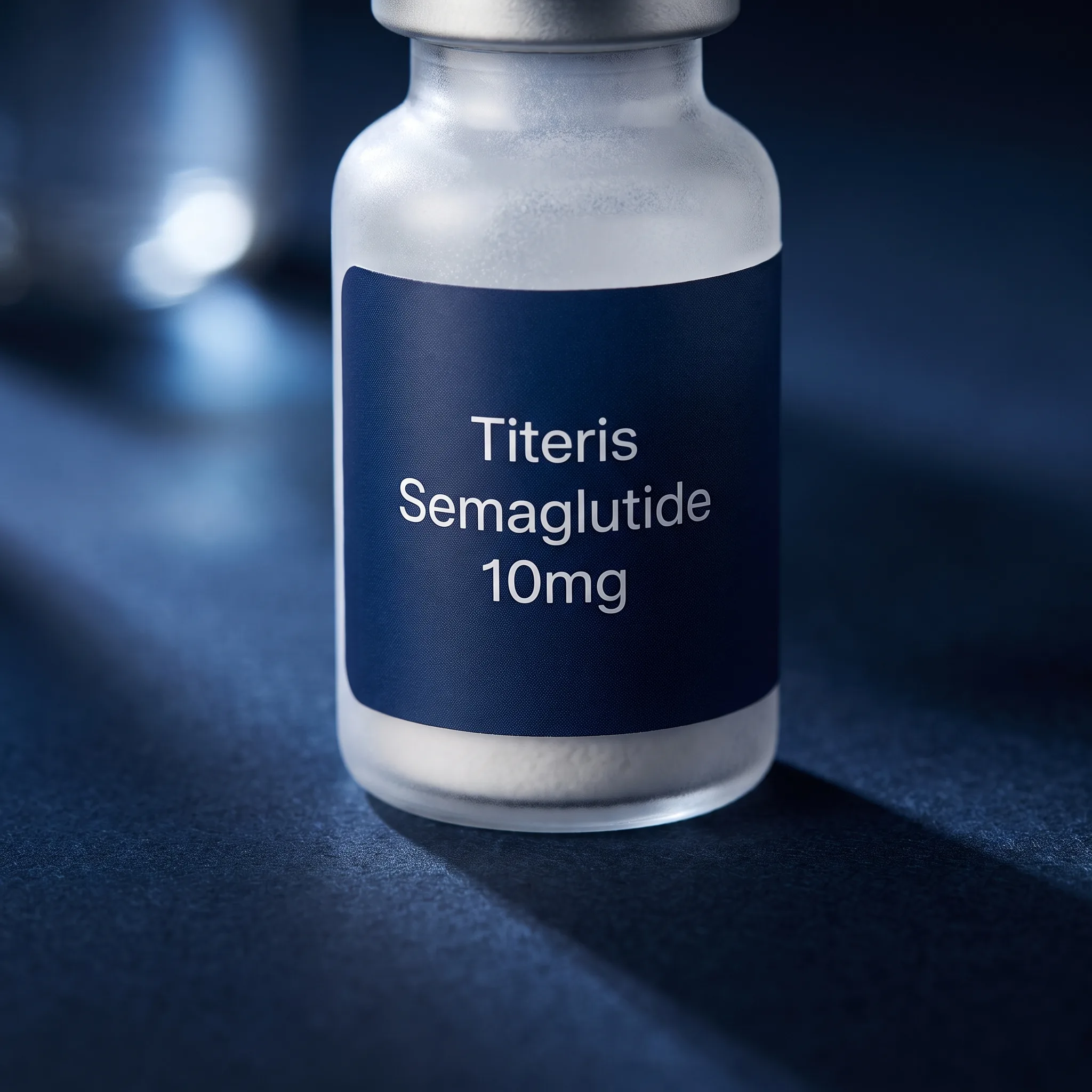 SM-5
SM-5Semaglutide, 5mg
Supplied as a lyophilised vial for laboratory research use.
£27.99 Contact us to orderSM-10Semaglutide, 10mg
Supplied as a lyophilised vial for laboratory research use.
£34.99 Contact us to orderSM-15Semaglutide, 15mg
Supplied as a lyophilised vial for laboratory research use.
£49.99 Contact us to orderSM-20Semaglutide, 20mg
Supplied as a lyophilised vial for laboratory research use.
£54.99 Contact us to orderSM-30Semaglutide, 30mg
Supplied as a lyophilised vial for laboratory research use.
£67.99 Contact us to orderSee our documentation policy for what supplier batch documentation covers, and our UK legal status page for the regulatory framing every listing follows.
Frequently asked
What's the difference between this and Ozempic or Wegovy?
Ozempic and Wegovy are licensed pharmaceutical products manufactured by Novo Nordisk, supplied through the healthcare system under a prescription framework, and approved for specific clinical indications. The semaglutide sold here is a research reference compound: the same molecule synthesised for in vitro laboratory research, not a pharmaceutical product, not for human use, and not approved by the MHRA for clinical application. The molecule is identical; the regulatory category, supply chain, quality standards, and intended use are entirely different.
What did the STEP trials actually study?
The STEP trials were Phase 3 randomised controlled trials run by Novo Nordisk, evaluating subcutaneous semaglutide 2.4mg weekly in human participants with obesity or overweight and at least one weight-related comorbidity. STEP 1 (2021, NEJM) is the largest: 1961 participants, 68 weeks, with a mean weight reduction of 14.9% versus 2.4% for placebo. These trials established the evidence base for Wegovy's MHRA approval. They studied a pharmaceutical product in a clinical context, not a research compound used in a laboratory setting.
Is semaglutide legal to buy in the UK?
As a licensed pharmaceutical product (Ozempic, Wegovy), semaglutide requires a prescription in the UK and can only be dispensed through authorised channels. As a research reference compound for in vitro laboratory use, it falls under a different regulatory category: it cannot be marketed, sold, or supplied for human use, but the research compound itself is not a controlled substance. Every listing on this site is for research use only. The distinction is explained in more detail on our UK legal status page.
How is it supplied?
As a lyophilised (freeze-dried) white powder in a sealed glass vial. It's supplied without solvent; reconstitution for laboratory use requires bacteriostatic water or similar diluent depending on the specific research application. Available in 5mg, 10mg, 15mg, 20mg, and 30mg vials. Batch documentation status, where available from our supplier, is stated directly on the listing page.