Compound Guide
Tirzepatide: what it is, and what the research actually shows
A plain, cited explanation of tirzepatide: its dual GIP and GLP-1 receptor mechanism, what the SURMOUNT and SURPASS clinical trials studied, how it compares to semaglutide in the published literature, and where it stands under UK law. Research use only. Nothing here is instruction for human use.
Tirzepatide sold here is a research reference compound for in vitro and laboratory research purposes only. It is not licensed for human administration, is not a pharmaceutical product, and has not been approved by the MHRA for any clinical or therapeutic use. The clinical applications discussed on this page are from published peer-reviewed research literature and are referenced for scientific context only. They are not an endorsement of human use of this compound. If you have questions about weight management or metabolic health, consult a registered healthcare professional.
What tirzepatide is
Tirzepatide is a dual GIP and GLP-1 receptor agonist: a synthetic peptide that activates both the glucose-dependent insulinotropic polypeptide (GIP) receptor and the GLP-1 receptor simultaneously. That dual mechanism is the central distinction separating it from semaglutide, which targets only the GLP-1 receptor. The molecule was developed by Eli Lilly and has reached the market as Mounjaro (for type 2 diabetes) and Zepbound (for obesity management, approved by the FDA in 2023).
GIP and GLP-1 are both incretins, hormones the gut secretes in response to food intake that amplify insulin release in a glucose-dependent manner. GIP was actually identified before GLP-1 but was historically considered less therapeutically promising for obesity because native GIP signalling doesn't suppress appetite as clearly as GLP-1 signalling does. Tirzepatide's clinical data complicated that picture: dual agonism appears to produce larger effects than GLP-1 agonism alone.
The molecular architecture is a 39-amino-acid peptide with a C20 fatty diacid modification at lysine-26, giving it a half-life compatible with once-weekly dosing. It's structurally distinct from semaglutide, which is based on the GLP-1 sequence. Tirzepatide's sequence is based on the GIP sequence with modifications allowing dual receptor engagement.
What the clinical research has studied
Like semaglutide, tirzepatide has been evaluated in large Phase 3 randomised controlled trials, which puts its human evidence base well beyond most research peptides.
The SURPASS trials (type 2 diabetes)
The SURPASS programme assessed tirzepatide at 5mg, 10mg, and 15mg weekly doses in people with type 2 diabetes, both against placebo and against active comparators including insulin glargine and semaglutide 1mg. SURPASS-2 is particularly relevant: a direct head-to-head comparison against semaglutide 1mg in 1879 participants with T2D found tirzepatide 10mg and 15mg produced greater HbA1c reductions and greater weight loss than semaglutide 1mg. At 40 weeks, tirzepatide 15mg reduced HbA1c by 2.58 percentage points versus 1.86 for semaglutide 1mg, and body weight by 12.4% versus 8.5%.
The SURMOUNT trials (obesity)
The SURMOUNT programme evaluated tirzepatide in people with obesity. SURMOUNT-1, published in the New England Journal of Medicine in 2022, enrolled 2539 participants with a BMI of 30 or above (or 27 with at least one weight-related comorbidity). At 72 weeks, tirzepatide 15mg produced a mean weight reduction of 20.9% from baseline versus 3.1% for placebo. That figure is the largest mean weight reduction reported in a phase 3 trial of a once-weekly injectable treatment to date. SURMOUNT-2 assessed the same doses in people with obesity and type 2 diabetes, finding 15.7% mean reduction at 72 weeks for the 15mg dose.
A weight-loss maintenance trial (SURMOUNT-4) found that discontinuing tirzepatide after 36 weeks led to most of the weight loss being regained over the following 52 weeks, consistent with the pattern seen with semaglutide. The data suggest ongoing administration is required to maintain the effect.
Why dual agonism produces larger effects
The mechanism by which GIP and GLP-1 co-agonism exceeds GLP-1 agonism alone isn't fully characterised, but researchers have proposed several pathways. In adipose tissue, GIP receptor activation may improve lipid metabolism and storage in ways that complement GLP-1's appetite-suppression effects. In the CNS, GIP receptors in the hypothalamus and reward circuits may enhance the appetite-suppressing signal beyond what GLP-1 alone achieves. There's also evidence that GIP receptor agonism reduces nausea, which is one of the more common adverse effects of GLP-1 agonism — if tirzepatide produces less nausea at equivalent weight-loss doses, tolerability could explain part of the outcome difference in trial data.
The interaction between GIP and GLP-1 signalling is an active research area. Prior to tirzepatide's clinical development, GIP antagonism (not agonism) had been proposed as a potential obesity treatment, based on rodent data. Tirzepatide's Phase 3 results complicated that hypothesis and generated substantial research interest in the distinction between GIP agonism and antagonism in humans versus rodents.
Tirzepatide versus semaglutide in the research
The SURPASS-2 trial provided the only head-to-head comparison available in large Phase 3 data: tirzepatide 10mg and 15mg both outperformed semaglutide 1mg on both HbA1c reduction and weight loss at 40 weeks. The caveat is that semaglutide 1mg is the diabetes dose, not the 2.4mg obesity dose. There's no large head-to-head trial comparing tirzepatide 15mg against semaglutide 2.4mg in an obesity population. The comparison is reasonable to make from the trial populations and doses studied, but it isn't a direct test.
Indirect comparisons based on separate trial populations suggest tirzepatide 15mg produces larger mean weight reduction than semaglutide 2.4mg, but indirect comparisons carry more uncertainty than direct ones. This is an ongoing area of study.
UK regulatory status
Tirzepatide received MHRA approval for type 2 diabetes management (as Mounjaro) in the UK in 2023. As a prescription-only medicine in a clinical context, it's dispensed through GP or specialist prescription and subject to the same regulatory framework as any POM. The research compound sold here is not Mounjaro, is not sourced from Eli Lilly's pharmaceutical supply chain, and is not for human use. See our UK legal status page for the full regulatory context.
Tirzepatide in our catalogue
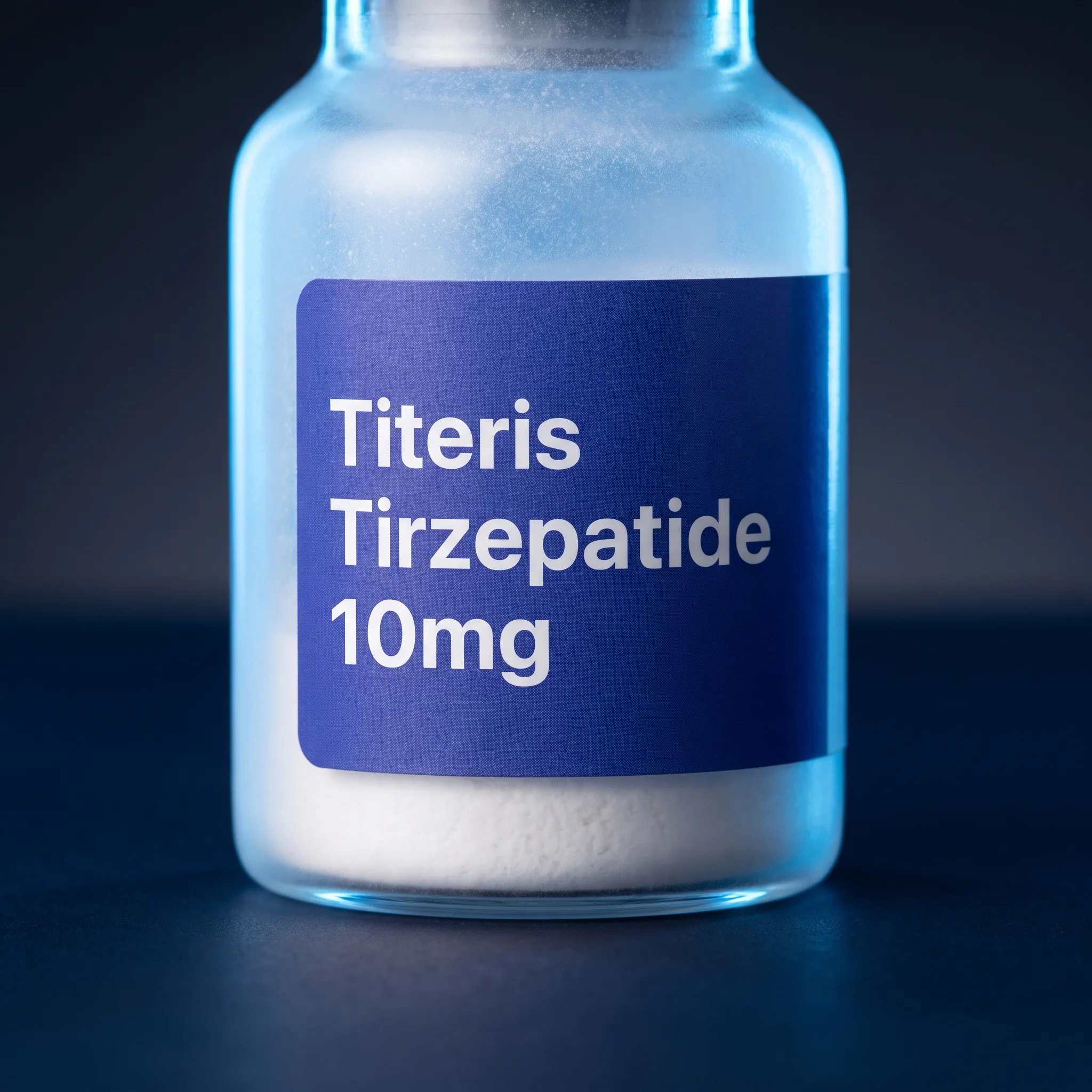 TR-5
TR-5Tirzepatide, 5mg
Supplied as a lyophilised vial for laboratory research use.
£34.99 Contact us to orderTR-10Tirzepatide, 10mg
Supplied as a lyophilised vial for laboratory research use.
£47.99 Contact us to orderTR-20Tirzepatide, 20mg
Supplied as a lyophilised vial for laboratory research use.
£67.99 Contact us to orderTR-30Tirzepatide, 30mg
Supplied as a lyophilised vial for laboratory research use.
£89.99 Contact us to orderTR-15Tirzepatide, 15mg
Supplied as a lyophilised vial for laboratory research use.
£54.99 Contact us to orderTR-40Tirzepatide, 40mg
Supplied as a lyophilised vial for laboratory research use.
£89.99 Contact us to orderTR-50Tirzepatide, 50mg
Supplied as a lyophilised vial for laboratory research use.
£99.99 Contact us to orderTR-60Tirzepatide, 60mg
Supplied as a lyophilised vial for laboratory research use.
£119.99 Contact us to orderTR-100Tirzepatide, 100mg
Supplied as a lyophilised vial for laboratory research use.
£189.99 Contact us to orderSee our documentation policy for what supplier batch documentation covers, and our UK legal status page for the regulatory framing every listing follows.
Frequently asked
How does tirzepatide differ from semaglutide?
Semaglutide targets only the GLP-1 receptor. Tirzepatide targets both GIP and GLP-1 receptors simultaneously. In head-to-head Phase 3 trial data (SURPASS-2), tirzepatide 10mg and 15mg produced greater reductions in HbA1c and body weight than semaglutide 1mg. There's no published head-to-head trial comparing tirzepatide 15mg against semaglutide 2.4mg in an obesity population, so the comparison at those doses rests on indirect comparison across separate trials.
What did the SURMOUNT-1 trial find?
SURMOUNT-1 (NEJM, 2022) enrolled 2539 participants with obesity and assessed tirzepatide 5mg, 10mg, and 15mg weekly over 72 weeks. The 15mg dose produced a mean weight reduction of 20.9% from baseline versus 3.1% for placebo. This is the largest mean weight reduction reported in any Phase 3 trial of a once-weekly injectable treatment to date, and it's what's generated the most research interest in tirzepatide's dual mechanism.
Is tirzepatide approved in the UK?
Mounjaro (tirzepatide, Eli Lilly's pharmaceutical formulation) received MHRA approval for type 2 diabetes management in 2023 and is a prescription-only medicine. The research reference compound sold here is not Mounjaro, is not for human use, and is not sourced from pharmaceutical supply chains. It's supplied strictly for laboratory research use.
How is it supplied?
As a lyophilised white powder in a sealed glass vial, available in 5mg, 10mg, 15mg, 20mg, 30mg, 40mg, 50mg, 60mg, and 100mg sizes. Supplied without solvent. Batch documentation status, where available from our supplier, is stated directly on the listing page.