Compound Guide
Cartalax: what the cartilage peptide bioregulator is and what the research actually shows
A plain, factual explanation of Cartalax: what peptide bioregulators are, how Cartalax is used in cartilage tissue research, and an honest account of the evidence base including its geographical concentration and limitations. Cartilage peptide bioregulator. Research use only. Nothing on this page is instruction for human use.
Cartalax sold here is a research reference compound for in vitro and laboratory research purposes only. It is a cartilage peptide bioregulator supplied strictly for research use only. It is not licensed for human administration, is not a pharmaceutical product, and has not been approved by the MHRA for any clinical or therapeutic use. There are no MHRA-approved clinical uses of Cartalax. The research applications discussed on this page are from published literature and are referenced for scientific context only. If you have health concerns about joints or cartilage, consult a registered healthcare professional.
What Cartalax is
Cartalax is a synthetic tripeptide belonging to the class of peptide bioregulators, a research concept developed primarily at the Military Medical Academy in St Petersburg, Russia. This research line investigates short-chain peptides derived from or related to specific organs and tissues, with the proposed mechanism being tissue-selective effects on gene expression and cell proliferation.
Cartalax is the cartilage-specific representative of this peptide bioregulator class. Its amino acid sequence is related to type II collagen tissue and the extracellular matrix of cartilage. The research interest centres on the hypothesis that short peptides can influence gene expression in target tissues through direct DNA binding or transcription factor interactions. This hypothesis is the conceptual foundation of the bioregulator research programme.
Cartalax is not a medicine and is not an alternative to clinically approved treatments for joint or cartilage conditions. The available research literature derives primarily from Russian institutions and has less presence in the Western mainstream scientific literature than compounds like BPC-157. This is a relevant characteristic of the evidence base that any researcher using Cartalax as a reference compound should understand before interpreting experimental results.
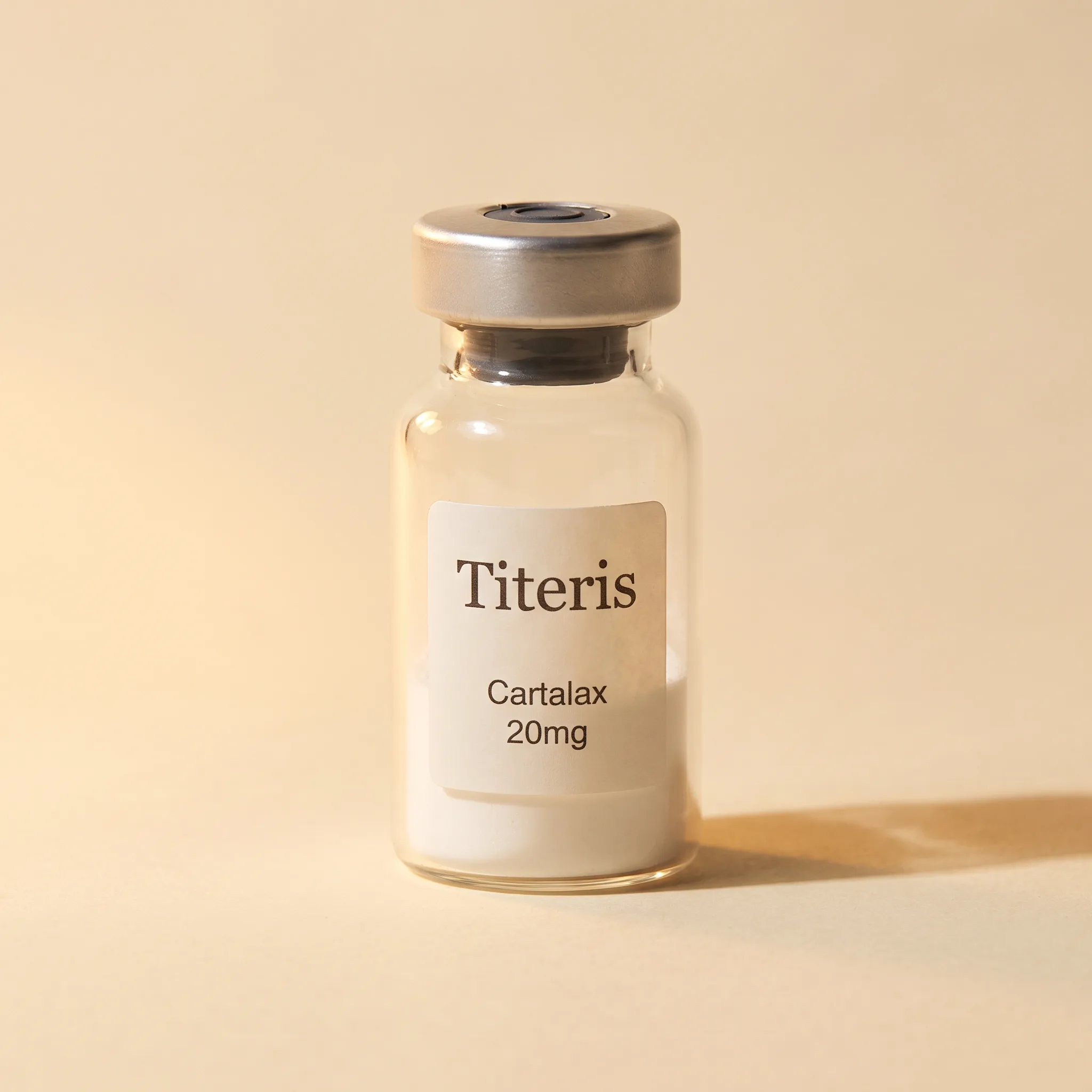
As a research reference material, Cartalax is supplied as a lyophilised tripeptide for laboratory use. It must not be used for human or veterinary administration.
The peptide bioregulator concept
The peptide bioregulator concept, developed by Vladimir Khavinson and colleagues at the St Petersburg Institute of Bioregulation and Gerontology over several decades, proposes that short oligopeptides (typically 2 to 4 amino acids) derived from specific tissues can interact with nuclear chromatin and influence gene expression in a tissue-selective manner. This proposed mechanism differs from classical receptor pharmacology: rather than binding a transmembrane receptor and activating a downstream signalling cascade, bioregulators are hypothesised to interact directly with DNA or transcription factors within the cell nucleus.
This mechanism hypothesis is scientifically distinct from the receptor-based mechanisms of most peptide research compounds and remains less well established in the mainstream Western pharmacological literature. The evidence base comes predominantly from the Russian research group that developed the concept. Independent replication of the proposed mechanism by research groups outside this institutional context is limited, which is a relevant methodological consideration for researchers interpreting bioregulator literature.
What is not in dispute is that Cartalax is a chemically defined tripeptide with a known sequence. What remains in active scientific discussion is whether the proposed tissue-specific gene regulatory mechanism accurately describes how the compound exerts any biological effects observed in laboratory models. Researchers using Cartalax should be aware of this distinction between chemical characterisation (well established) and proposed mechanism (still debated).
What the research has examined
The evidence base for Cartalax is specific in its geographical and institutional origin. Researchers considering Cartalax as a laboratory reference compound should take this into account when placing findings in context.
In vitro chondrocyte studies
Laboratory studies using chondrocyte cell cultures have examined Cartalax for effects on collagen synthesis and cell proliferation. These in vitro findings are basic research data from cartilage cell models. As with all cell culture data, the results represent findings in a specific experimental system that does not fully replicate the complex biological environment of cartilage tissue in a living organism.
The peptide bioregulator research framework
The broader research concept of tissue-selective short peptides is scientifically discussed but not broadly established in Western pharmacology. Researchers in this area should engage with the primary literature critically, noting the institutional concentration of studies and the limited independent replication of the proposed mechanism by external groups.
Animal models for cartilage degeneration
Some animal studies have examined peptide bioregulators including Cartalax in osteoarthritis model systems. These preclinical data are from animal experiments and should be interpreted accordingly. The transition from animal model findings to conclusions about human biology requires additional evidence that is not yet present for Cartalax in the mainstream literature.
Tissue specificity hypothesis
The hypothesis that peptides derived from particular organs direct tissue-specific epigenetic effects is the conceptual foundation of bioregulator research. Whether this mechanism is operative for Cartalax in cartilage cells is the central scientific question. Available data from the originating research group supports the hypothesis; independent replication is limited. This is an honest assessment of where the evidence stands, and is the kind of accurate representation of the scientific status of a compound that Titeris believes researchers are entitled to receive.
UK regulatory status
Cartalax is not a licensed medicine in the UK. There is no MHRA-approved pharmaceutical product containing Cartalax for any indication. It is not a controlled substance. As a research reference compound for in vitro laboratory use, it occupies a different regulatory category from pharmaceutical products.
A research reference compound containing Cartalax, supplied for in vitro laboratory research and strictly under a research-use-only framework, cannot be marketed or supplied for human use. Titeris operates strictly within the research-use-only framework. Every listing on this site is for research use only, and nothing here is an instruction or invitation to administer Cartalax to a human or animal.
Our UK legal status page provides an overview of the applicable regulatory framework for research compounds in the UK.
Laboratory context: how Cartalax is used in basic research
In the laboratory, Cartalax is used as a research reference compound for controlled in vitro experiments. Common applications include chondrocyte cell culture experiments examining collagen type II expression, cell proliferation assays in cartilage-derived cell lines, comparative experiments contrasting the effects of different peptide bioregulators in the same cell model system, and mechanistic studies examining nuclear localisation and DNA binding properties of short peptides.
Researchers approaching Cartalax for the first time should familiarise themselves with the primary bioregulator literature, particularly the work of the St Petersburg group, before designing experiments. The experimental models used in the originating research (specific cell lines, dosing concentrations, assay systems) are relevant to designing comparable or comparative experiments. Researchers conducting independent experiments with Cartalax provide scientifically valuable data precisely because independent replication is limited.
The defined chemical identity of Cartalax as a synthetic tripeptide is important for reproducibility. Storage at -20°C in the dry state maintains chemical integrity. After reconstitution in bacteriostatic water or an appropriate laboratory solvent, the compound should be stored at 4°C and used promptly. Repeated freeze-thaw cycles should be avoided.
Standard laboratory safety protocols apply: gloves, lab coat, and appropriate eye protection. Disposal follows institutional chemical waste guidelines.
Cartalax in our catalogue
CAR20Cartalax, 20mg
Supplied as a lyophilised vial for laboratory research use only.
£44.99 Contact us to orderSee our documentation policy for what supplier batch documentation covers, and our UK legal status page for the regulatory framing every listing follows.
Frequently asked
What is a peptide bioregulator?
Peptide bioregulators, in the Russian research framework, are short-chain peptides of 2 to 4 amino acids proposed to exert tissue-selective effects on gene expression through direct interaction with chromatin or transcription factors. This proposed mechanism differs from classical receptor pharmacology. The concept is not broadly established in Western mainstream pharmacological literature, and independent replication of the proposed mechanism is limited. Researchers using bioregulator compounds should engage with the primary literature critically.
Are there Western clinical trials for Cartalax?
No published randomised controlled trials in Western peer-reviewed journals for Cartalax are known to us. The available literature derives primarily from Russian institutions. This is a relevant characteristic of the evidence base for any researcher assessing Cartalax's research status.
How is Cartalax supplied?
As a lyophilised powder in a sealed glass vial, in 20mg size. Supplied without solvent; reconstitution for laboratory use requires bacteriostatic water or another appropriate laboratory diluent. This is a research reference compound, not a pharmaceutical product for human use.
Is Cartalax legal to buy in the UK?
As a research reference compound for in vitro laboratory use, Cartalax is supplied under a research-use-only framework. It is not a controlled substance and is not a licensed pharmaceutical product. It cannot be marketed, sold, or supplied for human use. Every listing on this site is for research use only.