Compound Guide
Glutathione: what it is, and what the research actually shows
A plain, cited explanation of glutathione (GSH): its role as the primary intracellular antioxidant, what research has found on glutathione depletion in disease and ageing, why it's studied as an IV research compound despite oral bioavailability challenges, and what the evidence base actually covers. Research use only. Nothing here is instruction for human use.
What glutathione is
Glutathione (GSH) is a tripeptide composed of three amino acids: glutamate, cysteine, and glycine. It's the most abundant intracellular antioxidant in mammalian cells, present at millimolar concentrations in most cell types, with the highest concentrations in the liver. Every cell synthesises its own glutathione from these precursor amino acids using two enzymes: gamma-glutamylcysteine synthetase and glutathione synthetase.
Glutathione exists in two forms: reduced (GSH, active antioxidant) and oxidised (GSSG). The ratio of GSH to GSSG in a cell is one of the standard measurements researchers use to assess the cell's oxidative stress status. A falling GSH:GSSG ratio indicates oxidative stress; the cell is consuming antioxidant capacity faster than it can regenerate it.
Its biochemical roles extend beyond simple free-radical scavenging. Glutathione is required for the activity of glutathione peroxidase enzymes (which neutralise hydrogen peroxide and lipid hydroperoxides), serves as a cofactor in several metabolic reactions, and is central to the detoxification of xenobiotics (foreign compounds) in the liver through glutathione S-transferase reactions. It also participates in the regulation of immune function and in the maintenance of protein structure through glutathionylation.
What the research has studied
Depletion in disease states
Low glutathione levels have been documented across a wide range of conditions: Parkinson's disease (neurons in the substantia nigra show marked GSH depletion), HIV infection, diabetes, lung disease including COPD and pulmonary fibrosis, and alcoholic liver disease. In each case, researchers have explored whether the depletion is a contributor to cellular damage or a consequence of it, a question that's often difficult to answer in cross-sectional disease studies.
The Parkinson's research is one of the more studied threads. Sian et al. (1994, Ann Neurology) reported that GSH levels in the substantia nigra of Parkinson's patients were significantly lower than in age-matched controls, and this reduction was specific to that brain region. Whether glutathione repletion could slow neurodegeneration is a hypothesis that several research groups have explored with IV glutathione administration, without definitive conclusions from large controlled trials.
Ageing
Glutathione levels decline with age in multiple tissues, including red blood cells, liver, and plasma. Lang et al. (1992, PNAS) reported a significant age-dependent decline in plasma GSH in healthy human subjects. Julius et al. measured whole-blood GSH across age groups and found clear decline from young adults through elderly subjects. The mechanism involves both reduced synthesis (lower gamma-GCS activity) and increased oxidative demand.
IV glutathione and direct supplementation research
Oral glutathione has poor bioavailability because the gastrointestinal tract degrades the tripeptide into its constituent amino acids before absorption. Intravenous (IV) administration bypasses this. Research using IV glutathione has looked at effects on oxidative stress markers in clinical contexts including Parkinson's, dialysis patients, and chemotherapy-related toxicity. Witschi et al. (1992, Eur J Clin Pharmacol) showed IV glutathione raised plasma GSH significantly while oral administration at equivalent doses did not. Lyophilised glutathione for reconstitution is the standard research-grade form used in these laboratory and clinical research contexts.
UK regulatory status
Glutathione is not a controlled substance in the UK. It is available as a food supplement in some formulations. As a lyophilised research compound for laboratory use, it occupies a research-material category distinct from a licensed medicine or food supplement. It cannot be marketed for therapeutic human use. See our UK legal status page.
Glutathione in our catalogue
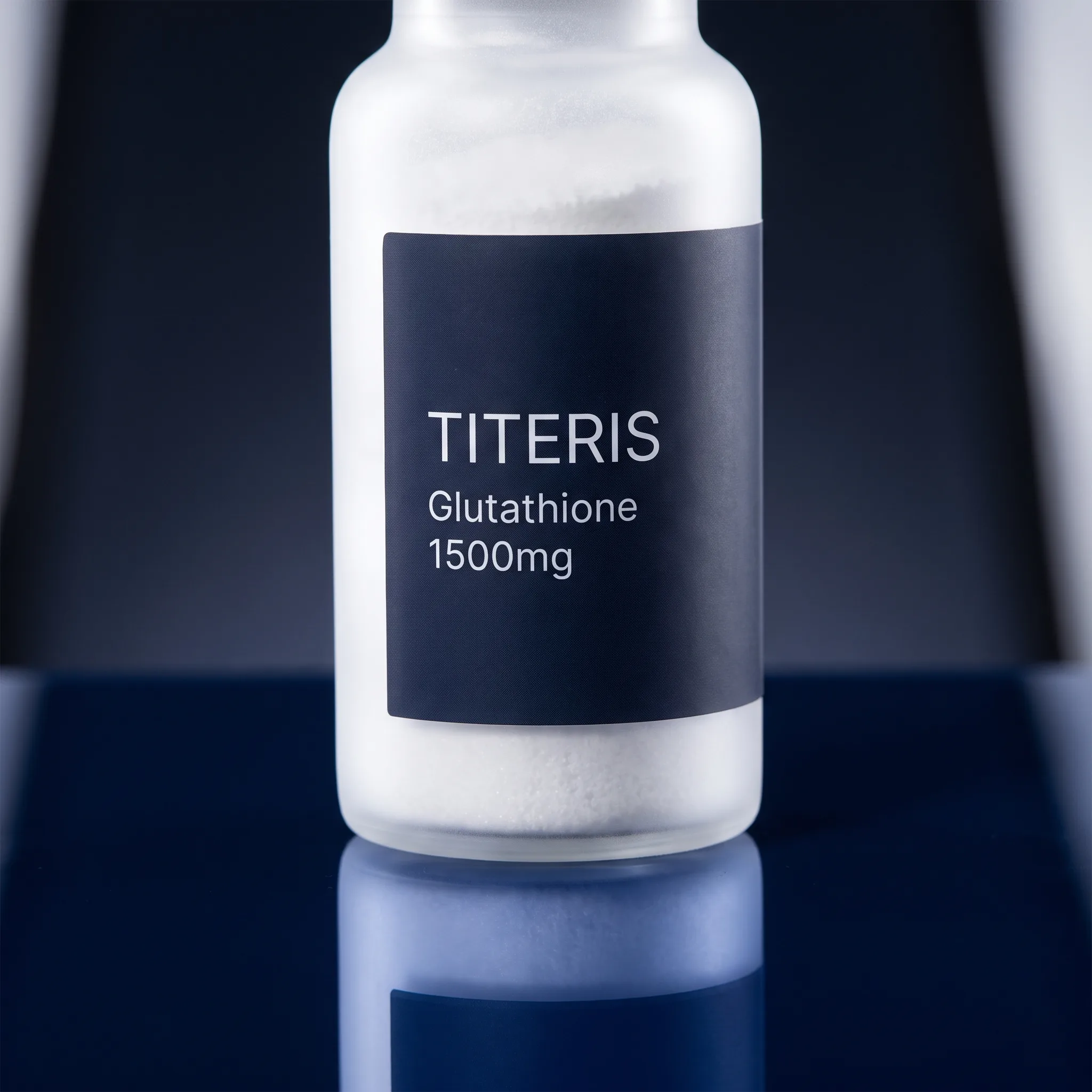 GT-600
Glutathione, 600mg
Supplied as a lyophilised vial for laboratory research use.
£24.99 Contact us to orderGT-1500Glutathione, 1500mg
Supplied as a lyophilised vial for laboratory research use.
£39.99 Contact us to orderSee our documentation policy for what supplier batch documentation covers, and our UK legal status page for the regulatory framing every listing follows.
Frequently asked
Why is glutathione supplied as a lyophilised compound rather than in solution?
Glutathione in solution is unstable: it oxidises from GSH to GSSG relatively quickly at room temperature, and more rapidly in the presence of metal ions or at higher temperatures. Lyophilised (freeze-dried) powder is the standard pharmaceutical and research-grade form because it's stable at appropriate storage temperatures (-20°C recommended for long-term storage). Reconstituting immediately before use gives researchers a controlled, accurately dosed form for their work.
What does "reduced" glutathione mean?
Reduced glutathione (GSH) is the active antioxidant form: the thiol group (-SH) on the cysteine residue is free and able to donate electrons to neutralise reactive oxygen species. Oxidised glutathione (GSSG) has two GSH molecules linked by a disulfide bond and has lost this antioxidant capacity. The enzyme glutathione reductase, using NADPH, converts GSSG back to GSH. The compound sold here is reduced glutathione (GSH).
Why doesn't oral glutathione work well?
The gastrointestinal tract contains peptidases that cleave glutathione into its three amino acid components (glutamate, cysteine, glycine) before it can be absorbed intact. Those amino acids are absorbed and used by the body, but they don't replicate having intact glutathione available. IV administration bypasses this by delivering the intact molecule into circulation. N-acetyl cysteine (NAC) is an alternative approach: it provides cysteine in a form that can be absorbed orally and converted to glutathione intracellularly.
How is it supplied?
As a lyophilised white powder in a sealed glass vial, available in 600mg and 1500mg sizes. Supplied without solvent for laboratory research use. Store at -20°C for long-term stability. Batch documentation status is stated directly on the listing page where available from our supplier.