Compound Guide
HCG (Human Chorionic Gonadotropin): what it is and what the research covers
A factual explanation of HCG: its structure as a glycoprotein hormone, its role as an LH receptor agonist in reproductive biology research, and where it stands under UK law. HCG is a prescription-only medicine when used clinically. Supplied here strictly as a research reference compound. Nothing on this page is instruction for human use.
HCG sold here is a research reference compound supplied for in vitro and laboratory research purposes only. It is not licensed for human administration, is not a pharmaceutical product, and has not been approved by the MHRA for any clinical or therapeutic use. HCG is a prescription-only medicine (POM) in the UK when supplied as a pharmaceutical product for clinical use. Nothing here is an endorsement of human use of this compound, and nothing on this page should be read as medical advice or as instruction for self-administration.
Human chorionic gonadotropin (HCG) is a prescription-only medicine in the UK when supplied as a pharmaceutical product for clinical or therapeutic use in humans. It is supplied on this site exclusively as a research reference compound for in vitro laboratory use, which is a different regulatory category. If you have questions about clinical HCG use, consult a registered healthcare professional.
What HCG is
Human chorionic gonadotropin (HCG) is a glycoprotein hormone consisting of two subunits: the alpha subunit, which it shares with luteinising hormone (LH), follicle-stimulating hormone (FSH), and thyroid-stimulating hormone (TSH), and the beta subunit, which is HCG-specific and determines the molecule's biological activity and antigenic identity. The beta subunit of HCG has a carboxy-terminal peptide extension of approximately 30 amino acids that is absent in LH, which is one structural feature that distinguishes the two hormones and contributes to HCG's longer circulating half-life.
HCG is physiologically produced by the syncytiotrophoblast layer of the early embryo after implantation. Its role in early pregnancy is to maintain the corpus luteum and sustain progesterone production until the placenta takes over this function. HCG is the molecule detected by pregnancy tests because it appears in urine and blood very early in pregnancy and rises rapidly through the first trimester. Its detection is highly specific to pregnancy in the normal physiological context.
Both HCG and LH bind to the same LH/hCG receptor (LHCGR), a G protein-coupled receptor expressed in the gonads and other tissues. This shared receptor explains why HCG can mimic LH action: in males, LHCGR activation in Leydig cells stimulates testosterone production; in females, it triggers ovulation and supports the corpus luteum. The extended half-life of HCG compared to LH makes it useful in clinical fertility medicine because a single dose has a more prolonged effect than an equivalent dose of LH.
As a research reference compound, HCG is used in reproductive biology basic research: for LH receptor binding studies, in vitro fertilisation research, and studies of the gonadotropin hormone axis. These are in vitro and preclinical applications that differ fundamentally from clinical therapeutic use.
What the research literature has investigated
HCG has an extensive research literature because of its clinical importance as a naturally occurring hormone and as a pharmaceutical used in fertility medicine.
- Reproductive biology. HCG is a central molecule in reproductive biology research. LH receptor activation by HCG is biochemically well characterised, and the downstream signalling cascades through the cAMP/PKA pathway and other intracellular mediators have been extensively studied in cell and animal models.
- Fertility research. Clinical applications of HCG for ovulation induction and assisted reproductive technologies are well established in the medical literature. These applications use licensed pharmaceutical products under prescription and clinical supervision and are not relevant to the research compound context.
- Testicular function research. In animal models and in basic clinical research, HCG is used as an LH equivalent to study Leydig cell function and testosterone production. The steroidogenesis pathway in Leydig cells, from cholesterol to testosterone, is well characterised, and HCG is a standard tool for stimulating this pathway in research settings.
- Pregnancy immunology. HCG plays a role in the immunological tolerance of the embryo by the maternal immune system. Basic research on HCG's immunomodulatory effects is an active field with mechanistic questions that remain open.
- HCG receptor pharmacology. The LH/hCG receptor has been studied as a pharmacological target. Research characterising receptor binding affinities, signal transduction kinetics, and receptor desensitisation contributes to the broader understanding of glycoprotein hormone pharmacology.
WADA status and anti-doping considerations
HCG is on the WADA prohibited list (category S2 peptide hormones) because it stimulates endogenous testosterone production via LH receptor activation in Leydig cells, which could be exploited to enhance testosterone levels in competitive sports contexts. This classification applies to use by competitive athletes. As a laboratory research reference compound, a different regulatory context applies. Researchers handling HCG in a laboratory setting operate within the framework of research material regulations, not sports anti-doping rules, though the compound's prohibited status under WADA is a factual matter worth noting on this page for completeness.
UK regulatory status
HCG is a prescription-only medicine (POM) in the UK when supplied as a pharmaceutical product for clinical use in humans. Licensed pharmaceutical HCG products are available only through prescription via the NHS or private healthcare channels and are subject to full pharmaceutical quality and regulatory requirements.
A research reference compound containing HCG, supplied for in vitro laboratory research and strictly not for human use, occupies a different regulatory category. It is not a licensed medicine, is not subject to prescription requirements in the same way as a pharmaceutical HCG product, and cannot be marketed or supplied for human administration. The MHRA is clear that the line between a research compound and a pharmaceutical product must not be blurred. Titeris does not blur this line: every listing is for research use only, and nothing on this site is instruction or invitation to administer HCG to a human or animal.
Our UK legal status page provides a general overview of the regulatory framework applicable to research compounds. For specific legal questions, consultation with a solicitor experienced in UK medicines law is appropriate.
Storage, handling, and stability
HCG as a glycoprotein hormone is more structurally complex than most synthetic peptides, and its stability considerations reflect that complexity. The lyophilised (freeze-dried) form is stable at low temperatures. Storage at minus 20 degrees Celsius in the dry state is appropriate for long-term stability. The vial should be allowed to reach room temperature before opening to prevent condensation forming inside the vial.
Reconstitution should be performed with bacteriostatic water for multi-draw laboratory use. The reconstituted solution should be stored at 4 degrees Celsius and used within the stability window recommended for the compound. Glycoprotein hormones can be sensitive to mechanical shear forces; vigorous vortexing should be avoided. Gentle swirling or inversion is the appropriate mixing method when dissolving the lyophilised material.
Standard laboratory precautions apply: protective gloves, a lab coat, and eye protection where appropriate. As a research reference compound, HCG does not carry a pharmaceutical-grade safety data sheet in the clinical sense. Researchers operate according to institutional safety protocols and their professional judgement about handling biologically active compounds.
Disposal of unused HCG research compound should follow institutional guidelines for biological and chemical waste, in accordance with applicable UK environmental and laboratory safety regulations.
Research context: HCG in basic science laboratory work
HCG is a research reference material for laboratory use. The laboratory context differs fundamentally from clinical or therapeutic applications. In the laboratory, controlled in vitro experiments are conducted where the compound is applied in defined concentrations to cell cultures or other model systems. Results from such experiments characterise the molecule's behaviour in those models and are not directly transferable to the intact human organism.
For reproductive biology laboratories, HCG is a standard tool for activating LH/hCG receptors in Leydig cell or granulosa cell culture models. Receptor binding studies, cAMP assays, and steroidogenesis assays all use HCG as a pharmacological stimulus to interrogate the pathway downstream of receptor activation. The availability of a defined reference compound with consistent identity supports the reproducibility of these assay systems across experiments and laboratories.
The interpretation of in vitro HCG data requires awareness of the limitations of cell culture models compared to the intact organism. Receptor density, co-receptor expression, feedback mechanisms, and the contributions of other hormones are all context-dependent in ways that cell culture models cannot fully replicate. Researchers using HCG as a laboratory tool are aware of these limitations when interpreting their findings.
Titeris takes a transparent approach: we describe what is known about HCG without making claims beyond what can be supported. The research literature on HCG in reproductive biology is substantial and well-established. The compound's clinical use is distinct from its use as a laboratory research material, and this distinction is maintained at every point in how we supply and describe the compound.
Where documentation for available batches is provided by our supplier, it is noted directly on the listing. Documentation is associated with specific batches, not with the product line as a whole. See our documentation policy for further information.
HCG in our catalogue
G5KG10KSee our documentation policy and our UK legal status page for the regulatory framing every listing follows.
Frequently asked
What is the difference between HCG and LH?
LH (luteinising hormone) and HCG share the alpha subunit and bind to the same LH/hCG receptor. HCG has a longer half-life than LH, partly due to its carboxy-terminal peptide extension and different glycosylation pattern, and it is produced by the trophoblast of the early placenta rather than the pituitary gland. In pharmacological terms, HCG is often described as a long-acting LH analogue for laboratory purposes, though the two molecules are distinct entities with different sources and different circulating kinetics.
Why is HCG on the WADA prohibited list?
HCG stimulates testosterone production via LH receptor activation in Leydig cells. In the context of competitive sport, this mechanism could be used to elevate endogenous testosterone levels. The WADA prohibited list classification (S2 peptide hormones) reflects this potential for performance enhancement. This classification applies to competitive athletes; it does not affect the status of HCG as a laboratory research reference compound in the in vitro research context.
How is the research compound supplied?
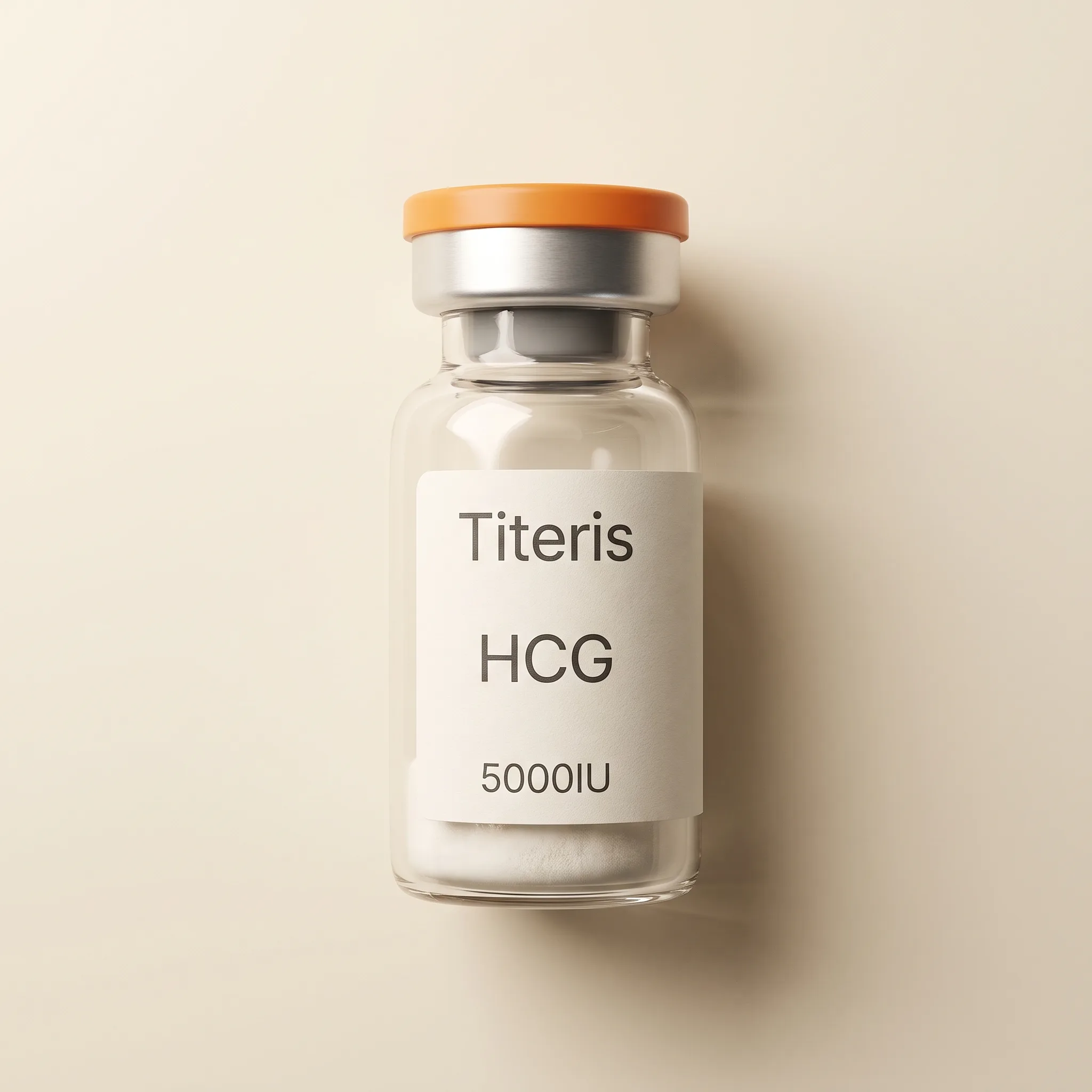
As a lyophilised glycoprotein in a sealed glass vial, in IU units (5000 IU or 10000 IU). It is supplied without solvent; reconstitution for laboratory use requires bacteriostatic water. Batch documentation status, where available from our supplier, is stated directly on the listing.
Is HCG legal to buy in the UK?
As a licensed pharmaceutical product for clinical use, HCG is a prescription-only medicine in the UK. As a research reference compound for in vitro laboratory use, it occupies a different regulatory category and can be supplied for legitimate research purposes. Every listing on this site is for research use only. Purchasing for any purpose other than legitimate laboratory research is outside the scope of our supply terms.