Compound Guide
Kisspeptin-10: what the GnRH-regulating neuropeptide is and what the research shows
A factual explanation of Kisspeptin-10: what the C-terminal fragment of kisspeptin is, how it regulates GnRH secretion through the KISS1R receptor, and what the published research on reproductive neuroendocrine biology actually shows. Supplied here strictly as a research reference compound for laboratory use. Nothing on this page is instruction for human use.
Kisspeptin-10 sold here is a research reference compound supplied for in vitro and laboratory research purposes only. It is not licensed for human administration and has not been approved by the MHRA for any clinical or therapeutic use. The hypothalamic neuropeptide functions discussed on this page are from published research literature and are referenced for scientific context only. They are not an endorsement of human use. Nothing on this page should be read as medical advice or as instruction for self-administration.
What kisspeptin is
Kisspeptin is the neuropeptide product of the KISS1 gene. The KISS1 gene encodes a 145-amino acid precursor protein (in humans) that is cleaved by proteolytic processing to generate a family of bioactive peptides: kisspeptin-54, kisspeptin-14, kisspeptin-13, and kisspeptin-10. All of these share the same C-terminal decameric sequence, which is the minimal active fragment required for receptor binding and biological activity. The names refer to the number of amino acids in each processed form.
Kisspeptin-10 is the smallest active fragment of the kisspeptin family, containing just ten amino acids. Despite its smaller size compared to kisspeptin-54, Kisspeptin-10 retains essentially the same receptor-binding affinity for the kisspeptin receptor KISS1R (also known as GPR54). This makes it the preferred form for laboratory experiments because short peptides are easier and less expensive to synthesise with high chemical definition, which supports experimental reproducibility.
The kisspeptin receptor KISS1R is a G protein-coupled receptor (GPCR) expressed predominantly in the hypothalamus, particularly in the arcuate nucleus and the anteroventral periventricular nucleus (AVPV), which are the key hypothalamic regions governing GnRH secretion. KISS1R activation stimulates the release of gonadotropin-releasing hormone (GnRH), which in turn drives the pituitary to release LH and FSH, the gonadotropins that control gonadal function. This kisspeptin-GnRH-gonadotropin axis is central to the neuroendocrine control of reproduction.
The discovery of the central role of kisspeptin signalling in puberty onset and reproductive function represented a significant advance in neuroendocrinology. Before kisspeptin's identification as a key GnRH regulator in the early 2000s, the identity of the upstream regulator of pulsatile GnRH secretion was not well understood. Loss-of-function mutations in KISS1 or KISS1R cause idiopathic hypogonadotropic hypogonadism (IHH) with failure to enter puberty, which established the essential role of this signalling pathway in reproductive biology.
What the research literature has investigated
Kisspeptin has a growing and well-regarded research literature in reproductive neuroendocrine biology and related fields.
- GnRH regulation. Kisspeptin neurons in the hypothalamic arcuate nucleus and AVPV are the primary hypothalamic regulator neurons for pulsatile GnRH secretion. The arcuate kisspeptin neurons (which co-express neurokinin B and dynorphin, and are often called KNDy neurons) are responsible for generating the pulsatile pattern of GnRH release that drives episodic gonadotropin secretion from the pituitary. This circuit is one of the most important discoveries in reproductive neuroendocrinology in recent decades.
- Genetics of reproductive failure. Loss-of-function mutations in KISS1R and KISS1 in humans cause idiopathic hypogonadotropic hypogonadism (IHH) and absent or incomplete puberty. The characterisation of these mutations has been foundational in establishing the essential role of kisspeptin signalling in human reproductive development. Gain-of-function mutations in KISS1R have been associated with precocious puberty in some cases, reinforcing the pathway's importance in puberty timing.
- Clinical research in reproductive disorders. There are published clinical studies investigating kisspeptin infusion and kisspeptin receptor pharmacology in women with hypothalamic amenorrhoea and other reproductive disorders. These are clinical research investigations using characterised peptide preparations under controlled conditions, distinct from the use of a laboratory research compound.
- Stress, metabolism, and reproduction. Kisspeptin neurons integrate metabolic signals (including leptin and insulin signalling), stress signals (including cortisol pathways), and gonadal steroid feedback. This integration makes kisspeptin neurons a convergence point for understanding how metabolic status and stress affect reproductive function. It is an active research area with genuine scientific questions remaining open.
- KISS1R pharmacology. KISS1R is studied as a pharmacological target. Research on receptor binding kinetics, signal transduction, and receptor desensitisation contributes to understanding GPCR pharmacology more broadly and to the search for kisspeptin receptor agonists and antagonists as potential tools for reproductive medicine research.
UK regulatory status
Kisspeptin-10 is not a licensed medicine in the UK and has no approved clinical application. It is not a controlled substance under the Misuse of Drugs Act. As a research reference compound for in vitro laboratory use, it is supplied under a research use only framework and is not subject to prescription requirements as a research material.
Titeris supplies Kisspeptin-10 exclusively as a research reference compound. It is not marketed for human use, purchasers confirm they are acquiring it for legitimate laboratory research, and use is restricted to those aged 18 and over. Our UK legal status page provides a general overview of the regulatory framework applicable to research compounds.
Storage, handling, and stability
Kisspeptin-10 as a lyophilised decapeptide should be stored at minus 20 degrees Celsius in the dry state, protected from light. The vial should be allowed to reach room temperature before opening to prevent condensation. In the lyophilised state, the compound is stable for the duration appropriate to the storage conditions.
Reconstitution with bacteriostatic water is appropriate for laboratory use, as kisspeptin-10 is soluble at near-neutral pH. The reconstituted solution should be stored at 4 degrees Celsius and used within a reasonable stability window. For experiments spread over time, aliquoting the reconstituted stock and freezing aliquots at minus 20 degrees Celsius for single-use thaw is the recommended approach to avoid degradation from repeated freeze-thaw cycles.
Standard laboratory precautions apply: protective gloves, a lab coat, and eye protection where appropriate. As a research reference compound, kisspeptin-10 does not carry a pharmaceutical-grade safety data sheet. Researchers follow institutional protocols and professional judgement for handling biologically active peptides. Disposal of unused compound should follow institutional guidelines for chemical waste in accordance with UK environmental regulations.
Research context: kisspeptin-10 in laboratory neuroendocrinology
Kisspeptin-10 is a research reference material for laboratory use. The laboratory context differs from clinical or therapeutic applications. In vitro experiments with kisspeptin-10 characterise KISS1R receptor binding, receptor activation, and downstream signalling in cell models expressing the receptor. These results describe the pharmacology of the compound in the model system used and do not directly apply to intact organisms where the neuronal circuit context, feedback mechanisms, and hormonal milieu all modulate the outcome.
For neuroendocrinology laboratories, kisspeptin-10 is a standard tool for activating KISS1R in hypothalamic cell lines or primary neuronal cultures. KISS1R-binding assays, calcium mobilisation assays (since KISS1R signals through Gq/11 to activate phospholipase C and raise intracellular calcium), and downstream ERK phosphorylation assays are all used with kisspeptin-10 as the agonist stimulus. The availability of a defined, consistently characterised reference compound supports reproducible results across these experimental systems.
The research on kisspeptin-10 in reproductive biology stands on solid mechanistic ground: the role of the kisspeptin-KISS1R-GnRH axis in controlling reproductive hormone secretion is well established, and the genetic evidence from KISS1R loss-of-function mutations in humans provides compelling evidence of the pathway's essential role. This is one of the better-supported areas of neuropeptide research, which makes kisspeptin-10 a compelling laboratory tool for researchers working in reproductive and neuroendocrine biology.
Where documentation for available batches is provided by our supplier, it is noted on the listing. Documentation is batch-specific. See our documentation policy for further information.
Kisspeptin-10 in our catalogue
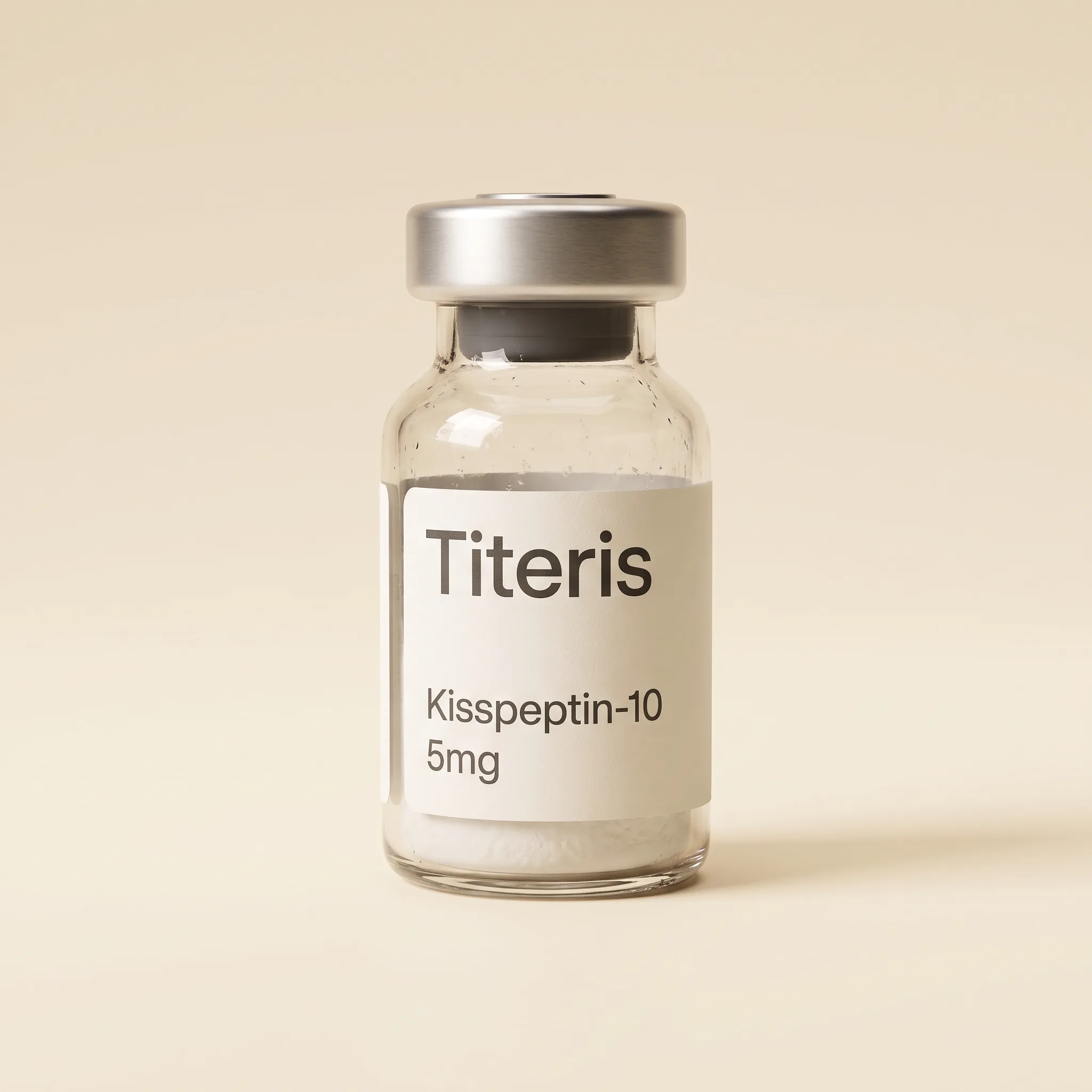
KS5Kisspeptin-10, 5mg
Supplied as a lyophilised vial for laboratory research use.
£19.99 Contact us to orderKS10Kisspeptin-10, 10mg
Supplied as a lyophilised vial for laboratory research use.
£34.99 Contact us to orderSee our documentation policy and our UK legal status page for the regulatory framing every listing follows.
Frequently asked
What is the KISS1R receptor?
KISS1R (also known as GPR54) is a G protein-coupled receptor expressed in the hypothalamus, pituitary, and other tissues. It is the receptor through which kisspeptin exerts its biological effects. KISS1R signals primarily through the Gq/11 family of G proteins, activating phospholipase C, raising intracellular calcium, and activating downstream kinase cascades including ERK. In GnRH neurons, KISS1R activation stimulates GnRH release, which drives pituitary gonadotropin secretion.
What happens when KISS1R is absent?
Humans with inactivating mutations in KISS1 or KISS1R develop idiopathic hypogonadotropic hypogonadism (IHH) characterised by absent or incomplete puberty, low gonadotropin levels, and gonadal insufficiency. The failure of pubertal development in these individuals established the essential role of kisspeptin signalling in the initiation of reproductive endocrine function. These are extremely rare genetic conditions; the research context here concerns the signalling pathway, not any treatment implication.
Why is kisspeptin-10 the preferred form for laboratory research?
Kisspeptin-10 is the shortest active fragment with full receptor-binding affinity, making it the most cost-effective and chemically well-defined form for laboratory use. Shorter peptides are generally easier to synthesise with high purity and defined chemical identity, which supports experimental reproducibility. For studies focused on KISS1R pharmacology and downstream signalling, kisspeptin-10 is the standard choice.
How is it supplied?
As a lyophilised decapeptide in a sealed glass vial, in 5mg and 10mg sizes. Reconstitution for laboratory use requires bacteriostatic water. Batch documentation status, where available from our supplier, is stated directly on the listing.