Compound Guide
KPV: what the alpha-MSH tripeptide fragment is and what the research actually shows
A plain, factual explanation of KPV: what the C-terminal tripeptide of alpha-MSH is, how it interacts with melanocortin receptors, and what has been examined in inflammation-related basic research. Research use only. Nothing on this page is instruction for human use.
KPV sold here is a research reference compound for in vitro and laboratory research purposes only. It is a tripeptide fragment of alpha-MSH supplied strictly for research use only. It is not licensed for human administration, is not a pharmaceutical product, and has not been approved by the MHRA for any clinical or therapeutic use. There are no approved clinical uses of KPV. The research applications discussed on this page are from published literature and are referenced for scientific context only. If you have health concerns, consult a registered healthcare professional.
What KPV is
KPV is a tripeptide consisting of the amino acids Lysine (K), Proline (P), and Valine (V). It represents the C-terminal fragment of alpha-Melanocyte-Stimulating Hormone (alpha-MSH), a 13-amino acid peptide derived from the precursor protein proopiomelanocortin (POMC). Alpha-MSH is produced in several tissues including the pituitary gland, skin, and gut.
The C-terminal tripeptide Lys-Pro-Val carries the biological activity relevant to the inflammatory signalling research associated with alpha-MSH. Alpha-MSH binds to melanocortin receptors, particularly MC1R and MC3R, and has documented effects on inflammatory signalling pathways. KPV as the shortest active fragment is of interest to basic researchers because it is simpler to synthesise, more stable, and more cell-permeable than the full alpha-MSH sequence, while retaining relevant pharmacological activity at the receptor level.
KPV is not a medicine. There are no approved clinical uses of KPV as a pharmaceutical product. It is a tripeptide for laboratory use as a research reference material. It must not be used for human or veterinary administration. All available data on KPV comes from laboratory studies and animal models; there are no randomised controlled clinical trials of KPV as a pharmaceutical product.
Mechanism: melanocortin receptor interactions and inflammatory signalling
Alpha-MSH and its fragments interact with melanocortin receptors, a family of G-protein coupled receptors with five subtypes (MC1R through MC5R). KPV shows activity particularly at MC1R and MC3R. MC1R is expressed in melanocytes, keratinocytes, macrophages, and other immune cells; MC3R is expressed in the brain, gut, and immune cells. The expression of these receptors in immune cell populations is central to the inflammation research interest in KPV.
Melanocortin receptor activation by alpha-MSH and its fragments has been associated in laboratory models with modulation of NF-kappaB signalling pathways, which are central regulators of inflammatory gene expression. Downstream of MC1R and MC3R activation, cyclic AMP production and protein kinase A activation are among the signalling intermediates that researchers have studied in inflammatory cell models.
The cellular permeability of KPV relative to the full alpha-MSH sequence is relevant to researchers designing in vitro experiments. Small tripeptides can cross cell membranes more readily than larger peptide sequences, which makes KPV a more practical research tool for experiments examining intracellular signalling effects in addition to receptor-level interactions.
The distinction between the biological activity of the full alpha-MSH sequence and its C-terminal fragment is itself a research question. The N-terminal portion of alpha-MSH contains the HFRW pharmacophore responsible for potent melanocortin receptor binding; the C-terminal KPV portion has a distinct pharmacological profile. Researchers comparing the two can use KPV as a defined reference compound alongside full-length alpha-MSH analogues.
What the research has examined
The published literature on KPV concentrates on in vitro cell models and animal models. There are no clinical trial data for KPV as a pharmaceutical product.
Gastrointestinal inflammation models
Several laboratory studies have examined KPV in intestinal epithelial cell models and animal models of colitis. Researchers have investigated effects on proinflammatory cytokine production and NF-kappaB pathway activation in these models. These are basic pharmacology findings in preclinical model systems, not clinical data. The distinction between a laboratory finding in a cell model and a clinical effect in a human patient is particularly important for tripeptide compounds, where bioavailability, stability, and tissue distribution in a living organism differ substantially from in vitro conditions.
Melanocortin receptor pharmacology
The interaction of KPV with MC1R and MC3R is a legitimate area of receptor pharmacology research. These receptors are expressed in inflammatory cell populations, and characterising the binding and signalling profiles of small melanocortin ligands is relevant to understanding the biology of the melanocortin system. Cell-based binding assays and reporter gene experiments are standard tools for this type of research.
Cellular permeability studies
KPV's small size and amino acid composition make it a subject of studies examining cellular uptake and membrane permeability. Understanding how peptides of this size cross epithelial barriers is relevant to transport biology research and to researchers interested in peptide delivery mechanisms.
Skin and keratinocyte models
In some cell culture studies, KPV has been examined in the context of skin inflammation models, given the expression of MC1R in melanocytes and keratinocytes. These are in vitro findings in cell culture systems and should not be interpreted as clinical data about skin conditions.
UK regulatory status
KPV is not a licensed medicine in the UK. There is no MHRA-approved pharmaceutical product containing KPV for any indication. It is not a controlled substance. As a research reference compound for in vitro laboratory use, it occupies a different regulatory category from pharmaceutical products.
A research reference compound containing KPV, supplied for in vitro laboratory research and strictly under a research-use-only framework, cannot be marketed or supplied for human use. Titeris operates strictly within the research-use-only framework. Every listing on this site is for research use only, and nothing here is an instruction or invitation to administer KPV to a human or animal.
Our UK legal status page provides an overview of the regulatory framework applicable to research compounds. Specific legal questions should be addressed with a solicitor specialising in medicines regulation.
Laboratory context: how KPV is used in basic research
In the laboratory, KPV is used as a research reference compound for controlled in vitro experiments. Common applications include binding affinity studies at melanocortin receptor subtypes using transfected cell lines, cytokine expression assays in inflammatory cell models such as macrophages and intestinal epithelial cells, NF-kappaB reporter gene assays examining effects on inflammatory transcription factor activation, and transport studies examining cellular uptake mechanisms.
The defined chemical identity of KPV as a synthetic tripeptide is important for reproducibility. Its small size means it behaves differently in solution and in cell culture compared to larger peptide reference compounds: solubility, stability under cell culture conditions, and the kinetics of membrane association all need to be considered when designing experiments.
Proper storage of the lyophilised tripeptide is important for maintaining chemical integrity. Storage at -20°C in the dry state is appropriate. After reconstitution in bacteriostatic water or sterile saline, the compound should be stored at 4°C and used promptly. Repeated freeze-thaw cycles should be avoided.
Standard laboratory safety procedures apply: gloves, lab coat, and appropriate eye protection. Disposal should follow institutional chemical waste guidelines. Since KPV is a research reference material and not a pharmaceutical product, pharmaceutical-standard safety data sheets are not available; researchers act under their own institutional safety guidelines.
KPV in our catalogue
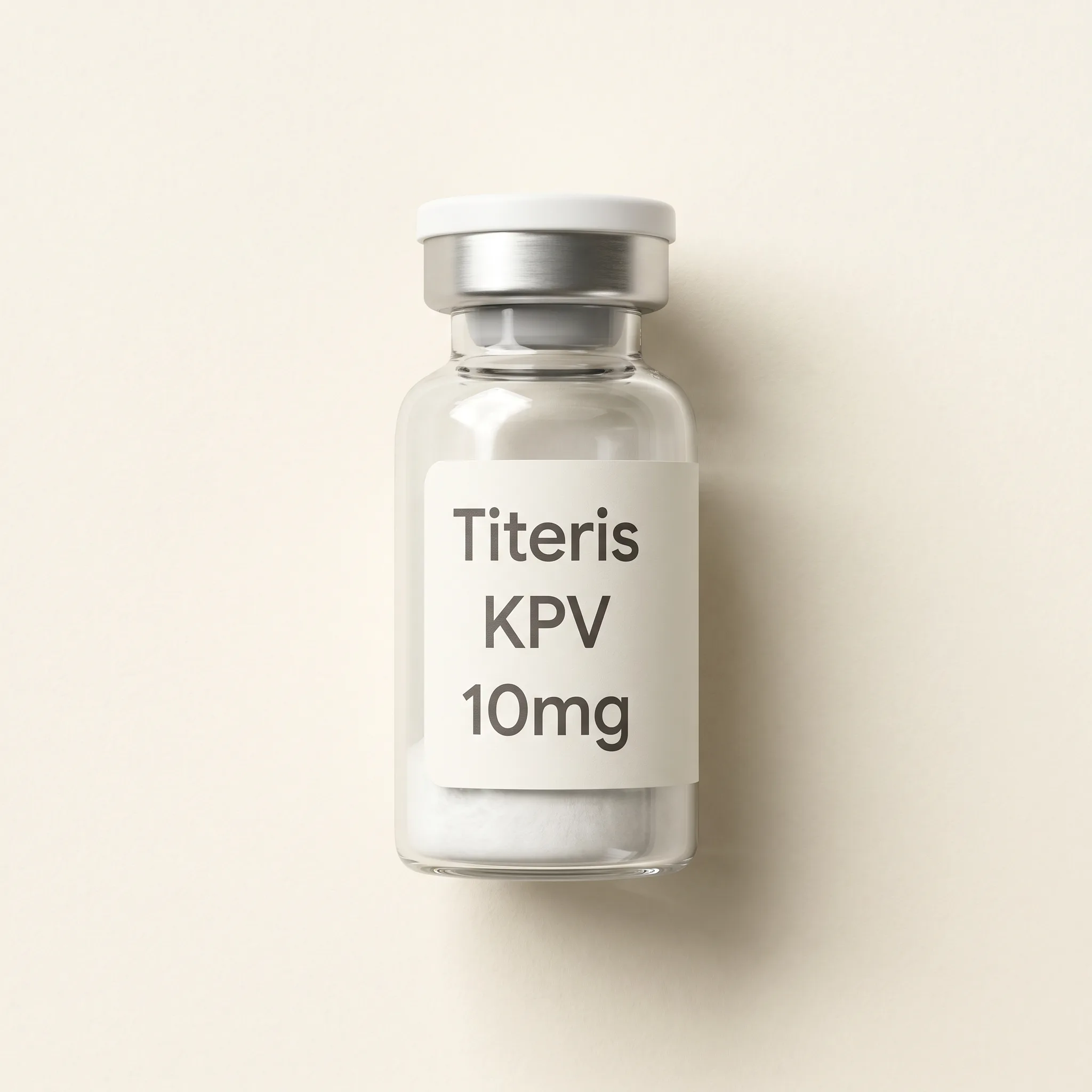
KPV10KPV, 10mg
Supplied as a lyophilised vial for laboratory research use only.
£24.99 Contact us to orderSee our documentation policy for what supplier batch documentation covers, and our UK legal status page for the regulatory framing every listing follows.
Frequently asked
What is the difference between KPV and BPC-157?
BPC-157 is a 15-amino acid peptide derived from a gastric mucosal protein with primary research focus on tissue repair mechanisms and angiogenic pathways. KPV is a 3-amino acid C-terminal fragment of alpha-MSH with research focus on melanocortin receptor-mediated inflammatory signalling pathways. They have different sequences, different receptor targets, and different research applications. Neither is a licensed pharmaceutical product.
Why is the C-terminal fragment of alpha-MSH biologically active?
Alpha-MSH has two main pharmacophore regions: the N-terminal HFRW sequence responsible for potent melanocortin receptor binding, and the C-terminal KPV sequence that carries distinct biological activity relevant to inflammatory signalling. The KPV portion retains the ability to interact with melanocortin receptors and modulate downstream inflammatory pathways, making it a useful isolated fragment for researchers studying those specific interactions without the full alpha-MSH binding profile.
How is KPV prepared for laboratory use?
KPV is supplied as a lyophilised powder and requires reconstitution in a suitable solvent before use in in vitro experiments. Bacteriostatic water or sterile saline are common choices depending on the specific research application and cell culture system being used. The reconstituted solution should be handled according to standard laboratory protocols for peptide solutions.
Is KPV legal to buy in the UK?
As a research reference compound for in vitro laboratory use, KPV is supplied under a research-use-only framework. It is not a controlled substance and is not a licensed pharmaceutical product. It cannot be marketed, sold, or supplied for human use. Every listing on this site is for research use only.