Compound Guide
L-Carnitine: what it is biochemically and how it is used in laboratory research
A factual explanation of L-carnitine as a laboratory research compound: what it is biochemically, what role it plays in mitochondrial fatty acid transport, how it is used in cell culture research, and where it sits within UK regulatory frameworks. Supplied for research use only. Nothing here is instruction for human use.
L-Carnitine sold here is a research reference material supplied for in vitro and laboratory research purposes only. It is not a licensed pharmaceutical product and has not been approved by the MHRA for any clinical or therapeutic application in this form. Our products are not intended to diagnose, treat, cure, or prevent any disease or condition. Nothing on this page is instruction or invitation to administer this material to a human or animal.
What L-carnitine is
L-Carnitine is a quaternary ammonium compound biosynthesised from the amino acids lysine and methionine. Its primary biochemical function is the transport of long-chain fatty acids as acylcarnitine esters across the inner mitochondrial membrane into the mitochondrial matrix, where beta-oxidation takes place. This transport function is essential: without L-carnitine, long-chain fatty acids cannot cross the inner mitochondrial membrane and are not available as an energy substrate for mitochondrial beta-oxidation.
The mechanism involves the carnitine acyltransferase enzyme system. On the cytoplasmic side, carnitine palmitoyltransferase I (CPT-I) catalyses the transfer of the fatty acyl group from coenzyme A to carnitine, forming an acylcarnitine ester. This ester crosses the inner mitochondrial membrane via the carnitine-acylcarnitine translocase. On the matrix side, CPT-II regenerates the acyl-CoA for entry into beta-oxidation, releasing free carnitine which is shuttled back across the membrane. This cycle is the carnitine shuttle, and it is a central node in fatty acid metabolism that has been well characterised in the biochemical literature.
Short-chain and medium-chain fatty acids can cross the inner mitochondrial membrane without carnitine, which is why the carnitine-dependency of beta-oxidation applies specifically to long-chain fatty acids. This distinction is relevant to how L-carnitine functions in experimental systems that use different fatty acid substrates.
As a laboratory compound, L-carnitine is used in basic research on mitochondrial function, fatty acid metabolism, and cell biology. It is not a pharmaceutical product in the therapeutic sense in this context. The regulatory categories for L-carnitine as a laboratory research compound, as a nutritional supplement, and as a licensed medicine for primary carnitine deficiency are distinct, and the compound supplied here falls in the first category only.
What the research literature shows about L-carnitine
L-Carnitine has a very broad biochemical and clinical research literature, which reflects both its central role in fatty acid metabolism and the range of contexts in which that role has been investigated.
- Mitochondrial fatty acid transport. The role of L-carnitine as an essential transport molecule for long-chain fatty acids is biochemically well established. The carnitine acyltransferase enzymes are thoroughly characterised, and the carnitine shuttle mechanism is standard content in biochemistry curricula. This is the foundational knowledge base for L-carnitine research.
- Primary carnitine deficiency. Genetically determined primary carnitine deficiency, caused by mutations in the SLC22A5 gene encoding the high-affinity carnitine transporter OCTN2, causes severe fatty acid metabolism disorders. L-Carnitine is licensed as a medicine for this condition. This clinical application concerns a specific, rare genetic disorder and does not extend to any general supplementation claim.
- Sports physiology research. L-Carnitine has been investigated in studies on endurance performance and muscle energy metabolism. The literature in this area is mixed, which is common for compounds investigated in healthy populations where baseline carnitine levels are typically adequate. This area of research is distinct from the mitochondrial biology laboratory applications described below.
- Cell culture supplementation. L-Carnitine is used as a supplement in cell culture media to support mitochondrial beta-oxidation in vitro, particularly in experiments with adipocytes and muscle cells where fatty acid metabolism is the subject of study. This is the most relevant application for laboratory researchers.
- Fatty acid oxidation assays. L-Carnitine is used as a substrate in beta-oxidation assay systems, allowing researchers to quantify the rate of fatty acid oxidation in cell or tissue preparations. As a reference material with defined identity, it supports reproducible assay conditions.
L-Carnitine as a laboratory compound is not the same as L-carnitine nutritional supplements for oral consumption or the pharmaceutical formulation for primary carnitine deficiency. The laboratory compound does not meet pharmaceutical quality standards. The research uses described above are in vitro and preclinical contexts and do not constitute clinical evidence for any supplementation or therapeutic claim.
UK regulatory status
L-Carnitine has multiple regulatory categories in the UK depending on its intended use and formulation. As a licensed medicine for primary carnitine deficiency, it requires a prescription. As an oral nutritional supplement, it is available over the counter. As a laboratory research compound supplied for in vitro research purposes, it falls under a different regulatory category from either of those.
The L-carnitine in our catalogue is supplied strictly as a research reference material for laboratory use. It is not licensed for clinical use in this form, does not meet pharmaceutical quality standards for human administration, and is not marketed or supplied for any purpose other than laboratory research. The MHRA regulates medicines; a laboratory research material is a different category, and the distinction matters for how this compound can lawfully be supplied and used.
Our UK legal status page provides a general overview of the regulatory framework relevant to research compounds. For specific legal questions about any compound, independent legal advice from a solicitor experienced in UK medicines regulation is appropriate.
Storage, handling, and stability
L-Carnitine is a stable compound relative to many peptides. As supplied in aqueous solution for laboratory use, it should be stored at 4 degrees Celsius and protected from light. The solution should not be frozen repeatedly, as freeze-thaw cycles can degrade stability over time. If aliquoting is needed for long-term storage, preparing single-use aliquots and freezing them at minus 20 degrees Celsius is the recommended approach.
Standard laboratory precautions apply when handling the compound: protective gloves, a lab coat, and eye protection where appropriate. As a research reference material, it does not carry a pharmaceutical-grade safety data sheet. Researchers operate according to their institutional safety protocols.
L-Carnitine in aqueous solution is not a hazardous chemical at laboratory concentrations. Disposal of unused solution should follow institutional guidelines for laboratory chemical waste in accordance with UK environmental regulations. The institution's chemical safety officer can confirm the appropriate disposal route.
Research context: L-carnitine in basic research
L-Carnitine occupies an interesting position in laboratory research because it is a naturally occurring compound with a well-defined biochemical function, unlike many synthetic research peptides that are novel analogues without endogenous equivalents. Its role in the carnitine shuttle is not disputed. This gives researchers working with L-carnitine a defined mechanism to investigate and a clear experimental logic for its inclusion in fatty acid metabolism studies.
In cell culture, L-carnitine supplementation is used to support beta-oxidation experiments in cell lines or primary cultures that may have limited endogenous carnitine production. This is particularly relevant in serum-free culture conditions where supplementation from serum is absent, or in high-throughput experiments where consistent metabolic conditions matter for reproducibility.
For basic mitochondrial biology research, L-carnitine is often used alongside other metabolic substrates and inhibitors to probe specific steps in the fatty acid oxidation pathway. The availability of a defined compound with reliable identity and consistency is important for the reproducibility of these assay systems. A research material that varies in composition between batches introduces a confounding variable that is difficult to control.
Laboratory results obtained with L-carnitine are typically in cell or tissue model systems. In vitro results characterise the biochemistry of the molecule in the model used, and the findings are subject to the limitations of that model, including its relevance to intact organism physiology. Researchers interpreting their own results are aware of these limitations; this page simply notes them as context for what "research use" means in this field.
Where documentation for available batches is provided by our supplier, it is noted directly on the listing. Documentation is associated with specific batches, not with the product line as a whole. Further information is on our documentation policy page.
L-Carnitine in our catalogue
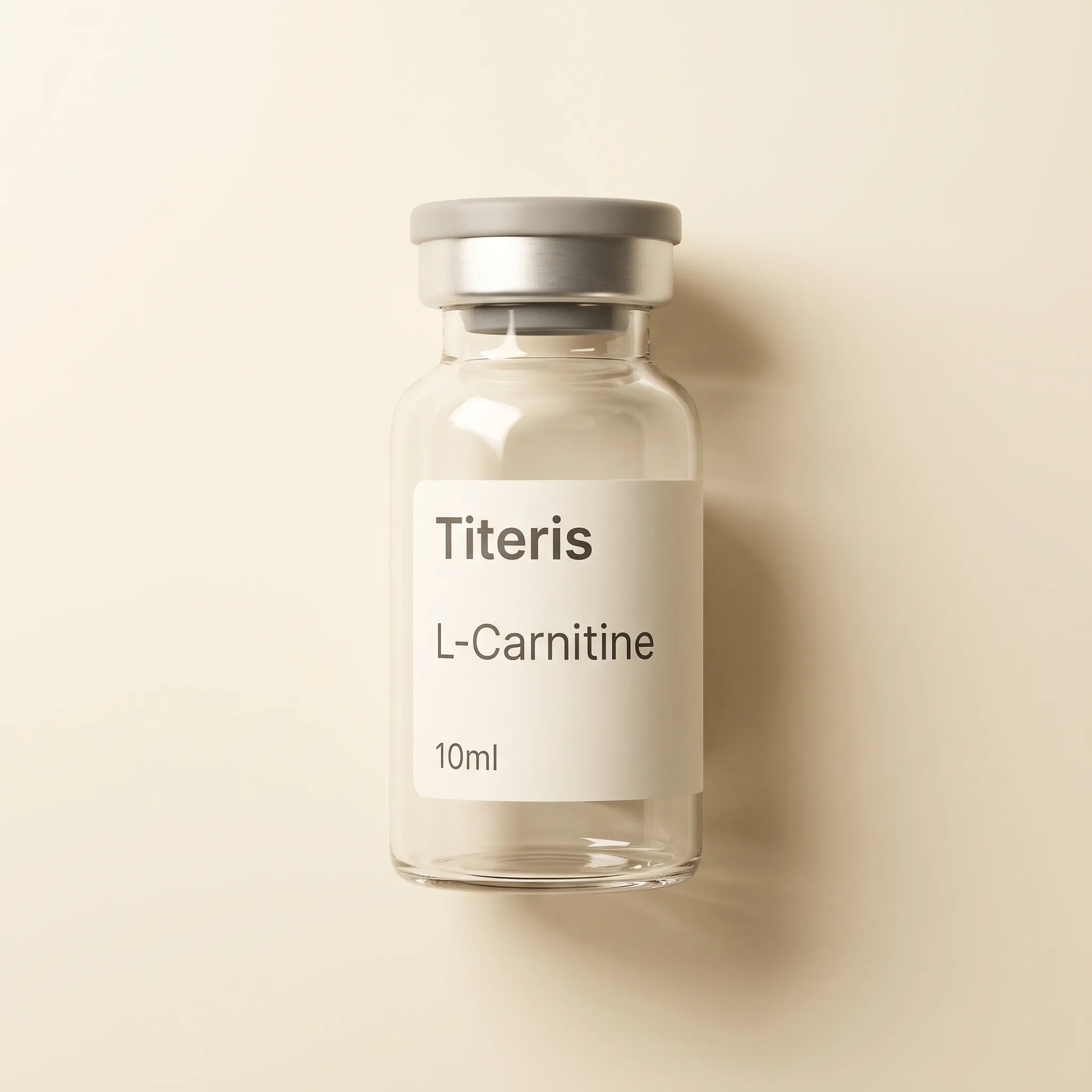
LCL-Carnitine, 10ml
Supplied as an aqueous solution for laboratory research use.
£19.99 Contact us to orderFor laboratory use only. Not for human or veterinary consumption. See our UK legal status page and our documentation policy.
Frequently asked
Why is L-carnitine both a nutritional supplement and a laboratory compound?
L-Carnitine has different product categories depending on intended use and quality standards. As an oral nutritional supplement, it is available over the counter and is subject to food supplement regulations. As a licensed medicine for primary carnitine deficiency, it requires a prescription and meets pharmaceutical standards. As a laboratory compound for in vitro research, it is a research reference material with a different regulatory status. These categories do not overlap. The compound supplied here is the third category only.
What is the difference between L-carnitine and acetyl-L-carnitine?
Acetyl-L-carnitine is an acetylated form of L-carnitine with different biochemical properties. It has an acetyl group attached to the hydroxyl position, which changes its solubility, its ability to cross lipid membranes including the blood-brain barrier in animal models, and its biochemical activity. Both have distinct research profiles, and they are not interchangeable for research purposes. The compound we supply is L-carnitine, not the acetylated form.
How is L-carnitine used as a laboratory compound?
As a supplement in cell culture media to support mitochondrial beta-oxidation, particularly in adipocyte and muscle cell experiments; as a substrate in beta-oxidation assay systems to quantify fatty acid oxidation rates; in mitochondrial function studies where carnitine shuttle activity is being investigated; and as a reference compound in biochemical characterisation experiments. The specific use is determined by the researcher's experimental objectives.
How is it supplied?
As an aqueous solution in a 10ml vial for laboratory use. It does not require reconstitution. The solution should be stored at 4 degrees Celsius and protected from light. It is not supplied for human consumption and does not meet pharmaceutical quality standards for any therapeutic application.