Compound Guide
Lemon Bottle: what the proprietary lipolytic blend is and what the research shows
A plain explanation of Lemon Bottle: what is known about this proprietary lipolytic blend, what cannot be independently verified about its composition, and what the research literature says about lipolytic compounds in general. Transparency about what is known and what is not is central to this page. For research use only.
Lemon Bottle sold here is a research reference material for in vitro and laboratory research purposes only. It is not licensed for human administration, is not a pharmaceutical product, and has not been approved by the MHRA for any clinical or therapeutic use. It is not a medicine, supplement, or food product.
Important notice: Lemon Bottle is a proprietary lipolytic compound blend. Its exact composition is not publicly documented and cannot be fully verified by any independent source known to us. We describe what is known about compounds in similar research contexts without making claims about the specific composition of this blend that we cannot substantiate.
What Lemon Bottle is
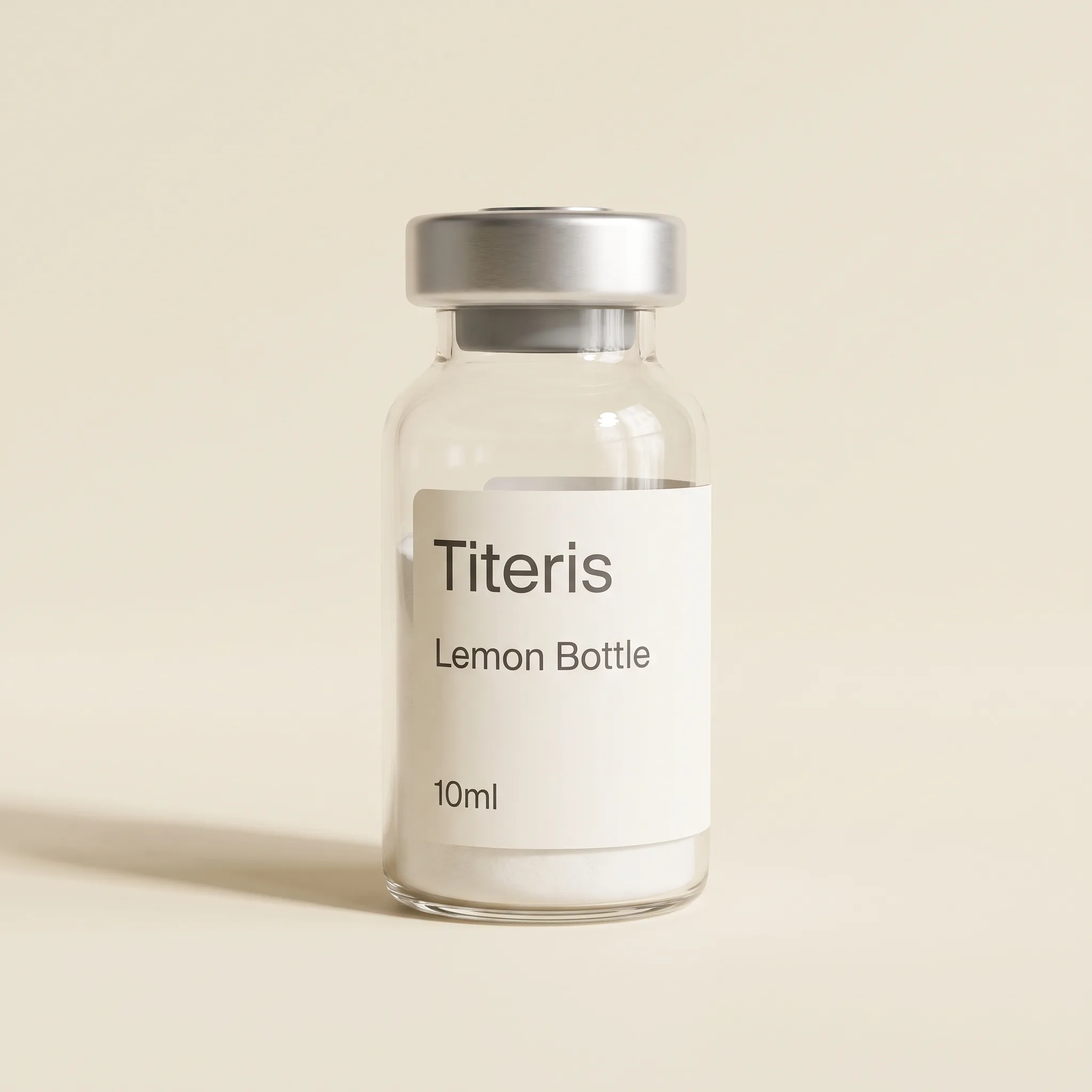
Lemon Bottle is a proprietary lipolytic blend positioned in aesthetic research and body contouring research contexts. Reports from the market suggest it contains phosphatidylcholine, deoxycholate, and other putatively lipolytic compounds, but this composition has not been independently verified and the formulation details are not publicly documented by the manufacturer.
For researchers, this creates a methodological constraint that is worth stating clearly at the outset: without a disclosed, verified composition, specific dose-response relationships for individual ingredients cannot be established, and reproducibility across different sources of the material cannot be assured. This is not a statement about the presence or absence of biological activity in the blend; it is a methodological observation about what kind of research can and cannot be conducted with an undisclosed composition.
Lemon Bottle is not a licensed medicine or medical device in the UK for human use. It is offered here as a research reference material for laboratory use.
Researchers considering Lemon Bottle for a study protocol should assess whether the proprietary composition is compatible with their experimental design requirements. Studies requiring defined, characterised reference compounds for dose-response work would be better served by chemically defined lipolytic compounds with known composition. Studies examining the combined activity of a proprietary formulation as a whole, without needing to attribute effects to specific components, may find this material appropriate.
What the research literature shows about lipolytic compounds
Since Lemon Bottle is a proprietary blend, this section describes the scientific context using chemically defined lipolytic compounds that have their own research literature:
Phosphatidylcholine research
Phosphatidylcholine (PC) is a well-studied lipolytic agent with a substantial research literature. PC is the major phospholipid in eukaryotic cell membranes and is essential for membrane integrity and VLDL secretion from the liver. In research into injection lipolysis, phosphatidylcholine has been studied for fat pad reduction in animal models and in controlled clinical settings. The mechanism in lipolytic contexts involves PC acting as a detergent-like agent at high concentrations, disrupting cell membranes of adipocytes. The research on PC as a defined molecule is distinct from research into proprietary blends that may contain PC as one component among several.
Deoxycholate research
Deoxycholic acid is a secondary bile acid that has been studied as a lipolytic agent for submental fat reduction. Kybella (deoxycholic acid) received FDA approval in the United States for the reduction of submental fat (fat under the chin). The mechanism involves cell membrane disruption in adipocytes. The research supporting Kybella's approval relates to that specific product at defined doses, in a defined clinical context, for a specific anatomy. Research on deoxycholic acid as a defined compound exists and is separate from any research on proprietary blends containing deoxycholate.
Injection lipolysis research more broadly
The scientific literature on injection lipolysis distinguishes between research into chemically defined single compounds and research into proprietary blends. The evidence base for the latter is methodologically weaker because composition variability makes reproducibility difficult. Reviews of the injection lipolysis literature generally note this distinction and recommend that researchers use defined reference compounds where possible for mechanistic studies.
Adipocyte cell models
In vitro studies examining lipolytic activity typically use adipocyte cell lines or primary adipocyte cultures. These cell models are the standard approach for initial characterisation of putative lipolytic compounds. Endpoints in such assays include glycerol release (as a marker of triglyceride breakdown), cytotoxicity assays to distinguish lipolytic effects from general cell toxicity, and downstream signalling markers. The choice of cell model and assay endpoints significantly affects how results are interpreted.
Using Lemon Bottle as a research material: practical considerations
Researchers intending to use Lemon Bottle as a research material should consider the following before designing their protocol:
The proprietary composition means that any result observed with Lemon Bottle cannot be attributed to a specific component without additional experiments using defined single-compound controls. If attribution to phosphatidylcholine, deoxycholate, or any other specific ingredient is required for the research question, using the defined compounds alongside any Lemon Bottle conditions is the appropriate design.
Reproducibility is always a consideration with undefined blends. If two batches of a proprietary blend differ in composition, results may not replicate across batches. Researchers using any proprietary blend should document the batch used and acknowledge this as a limitation of the study design.
The evidence hierarchy for proprietary blends is generally below that for defined compounds: review articles will typically weight single-compound clinical data more heavily than data for undefined proprietary formulations. Researchers should frame any results from Lemon Bottle experiments accordingly.
For researchers whose protocol specifically requires characterised, defined reference compounds, our catalogue includes other lipolytic and metabolic research materials. See our full catalogue for available options.
Mechanisms of lipolysis in adipocyte research
To put Lemon Bottle's research context properly, it helps to understand how researchers study lipolysis at the cellular level. Lipolysis is the enzymatic hydrolysis of triglycerides stored in adipocytes into glycerol and free fatty acids, which are then released into circulation. The primary intracellular pathway involves hormone-sensitive lipase (HSL) and adipose triglyceride lipase (ATGL), both regulated by cAMP-dependent phosphorylation cascades.
When researchers evaluate putative lipolytic compounds in vitro, the standard model uses differentiated adipocytes: typically 3T3-L1 cells differentiated into fat cells, or primary adipocytes isolated from fat tissue. The usual readout is glycerol release into the culture medium, which serves as a proxy for triglyceride breakdown. A lipolytic compound would increase glycerol release above a vehicle control. Cytotoxicity assays (such as LDH release or cell viability staining) are always run in parallel, because a compound that kills cells will also release triglycerides, mimicking a lipolytic effect without actually stimulating the lipolysis pathway.
This distinction is methodologically important for lipolytic blends like Lemon Bottle, where the mechanism may involve detergent action on cell membranes at certain concentrations rather than receptor-mediated intracellular lipolysis. Both modes can produce glycerol release, but they represent fundamentally different biological events. Careful experimental design, with appropriate concentration ranges and cytotoxicity controls, is needed to distinguish between true lipase-pathway activation and membrane-disruption effects.
For researchers designing assays with Lemon Bottle or any lipolytic blend, the following controls are typically included: a positive control (for example, isoproterenol to stimulate beta-adrenergic receptor-mediated lipolysis), a negative control (vehicle only), and ideally single-component conditions if the composition allows. Where composition is not fully known, interpretation will be limited to the blend's overall effect rather than mechanism attribution.
The research utility of a proprietary blend like Lemon Bottle is greatest in contexts where the research question is specifically about the blend as supplied, rather than about isolating the contribution of individual components. Product characterisation studies, stability studies, or comparative studies against other defined lipolytic compounds are examples of contexts where using the actual blend is the relevant choice.
UK regulatory status
Lemon Bottle is not a licensed medicine or medical device for human use in the UK. It has no MHRA approval for any clinical indication. Supply for human cosmetic or aesthetic injection purposes would be outside the research compound supply framework and potentially constitute unlicensed medicine supply under UK law.
Titeris supplies Lemon Bottle exclusively as a research reference material for in vitro laboratory research. Nothing on this site is an instruction or invitation to administer this material to a human or animal. Our UK legal status page provides further context.
Lemon Bottle in our catalogue
LBLemon Bottle, 10ml
Proprietary lipolytic blend, supplied for laboratory research use only.
£29.99 Contact us to orderFor laboratory use only. Not for human or veterinary consumption. Proprietary blend: composition not independently verified. See our documentation policy and UK legal status page.
Frequently asked
What is in Lemon Bottle?
Lemon Bottle is a proprietary blend. The exact composition is not publicly documented by the manufacturer. Reports suggest it contains phosphatidylcholine, deoxycholate, and other components, but we cannot independently verify the specific composition. We do not make claims about the composition that we cannot substantiate from independent sources.
How does Lemon Bottle differ from defined lipolytic compounds?
Defined compounds like phosphatidylcholine or deoxycholic acid have known molecular structures, their own peer-reviewed research literature, and in some markets pharmaceutical approvals for specific indications. Lemon Bottle is a proprietary blend without a disclosed composition. For mechanistic studies requiring defined reference compounds with known structure, the individual compounds would be more appropriate. For studies examining the overall activity of the proprietary formulation, Lemon Bottle as supplied is the relevant material.
Is Lemon Bottle approved for human use in the UK?
No. Lemon Bottle is not a licensed medicine or medical device in the UK. It is not approved by the MHRA for any clinical indication. It is supplied here as a research reference material for laboratory use only.
How is Lemon Bottle supplied?
As a 10ml solution for laboratory use only. Not as a pharmaceutical product, supplement, or food. For research use only. Proprietary blend: composition not independently verified.