Compound Guide
LL-37: what the antimicrobial cathelicidin peptide is and what the research shows
A factual explanation of LL-37: what the sole known human cathelicidin peptide is structurally, what role it plays in innate immune defence, and what the research literature in immunology, dermatology, and infection biology actually shows. Supplied here strictly as a research reference compound. Nothing on this page is instruction for human use.
LL-37 sold here is a research reference compound supplied for in vitro and laboratory research purposes only. It is not licensed for human administration and has not been approved by the MHRA for any clinical or therapeutic use. The biological activities described on this page are from published in vitro and preclinical research literature and are referenced for scientific context only. Nothing on this page is instruction or endorsement of human use of this compound.
What LL-37 is
LL-37 is the only cathelicidin peptide identified to date in the human genome. It is a 37-amino acid cationic, amphipathic peptide derived by proteolytic cleavage of the C-terminal region of the precursor protein hCAP18 (human cationic antimicrobial protein 18). The name LL-37 derives from the two leucine residues (LL) at the N-terminus of the mature peptide and its total length of 37 amino acids.
LL-37 belongs to the class of antimicrobial peptides (AMPs), which are short cationic peptides that form part of the innate immune defence across virtually all multicellular organisms. In humans, LL-37 is expressed in neutrophils, where it is stored in specific granules and released upon activation. It is also expressed in epithelial cells of the skin, respiratory tract, gastrointestinal tract, and genitourinary tract, where it contributes to the chemical barrier against microbial invasion.
The structural basis of LL-37's activity involves its amphipathic helical conformation when interacting with lipid bilayers. In aqueous solution, LL-37 is largely unstructured. Upon contact with lipid membranes, particularly those with the anionic lipid composition characteristic of bacterial membranes, it adopts an alpha-helical conformation and inserts into the membrane. This membrane interaction is the structural basis for its direct antimicrobial activity, though the precise mechanism of membrane disruption varies depending on peptide concentration and membrane composition.
Beyond its direct antimicrobial activity, LL-37 interacts with pattern recognition receptors, toll-like receptors, and formyl peptide receptors (particularly FPR2/ALX), which mediates its immunomodulatory functions. These receptor interactions give LL-37 a broader role in innate immunity than simple membrane disruption, contributing to its interest as a research subject in immunology and inflammation.
What the research has investigated
LL-37 has a substantial research literature spanning immunology, dermatology, infection biology, oncology, and wound healing. The compound's dual role as an antimicrobial and immunomodulatory molecule makes it a topic of broad interest.
- Antimicrobial activity. LL-37 shows in vitro antimicrobial activity against a broad range of bacteria, fungi, and viruses through membrane disruption and other mechanisms. These in vitro data are well characterised and represent the most direct and experimentally established aspect of LL-37 biology. It is worth noting that in vitro antimicrobial activity data do not straightforwardly predict in vivo efficacy, where factors like protease inactivation, serum binding, and pH affect activity.
- Immunomodulation. LL-37 interacts with toll-like receptors and other pattern recognition receptors, and modulates inflammatory signalling in cell models. The effects are context-dependent and can be either pro-inflammatory or anti-inflammatory depending on the experimental conditions, cell type, and concentration used. This complexity has made definitive characterisation of LL-37's immunomodulatory role challenging, and the cell-type specificity of its effects is an active area of investigation.
- Rosacea research. Elevated LL-37 levels in the skin of rosacea patients have been observed, and proteolytically processed forms of LL-37 (particularly KLK5-cleaved fragments) have been proposed to contribute to rosacea pathophysiology. This research line has generated interest in LL-37 processing and regulation as potential targets for understanding chronic inflammatory skin conditions.
- Wound healing and tissue regeneration. LL-37 has shown effects on keratinocyte migration and angiogenesis in animal models and cell studies, suggesting a role in tissue repair. These preclinical findings are the basis for research into LL-37's potential relevance to wound healing, though translation to clinical applications remains a research question rather than an established finding.
- Cancer cell biology. LL-37 has complex and context-dependent effects across different tumour cell lines. In some cancer cell models it shows antiproliferative activity; in others it can promote growth or invasion. This dual nature, reflecting the complexity of its receptor interactions and the heterogeneity of tumour cell biology, makes it an interesting research subject in cancer cell biology but precludes simple mechanistic conclusions.
- Gut microbiome and mucosal immunity. LL-37 expression in intestinal epithelial cells and its role in shaping the microbial environment of mucosal surfaces is an area of active research. The interaction between cathelicidin expression and microbiome composition is a topic with implications for understanding host-microbe relationships in health and disease.
The breadth of LL-37's research literature reflects both the fundamental importance of innate immune peptides and the compound's intrinsically interesting biology. It is not a compound with a single well-defined mechanism: its interactions with membranes, receptors, and signalling pathways make it a complex subject that continues to generate research questions.
UK regulatory status
LL-37 is not a licensed medicine in the UK and has no approved clinical application. It is not a controlled substance under the Misuse of Drugs Act. As a research reference compound for in vitro laboratory use, it is supplied under a research use only framework and is not subject to prescription requirements as a research material.
Titeris supplies LL-37 exclusively as a research reference compound for laboratory use. It is not marketed for human administration, purchasers confirm they are acquiring it for legitimate laboratory research purposes, and use is restricted to those aged 18 and over. Our UK legal status page provides a general overview of the regulatory framework applicable to research compounds. For specific legal questions, independent legal advice is appropriate.
Storage, handling, and stability
LL-37 as a lyophilised peptide should be stored at minus 20 degrees Celsius in the dry state, protected from light. The cationic, amphipathic nature of LL-37 means it can adsorb to certain surfaces and can aggregate in aqueous solution under some conditions, particularly at higher concentrations. These properties are relevant to laboratory handling and experimental design.
For reconstitution, a low-adsorption vial and careful pipetting practices help minimise loss of material through surface adsorption. Dilute solution in sterile buffer or bacteriostatic water is appropriate for most laboratory applications. The reconstituted solution should be stored at 4 degrees Celsius and used promptly. Preparing aliquots for single-use thaw avoids degradation from repeated freeze-thaw cycles. For experiments requiring LL-37 at defined concentrations, freshly prepared solutions from well-characterised stocks are preferable to solutions that have been stored for extended periods after reconstitution.
Standard laboratory precautions for biologically active peptides apply: protective gloves, a lab coat, and eye protection where appropriate. As a research reference compound, LL-37 does not carry a pharmaceutical-grade safety data sheet. Researchers follow institutional protocols and professional judgement. Disposal of unused compound follows institutional guidelines for chemical and biological waste in accordance with UK environmental regulations.
Research context: LL-37 in basic immunology and infection research
LL-37 is a research reference material for laboratory use. It is an endogenous human peptide, which gives it a different character from purely synthetic compounds: it exists naturally in the human body, it has evolved functions in innate immunity, and its biology is not purely theoretical. This makes it scientifically interesting but also means that in vitro experiments must be interpreted with appropriate attention to the differences between cell culture conditions and the intact biological context where LL-37 normally operates.
In the laboratory, LL-37 is used for direct antimicrobial assays characterising its activity against specific bacterial or fungal strains, for membrane disruption studies using lipid bilayer models, for receptor activation assays characterising its interactions with FPR2/ALX and toll-like receptors, and for cell biology experiments examining its effects on keratinocyte migration, neutrophil chemotaxis, and other cellular processes.
The amphipathic helical structure of LL-37 makes it an interesting subject for structural biology studies examining how peptide structure determines membrane interaction and antimicrobial specificity. As a reference compound with defined chemical identity, it is suitable for this kind of biophysical characterisation research.
Titeris describes what is established about LL-37 in the published literature without overstating the certainty or translational readiness of any specific finding. The in vitro antimicrobial data are solid; the in vivo relevance and any therapeutic potential are research questions, not established facts. We supply the compound to support the laboratory research that explores these questions rigorously.
Where documentation for available batches is provided by our supplier, it is noted on the listing. Documentation is batch-specific, not product-line-specific. See our documentation policy for further detail.
LL-37 in our catalogue
LL37See our documentation policy and our UK legal status page for the regulatory framing every listing follows.
Frequently asked
What is an antimicrobial peptide?
Antimicrobial peptides (AMPs) are short cationic peptides that form part of the innate immune defence across virtually all multicellular organisms. They typically act through disruption of microbial membranes, though some also have receptor-mediated immunomodulatory functions. AMPs are found in humans (where LL-37 is the primary cathelicidin), insects, frogs, plants, and many other organisms. Their evolutionary conservation reflects their fundamental importance in early-line defence against infection.
What is the difference between LL-37 and defensins?
LL-37 and defensins are both antimicrobial peptides involved in innate immunity, but they belong to different structural families. Defensins are characterised by their beta-sheet-rich structure stabilised by disulfide bonds, and they fall into alpha, beta, and theta subfamilies. LL-37 belongs to the cathelicidin family, with a different structural organisation based on an alpha-helical amphipathic conformation in lipid environments. They have partially overlapping antimicrobial spectra and both contribute to innate immune defence, but their mechanisms and receptor interactions differ in important ways that researchers in the field investigate and distinguish.
How is LL-37 as a research compound supplied?
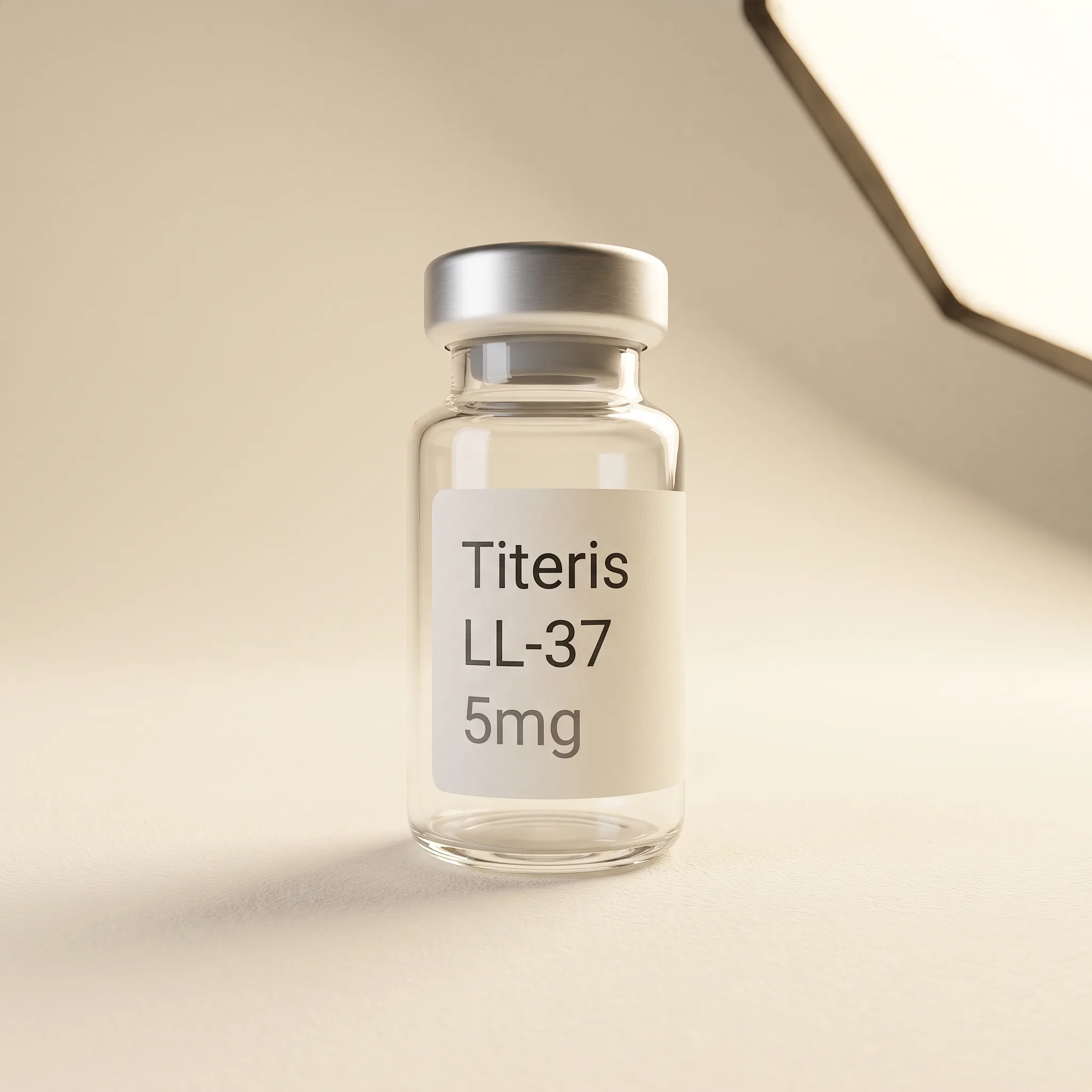
As a lyophilised peptide in a sealed borosilicate glass vial (5mg per vial). Reconstitution for laboratory use requires bacteriostatic water or appropriate sterile buffer depending on the experimental application. The reconstituted solution should be handled with attention to the compound's tendency to adsorb to surfaces. Batch documentation status, where available from our supplier, is stated directly on the listing.
Why does LL-37 have both pro-inflammatory and anti-inflammatory effects in different studies?
LL-37 interacts with multiple receptor systems including toll-like receptors, formyl peptide receptor 2 (FPR2/ALX), and potentially others, and the net outcome depends on which receptors predominate in the specific cell type, the concentration of LL-37 applied, and the inflammatory context. At some concentrations and in some cell types, FPR2/ALX activation is the dominant signal and the outcome is pro-resolving (tending toward reduced inflammation). In other contexts, toll-like receptor interactions dominate and the outcome is pro-inflammatory. This context-dependency is a genuine biological complexity, not an experimental artefact, and makes LL-37 an interesting subject for mechanistic immunology research.