Compound Guide
MOTS-C: what it is, and what the research actually shows
A plain, cited explanation of MOTS-C: its mitochondrial origin, the 2015 Cell Metabolism paper that identified it, what animal studies have found on metabolic regulation and exercise capacity, and where the human evidence actually stands. Research use only. Nothing here is instruction for human use.
What MOTS-C is
MOTS-C (Mitochondrial-derived peptide C) is a 16-amino-acid peptide encoded within the mitochondrial 12S ribosomal RNA gene. That's unusual: most peptides used in research are encoded by the nuclear genome. MOTS-C's mitochondrial origin places it in a relatively new and small class of molecules called mitochondrial-derived peptides (MDPs), alongside humanin and SHLP1-6.
It was first characterised and named by Lee et al. in a 2015 paper published in Cell Metabolism: "The Mitochondrial-Derived Peptide MOTS-C Promotes Metabolic Homeostasis and Reduces Obesity and Insulin Resistance." That paper is the starting point for essentially all subsequent research into the molecule.
The sequence MRWQEMGYIFYPRKLR was identified through bioinformatic analysis of alternative reading frames within the 12S rRNA gene. The full explanation of how a mitochondrial RNA sequence encodes a functional peptide is an active area of molecular biology research in its own right.
What the research has actually studied
The MOTS-C literature is predominantly preclinical, with a mix of animal studies and in vitro cell work. Human data is limited. The research focus has been on three main areas.
Metabolic regulation and insulin sensitivity
The original Lee et al. 2015 paper used mouse models to show that MOTS-C administration improved insulin sensitivity and reduced high-fat-diet-induced obesity. The proposed mechanism involved activation of AMPK (AMP-activated protein kinase), a cellular energy sensor that promotes glucose uptake and fatty acid oxidation. Subsequent work extended these findings into aged mouse models, where MOTS-C appeared to restore metabolic function closer to that of younger animals.
Exercise and physical performance
A 2019 study (Reynolds et al., published in Nature Communications) found that MOTS-C is released by muscle during exercise in humans and that circulating MOTS-C levels correlate with exercise intensity. The same group showed that exogenous MOTS-C administration in old mice improved exercise capacity and muscle function. This positioned MOTS-C within the "exerkine" research area: peptides and proteins the body releases during exercise that may mediate some of its metabolic benefits.
Ageing and longevity research
Circulating MOTS-C levels decline with age in humans. Studies measuring MOTS-C in centenarians found higher levels than in younger old controls, generating interest in whether MOTS-C signalling is involved in exceptional longevity. These are correlational observations, not causal data.
Human evidence
The human evidence for MOTS-C is much thinner than its animal evidence base. The Reynolds 2019 paper provides human data on endogenous MOTS-C levels, but clinical intervention trials studying administered MOTS-C in humans are limited. This is an emerging research area with preclinical data that is interesting enough to generate sustained research interest, but not yet a compound with a human RCT evidence base comparable to the GLP-1 agonists.
UK regulatory status
MOTS-C is not a controlled substance under UK law. It's not a licensed medicine and has not been reviewed by the MHRA for any clinical application. As a research reference compound for in vitro laboratory use, it can be sold, bought, and possessed as a research material, subject to the constraint that it cannot be marketed for human or veterinary use. See our UK legal status page for the broader regulatory context.
MOTS-C in our catalogue
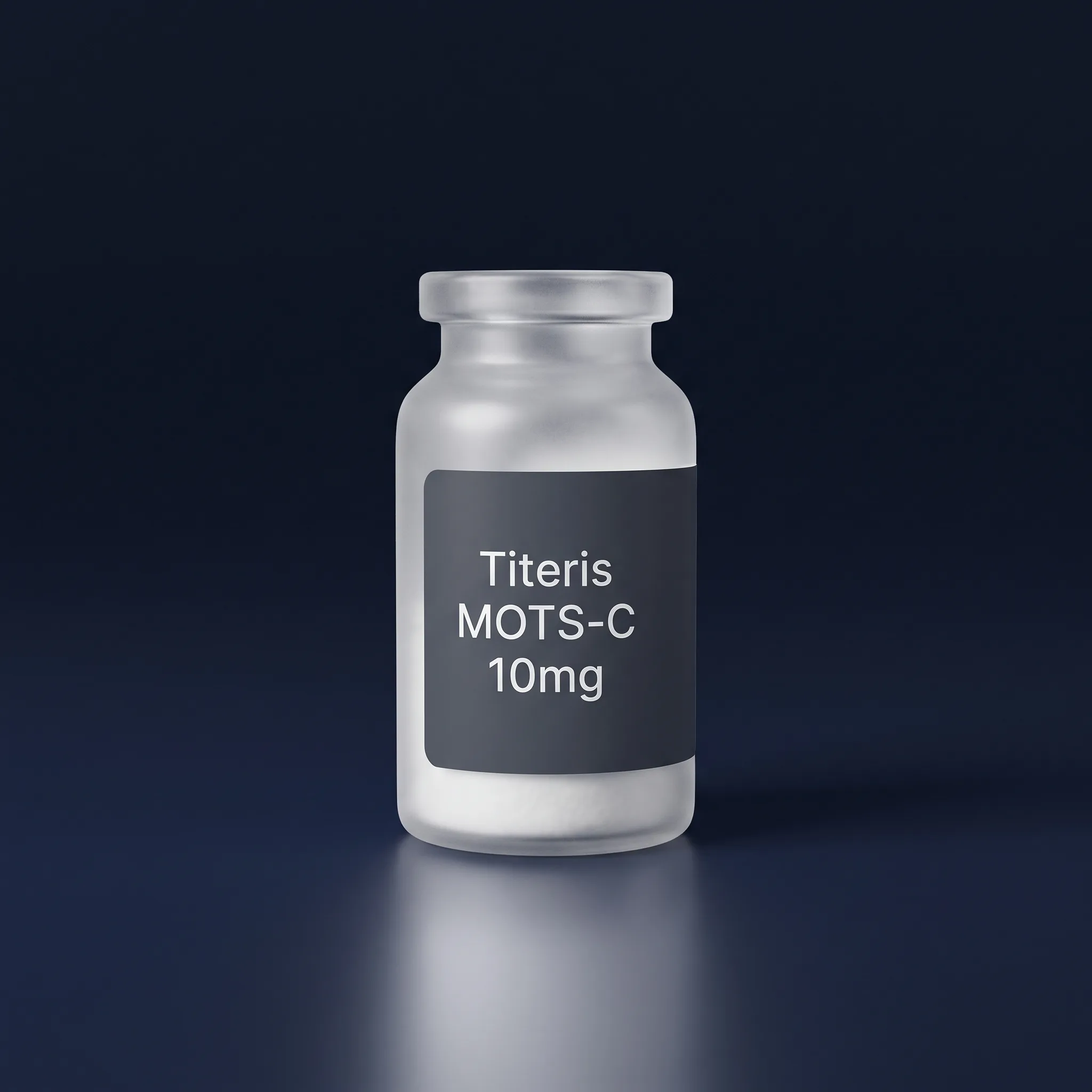 MS-10MS-20MS-40
See our documentation policy for what supplier batch documentation covers, and our UK legal status page for the regulatory framing every listing follows.
Frequently asked
Why is MOTS-C described as a mitochondrial peptide?
Its sequence is encoded in the mitochondrial genome rather than the nuclear genome, specifically within the 12S ribosomal RNA gene of mitochondrial DNA. This is unusual: almost all known human peptides are nuclear-encoded. MOTS-C belongs to a small class of mitochondrial-derived peptides (MDPs) that researchers have identified in recent years, including humanin and the SHLPs. The mitochondrial origin is part of what makes it an active area of research interest.
What did the original 2015 discovery paper find?
Lee et al. (Cell Metabolism, 2015) identified MOTS-C using bioinformatic analysis of alternative reading frames in the mitochondrial 12S rRNA gene. In mouse models, MOTS-C administration improved insulin sensitivity and reduced obesity induced by a high-fat diet, with AMPK activation proposed as the primary mechanism. The paper is the foundational reference for the field.
Is there human clinical trial data for MOTS-C?
Limited. The Reynolds et al. 2019 Nature Communications paper measured endogenous MOTS-C in humans during exercise and found circulating levels correlate with exercise intensity. Centenarian studies have found higher circulating MOTS-C versus younger-old controls. Intervention trials administering MOTS-C to humans are not yet available in the published literature at scale. It's a preclinical-dominant field as of 2026.
How is it supplied?
As a lyophilised white powder in a sealed glass vial, available in 10mg, 20mg, and 40mg sizes. Supplied without solvent for laboratory research use. Batch documentation status is stated directly on the listing page where available from our supplier.