Compound Guide
NAD+: what it is, and what the research actually shows
A plain, cited explanation of NAD+ (nicotinamide adenine dinucleotide): its central role in cellular energy metabolism, what the literature shows about NAD+ decline with age, the sirtuin and PARP research, and what precursor supplementation studies have found. Research use only. Nothing here is instruction for human use.
What NAD+ is
NAD+ (nicotinamide adenine dinucleotide) is a coenzyme found in every living cell. It's not a peptide; it's a dinucleotide: two nucleotides joined by a phosphate bond. The molecule exists in two forms, NAD+ (oxidised) and NADH (reduced), and cycles between them during metabolic reactions. This redox cycling is central to how cells extract energy from glucose and fatty acids, and to how the mitochondrial electron transport chain generates ATP.
Describing NAD+ as "a longevity molecule" or a "metabolism molecule" isn't wrong, but it understates how fundamental it is. It's a cofactor required by hundreds of enzymes. Without it, core metabolic processes can't proceed. The reason it's become a research target is a specific finding: NAD+ levels decline with age in both animal models and human tissue samples, and this decline appears to have consequences for cellular function that researchers are trying to understand and potentially reverse.
What the research has studied
The age-related decline
Multiple studies in both rodent and human tissue have documented that NAD+ concentrations fall significantly with age. Massudi et al. (2012, PLOS ONE) measured NAD+ in human liver, skeletal muscle, and subcutaneous fat and found progressive decline from early adulthood. Camacho-Pereira et al. (2016, Cell Metabolism) showed that NAD+ depletion in aged mice is linked to loss of CD38 NADase inhibition, identifying a specific mechanism. The consistency across species and tissues has made this one of the more reproducible findings in ageing biology.
Sirtuins and PARP enzymes
Two enzyme families require NAD+ as a substrate rather than just a cofactor: sirtuins (SIRT1-7) and PARPs (poly-ADP-ribose polymerases). Sirtuins are deacylases that regulate gene expression, mitochondrial biogenesis, and stress responses, and their activity falls when NAD+ levels fall. David Sinclair's lab at Harvard has published extensively on sirtuin biology and its connection to ageing, most accessibly in the 2019 book Lifespan (though the underlying peer-reviewed papers in Cell and Nature Metabolism are the primary references). PARP enzymes are involved in DNA damage repair, and chronic DNA damage responses in aged cells consume NAD+ faster than it can be replenished.
Precursor supplementation research
Because NAD+ itself doesn't cross cell membranes readily, most supplementation research has used precursors: NMN (nicotinamide mononucleotide) and NR (nicotinamide riboside). Both are converted to NAD+ intracellularly. Rajman et al. (2018, Cell Metabolism) summarised the animal data comprehensively. NMN has been studied in human trials: Igarashi et al. (2022, NPJ Aging) reported increased NAD+ in skeletal muscle of older men with NMN supplementation over 12 weeks in a placebo-controlled trial. Yoshino et al. (2021, Science) found NMN increased NAD+ in post-menopausal women with prediabetes and improved muscle insulin signalling. These are small trials with promising signals, not large Phase 3 confirmatory data.
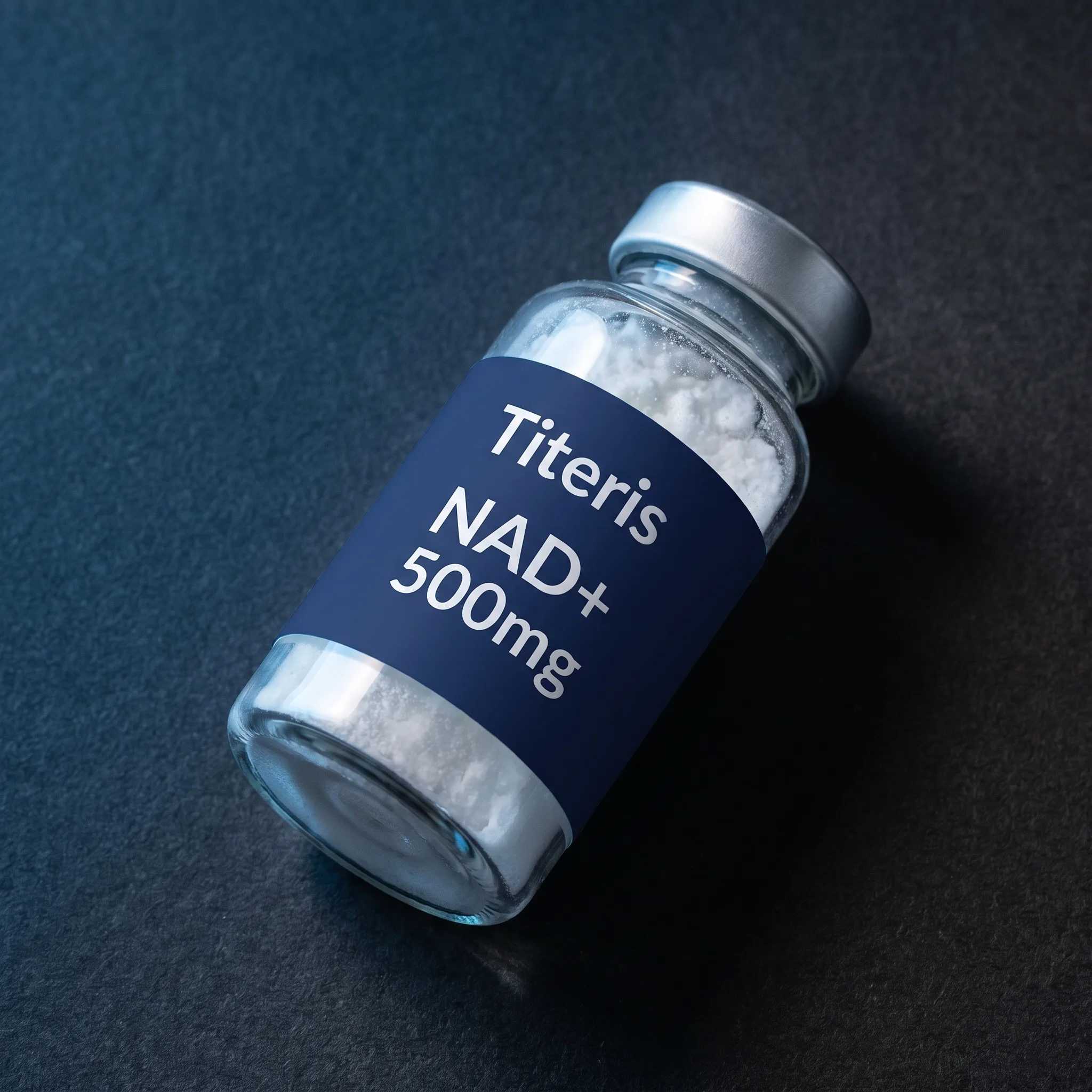
NAD+ itself, as a lyophilised compound for laboratory use, is a research tool for studying the coenzyme directly, its interactions with these enzyme pathways, and its stability and behaviour under various laboratory conditions.
UK regulatory status
NAD+ is not a controlled substance in the UK. NR (nicotinamide riboside) is available as a licensed food supplement. NAD+ as a research compound for laboratory use occupies a research-material regulatory category, not a supplement or medicine category. It cannot be marketed for human consumption. See our UK legal status page.
NAD+ in our catalogue
 NJ-100NJ-500NJ-1000
See our documentation policy for what supplier batch documentation covers, and our UK legal status page for the regulatory framing every listing follows.
Frequently asked
Is NAD+ the same as NMN or NR?
No. NMN (nicotinamide mononucleotide) and NR (nicotinamide riboside) are precursors to NAD+: the body converts them to NAD+ intracellularly. Most human supplementation research uses precursors rather than NAD+ directly, because NAD+ itself doesn't cross cell membranes efficiently. The compound sold here is NAD+ itself, supplied as a lyophilised research compound for laboratory use, not as a supplement precursor.
Why does NAD+ decline with age?
Multiple mechanisms contribute. PARP enzymes consume NAD+ during DNA damage repair, and DNA damage accumulates with age. CD38, a NADase enzyme, increases in activity in aged tissue, degrading NAD+ faster. Biosynthesis pathways for NAD+ also appear less efficient in aged cells. The relative contribution of each pathway varies by tissue type and is still being studied.
What is NAD+'s role in the sirtuin pathway?
Sirtuins (SIRT1-7) are NAD+-dependent deacylases that regulate epigenetic marks, mitochondrial function, and stress responses. They require NAD+ as a substrate to function: when NAD+ levels fall, sirtuin activity falls with them. David Sinclair's lab and others have proposed that restoring NAD+ levels in aged cells could partially restore sirtuin activity and, by extension, some age-related declines in cellular function. This is a hypothesis with animal-model support and early human data, not an established human clinical conclusion.
How is it supplied?
As a lyophilised powder in a sealed glass vial, available in 100mg, 500mg, and 1000mg sizes. Supplied for laboratory research use without solvent. Batch documentation status is stated directly on the listing page where available from our supplier.