Compound Guide
PE-22-28: what the BDNF-related spadin fragment is and what the research shows
A plain explanation of PE-22-28: what this short fragment of spadin is, its connection to TREK-1 potassium channels, and what the preclinical research literature has actually demonstrated. UK regulatory context included. For research use only. Nothing here is instruction for human use.
PE-22-28 sold here is a research reference compound for in vitro and laboratory research purposes only. It is not licensed for human administration, is not a pharmaceutical product, and has not been approved by the MHRA for any clinical or therapeutic use. The research applications discussed on this page are from published scientific literature and are referenced for scientific context only. They are not an endorsement of human use of this compound. If you have questions about depression or related mental health conditions, consult a registered healthcare professional.
What PE-22-28 is
PE-22-28 is a 7-amino-acid fragment corresponding to positions 22 through 28 of spadin, a natural antagonist of the TREK-1 potassium channel. Spadin itself is a 17-amino-acid peptide that is cleaved from the prosequence of NTSR3, also known as Neurotensin Receptor 3 or Sortilin. The cleavage of this prosequence releases spadin as a secreted endogenous TREK-1 inhibitor.
TREK-1, standing for TWIK-Related K+ Channel 1, is a two-pore domain potassium channel, classified as a K2P channel. It plays a role in neuronal excitability and has been linked to depression and other neurological states in preclinical research. The interest in TREK-1 as a research target follows from observations in knock-out mouse studies where animals lacking functional TREK-1 showed altered behaviour in models used to assess antidepressant-like effects. This positioned TREK-1 inhibition as an approach in neuroscience and depression research.
PE-22-28 was developed as a shorter fragment of spadin for specific research applications where a shorter peptide sequence offers methodological advantages. Shorter peptides can have different stability profiles and sometimes exhibit more selective interactions with binding targets than longer parent sequences. Its use as a laboratory tool is specifically as a TREK-1 inhibitory fragment in neurobiological research.
PE-22-28 is not a drug, not a licensed medicine, and not approved for any human therapeutic application. It is a research compound for in vitro and preclinical investigations into TREK-1 channel pharmacology and related neurobiological pathways.
What the research has examined
The research literature on PE-22-28 and spadin is specific and relatively limited in scope compared to compounds with long clinical development histories:
- TREK-1 channel research. TREK-1 is a mechanosensitive and thermosensitive K2P channel. Knock-out mice lacking TREK-1 show altered responses in certain depression-relevant behavioural paradigms, which positioned TREK-1 as a research target in depression neuroscience. This background literature on TREK-1 biology is what motivates the study of its inhibitors as research tools.
- Spadin as a natural TREK-1 inhibitor. Spadin was identified as an endogenous TREK-1 inhibitor through work primarily from the group of Catherine Heurteaux at CNRS Sophia Antipolis. The original studies characterising spadin and its interaction with TREK-1 form the foundational literature for this research area.
- PE-22-28 in preclinical neuroscience models. Some preclinical studies have investigated PE-22-28 in mouse models, measuring responses in behavioural paradigms used as surrogates for antidepressant-like activity. These data are preclinical and cannot be taken as evidence of clinical efficacy in humans.
- BDNF signalling pathway connections. Some studies have examined potential links between TREK-1 inhibition, upregulation of BDNF (Brain-Derived Neurotrophic Factor), and TrkB receptor signalling. This potential connection makes PE-22-28 of interest to researchers studying neurotrophin signalling as well as ion channel biology.
The PE-22-28 evidence base is narrower and more specialised than for compounds with extended clinical histories. Researchers using it as a laboratory tool are working with a compound at an early stage of characterisation, where findings require careful contextualisation and methodological rigour.
TREK-1 biology and the neurobiological rationale
Two-pore domain potassium channels, the K2P family, regulate the resting membrane potential and neuronal excitability. Unlike voltage-gated channels that open in response to changes in membrane potential, K2P channels are characterised as leak channels: they are open across a wide range of voltages and regulate the baseline electrical tone of neurones. TREK-1 is one of the best-characterised members of this family.
TREK-1 is regulated by multiple stimuli including membrane stretch, temperature, lipid second messengers, and various neurotransmitter signals. It is expressed in the brain, particularly in cortical and hippocampal regions. The observation that TREK-1 knock-out mice showed altered behaviour in forced swim and tail suspension tests, which are standardly used in preclinical antidepressant research, sparked interest in TREK-1 as a potential neurobiological target in depression research.
Spadin's identification as a natural TREK-1 inhibitor was significant because it suggested that endogenous peptide regulation of TREK-1 exists. If such regulation exists physiologically, understanding the peptide domain responsible for TREK-1 inhibition becomes a legitimate research question. PE-22-28, as a defined fragment of spadin, is a tool for investigating precisely this: which portion of the spadin sequence is necessary for TREK-1 inhibition, and whether this shorter fragment retains the biological activity attributed to the full spadin peptide.
The potential link to BDNF is relevant because antidepressant mechanisms are often associated with changes in neurotrophin signalling, particularly BDNF levels in the hippocampus. If TREK-1 inhibition feeds into BDNF upregulation through any mechanism, it would connect this potassium channel biology to the wider neurotrophic hypothesis of depression. This remains an area of active investigation in preclinical research rather than an established mechanistic pathway.
UK regulatory status
PE-22-28 is not a licensed medicine in the UK. It has not received MHRA approval for any indication and has no approved therapeutic application anywhere. It is a research compound at a preclinical stage of investigation and is not in clinical development for any indication in the UK or elsewhere as far as published literature indicates.
As a research reference compound for in vitro laboratory use, PE-22-28 is provided under a research-use-only framework. It cannot be marketed, sold, or supplied for human use. Every listing on this site follows the research-use-only framework.
See our UK legal status page for the broader regulatory framework that applies to research peptide compounds in the UK.
PE-22-28 in our catalogue
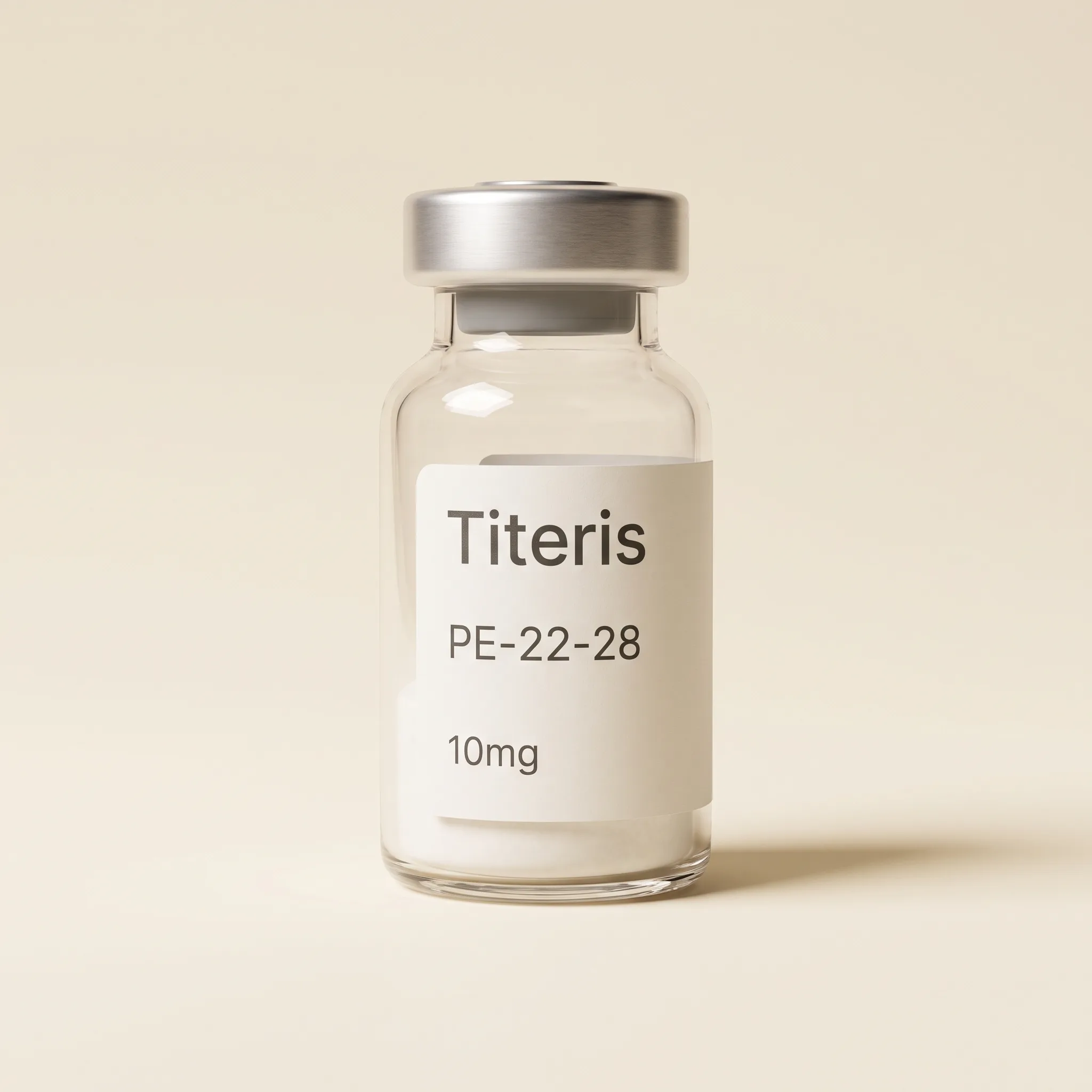
PE10PE-22-28, 10mg
Supplied as a lyophilised vial for laboratory research use.
£27.99 Contact us to orderSee our documentation policy for what supplier batch documentation covers, and our UK legal status page for the regulatory framing every listing follows.
Laboratory context: how PE-22-28 is used in basic research
PE-22-28 is a research reference material for laboratory use. Controlled in vitro and preclinical experiments using PE-22-28 address specific mechanistic questions about TREK-1 channel pharmacology and spadin fragment activity. Results from these experiments must be interpreted within the specific model system used and cannot be extrapolated to human clinical outcomes without extensive further validation.
For neuroscience research laboratories studying K2P channels, TREK-1 biology, or the neurobiological mechanisms of antidepressant action, PE-22-28 provides a defined short-sequence tool. Relevant experimental applications include electrophysiological recordings measuring TREK-1 channel activity in the presence and absence of the peptide, cell viability and neuronal health assays, and measurement of downstream signalling markers such as BDNF expression.
Appropriate experimental controls are essential when using PE-22-28. These include scrambled sequence controls (a peptide with the same amino acid composition but a randomised sequence), full-length spadin as a positive reference where available, and selective TREK-1 pharmacological tools from the wider literature. Without these controls, it is difficult to attribute observed effects specifically to TREK-1 inhibition by PE-22-28.
Titeris supplies PE-22-28 as a lyophilised peptide in a sealed glass vial. Storage at -20 degrees Celsius in the dry state is recommended. After reconstitution in bacteriostatic water or sterile water, the solution should be used promptly or stored at 4 degrees Celsius for short-term use. Aliquoting before freezing is recommended to avoid repeated freeze-thaw cycles.
Research reference materials like PE-22-28 are not clinical investigational products and have not been reviewed by the MHRA for any therapeutic application. Handling should follow institutional laboratory safety guidelines. Standard protective equipment and disposal under institutional chemical waste guidelines apply.
Frequently asked
What is TREK-1?
TREK-1 is a two-pore domain potassium channel (K2P family) that regulates neuronal excitability by controlling the resting membrane potential. It is activated by mechanical stretch, elevated temperature, lipid second messengers, and certain pharmacological agents. It is expressed in the brain, including in cortical and hippocampal regions, and preclinical data from TREK-1 knock-out mice have linked it to regulation of behaviour in depression-relevant paradigms.
What is spadin?
Spadin is a 17-amino-acid peptide secreted as the prosequence of NTSR3 (Neurotensin Receptor 3, also known as Sortilin). It acts as a natural endogenous inhibitor of the TREK-1 potassium channel. PE-22-28 is a 7-amino-acid fragment derived from positions 22 to 28 of the spadin sequence and is used as a research tool for investigating the domain of spadin responsible for TREK-1 inhibitory activity.
How is PE-22-28 supplied as a research reference material?
As a lyophilised peptide in a sealed glass vial, available in 10mg size. Supplied without solvent; reconstitution for laboratory use requires bacteriostatic water or sterile water depending on the specific research application.
Is PE-22-28 legal to buy in the UK?
As a research reference compound for in vitro laboratory use, PE-22-28 is not a controlled substance and can be supplied under a research-use-only framework. It cannot be marketed or supplied for human use. Every listing on this site is for research use only. See our UK legal status page for more detail.