Compound Guide
PT-141 (Bremelanotide): what it is, and what the research actually shows
A plain, cited explanation of PT-141 (bremelanotide): its melanocortin receptor mechanism, why it acts centrally rather than through vascular pathways, the context of Vyleesi's FDA approval in 2019, and how a research compound differs from a licensed medicine. Research use only. Nothing here is instruction for human use.
What PT-141 is
PT-141, also known as bremelanotide, is a heptapeptide melanocortin receptor agonist. Its sequence is derived from Melanotan II, a synthetic analogue of alpha-melanocyte-stimulating hormone (alpha-MSH). The active pharmaceutical product developed from PT-141 is Vyleesi (bremelanotide injection, Palatin Technologies/AMAG Pharmaceuticals), which received FDA approval in 2019 for hypoactive sexual desire disorder (HSDD) in pre-menopausal women. That approval is specific to the pharmaceutical formulation supplied under that indication. The research compound sold here is not Vyleesi.
PT-141 activates melanocortin receptors, primarily MC1R and MC4R. Melanocortin receptors are expressed in the skin, adrenal glands, and brain. The MC4R is the receptor relevant to the mechanism studied in HSDD research: it's expressed in hypothalamic and limbic brain regions involved in arousal and motivation signalling. This central (CNS) mechanism is what distinguishes PT-141 from earlier approaches to sexual dysfunction that focused on peripheral vascular effects.
What the research has studied
Origin in Melanotan II research
The discovery that melanocortin receptor agonists might affect sexual function was incidental. Early Melanotan II studies, conducted at the University of Arizona by Wessells and colleagues in the 1990s, found unexpected spontaneous erections in male volunteers during trials aimed at studying tanning effects. This led to a formal research programme. PT-141 was developed as a cyclic peptide analogue with reduced side effects relative to Melanotan II.
Mechanism: central not vascular
Earlier treatments for sexual dysfunction, particularly PDE5 inhibitors like sildenafil, work by increasing blood flow to genital tissues through vascular relaxation. PT-141's mechanism is different: it acts centrally through MC4R in the brain's motivation and arousal circuits to influence the desire component of sexual response rather than the physiological response to stimulation. Research using fMRI in human subjects confirmed CNS activation following PT-141 administration in studies supporting the Vyleesi application.
The Vyleesi clinical programme
The FDA approval of Vyleesi was based on two Phase 3 randomised controlled trials (RECONNECT studies) enrolling pre-menopausal women with HSDD. Both trials used the subcutaneous 1.75mg dose. The primary endpoints were change in number of satisfying sexual events and change in sexual desire score. Statistically significant improvements on both endpoints were observed versus placebo. The adverse event profile included transient nausea and flushing, and a transient increase in blood pressure in a subset of participants.
The FDA approval is specifically for premenopausal women with HSDD. The MHRA has not granted a corresponding UK approval. Vyleesi is not currently licensed in the UK.
UK regulatory status
PT-141 (bremelanotide) is not a controlled substance in the UK. Vyleesi, the pharmaceutical product, does not have MHRA approval and is not licensed for clinical use in the UK. The research compound sold here is supplied strictly as a reference material for in vitro laboratory research. It cannot be marketed or supplied for human use. See our UK legal status page.
PT-141 in our catalogue
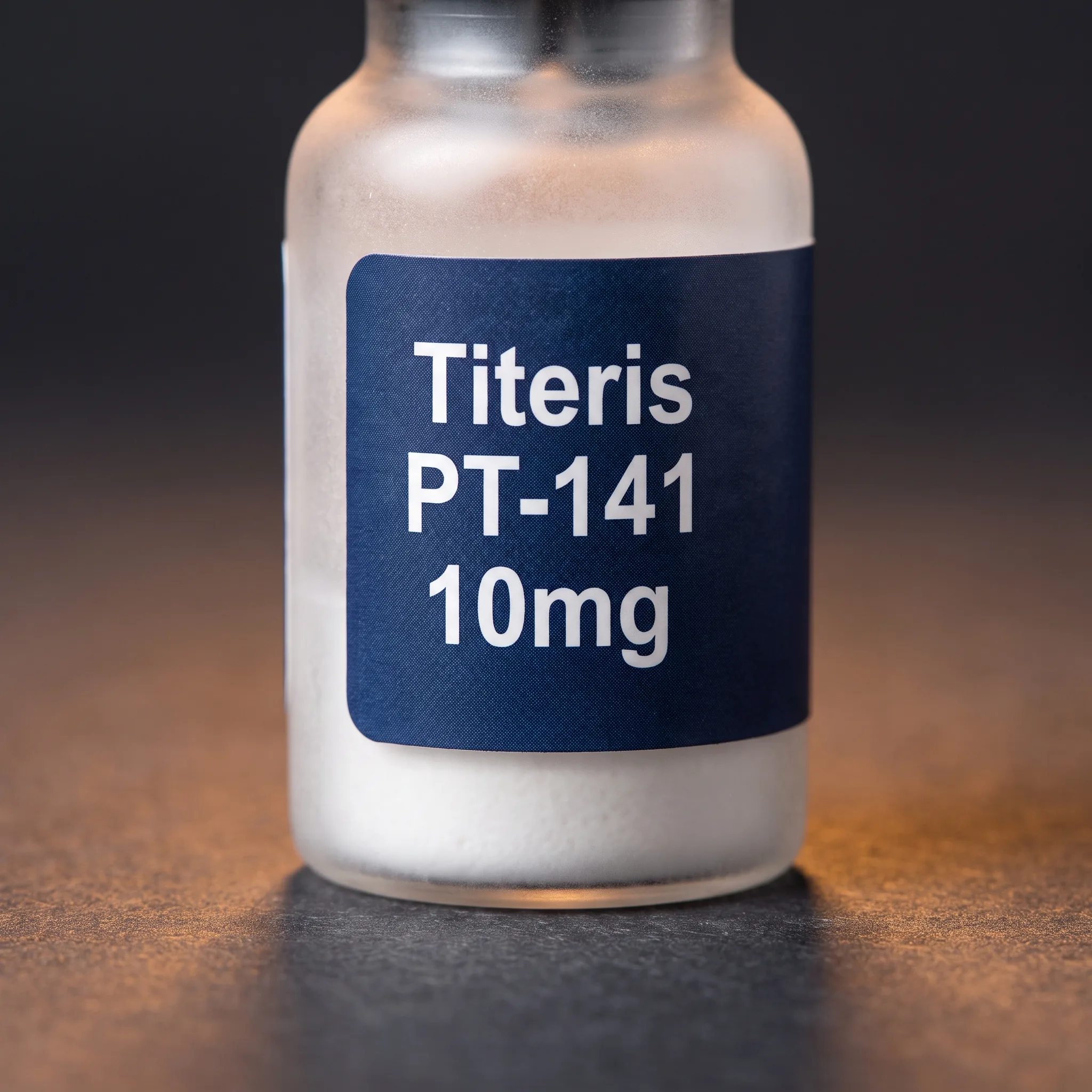 PT-141
PT-141 (Bremelanotide), 10mg
Supplied as a lyophilised vial for laboratory research use.
£19.99 Contact us to orderSee our documentation policy for what supplier batch documentation covers, and our UK legal status page for the regulatory framing every listing follows.
Frequently asked
How does PT-141 differ from sildenafil (Viagra)?
Sildenafil works peripherally, by inhibiting PDE5 to increase blood flow to genital tissue in response to stimulation. PT-141 acts centrally through MC4R receptors in the brain's arousal and motivation circuits. The distinction is between affecting the physiological capacity for sexual response versus affecting the desire or arousal component. The two mechanisms are studied for different aspects of sexual function.
What is the connection between PT-141 and Melanotan II?
Melanotan II is a synthetic alpha-MSH analogue originally studied for tanning effects, which was found incidentally to affect sexual function in human trials at the University of Arizona in the 1990s. PT-141 was developed from Melanotan II as a more targeted cyclic peptide analogue aimed at the sexual function application, with the tanning side effects reduced. The melanocortin receptor mechanism is shared between them.
Is PT-141 approved in the UK?
No. Vyleesi (bremelanotide, the pharmaceutical product) received FDA approval in the US in 2019, but the MHRA has not granted a corresponding UK marketing authorisation. PT-141 as a research compound is not a controlled substance in the UK but cannot be marketed or supplied for human use. See our UK legal status page.
How is it supplied?
As a lyophilised white powder in a sealed glass vial, 10mg size. Supplied without solvent for laboratory research use. Batch documentation status is stated directly on the listing page where available from our supplier.