Compound Guide
VIP-10: what the vasoactive intestinal peptide fragment is and what the research shows
A plain explanation of VIP-10: what this fragment of vasoactive intestinal peptide is, which VPAC receptors it engages, and what the research literature on VIP in inflammation, vasodilation, and neuromodulation actually shows. UK regulatory context included. For research use only. Nothing here is instruction for human use.
VIP-10 sold here is a research reference compound for in vitro and laboratory research purposes only. It is not licensed for human administration, is not a pharmaceutical product, and has not been approved by the MHRA for any clinical or therapeutic use. The research applications discussed on this page are from published scientific literature and are referenced for scientific context only. They are not an endorsement of human use of this compound. If you have questions about inflammatory conditions or related health matters, consult a registered healthcare professional.
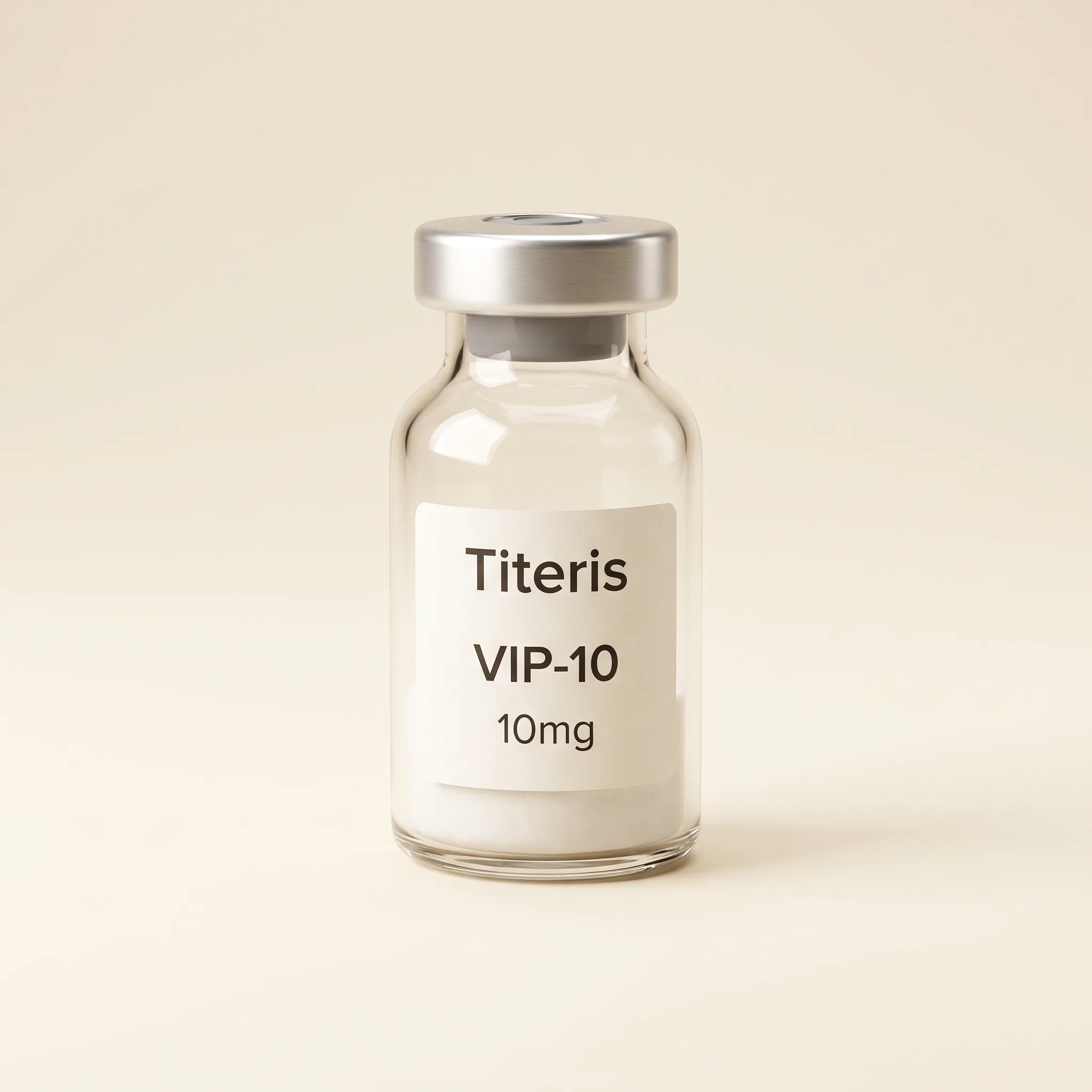
What VIP-10 is
VIP-10 is a 10-amino-acid fragment of vasoactive intestinal peptide (VIP). Full-length VIP is a 28-amino-acid neuropeptide belonging to the glucagon/secretin superfamily. It acts primarily at two G-protein-coupled receptors: VPAC1 (Vasoactive Intestinal Peptide Receptor 1) and VPAC2. These receptors are widely distributed across the body, and full-length VIP has correspondingly diverse physiological roles.
VIP is expressed in numerous tissues and organ systems, most notably in the enteric nervous system, the central nervous system, the lung, and the immune system. Its known functions span vasodilation, immune modulation, neurotrophic support, and regulation of secretory processes in the gastrointestinal tract. The circadian rhythm research context is also relevant: VIP-producing neurones in the suprachiasmatic nucleus of the hypothalamus play a documented role in synchronising circadian rhythms.
VIP-10 as a fragment retains certain biological interaction possibilities for research purposes, but may have a different receptor affinity profile compared to the full 28-amino-acid peptide. Fragment peptides are used as research tools because they allow investigators to probe specific portions of the full peptide's interaction surface with its receptors, which can help identify which domains are responsible for particular biological effects.
VIP-10 is not a drug, not a licensed medicine, and not approved for any human therapeutic application. It is a laboratory research compound for in vitro investigations into VIP receptor pharmacology and VIP signalling pathways.
What the research has examined
Full-length VIP and its fragments have a broad research literature spanning several decades. The key areas that provide scientific context for VIP-10 research are:
- Neuroimmunology. VIP is a potent immunomodulator with anti-inflammatory effects documented in a range of cell and animal models. It suppresses production of pro-inflammatory cytokines and activates anti-inflammatory mediators. These effects operate through VPAC1 and VPAC2 receptors expressed on immune cells including macrophages, T-cells, and dendritic cells, making VIP signalling a research area of interest in inflammation biology.
- Lung physiology. VIP is expressed in the bronchial system and has bronchodilatory properties in laboratory models. It has been investigated in animal models of respiratory conditions. The VPAC receptor distribution in lung tissue makes this a relevant system for VIP signalling research.
- Inflammation research. VPAC1 and VPAC2 are expressed on immune cells. VIP signalling through these receptors has modulatory effects on macrophage activation, T-cell proliferation, and dendritic cell function in laboratory models. The research literature in this area is substantial and covers both in vitro and in vivo preclinical systems.
- Circadian rhythm biology. VIP-producing neurones in the suprachiasmatic nucleus are well established in the circadian biology literature as important for synchronising the activity of the central circadian clock. This is a well-replicated finding that gives VIP a clear biological role in CNS research contexts beyond its peripheral functions.
The research literature on VIP is more extensive and methodologically diverse than for many research peptides. As a fragment, VIP-10 is positioned as a tool for dissecting the receptor biology of VIP, which requires an understanding of the full-length peptide's research context.
VPAC receptor biology and why fragment peptides matter
VPAC1 and VPAC2 are class B G-protein-coupled receptors of the glucagon superfamily. Both receptors primarily couple to Gs proteins and activate the cAMP signalling pathway, though additional signalling through other G-proteins and beta-arrestin pathways has been described in certain cell contexts. VPAC1 has broad expression across many tissues including liver, lung, small intestine, and immune cells. VPAC2 has a more restricted expression pattern, with particularly high levels in the central nervous system and pancreas.
Understanding how different parts of the VIP peptide sequence contribute to receptor selectivity and binding affinity is a legitimate research question in GPCR biology. Peptide fragments like VIP-10 allow researchers to test which regions of the full peptide are essential for receptor engagement and which modulate selectivity between receptor subtypes. This type of structure-activity relationship work has practical value for understanding VIP receptor pharmacology more broadly.
The cAMP signalling pathway activated by VPAC receptors has downstream effects on a range of cellular functions including gene transcription, cell proliferation, and cytokine production. Researchers using VIP-10 as a laboratory tool to study VPAC receptor signalling need to consider where in the receptor activation pathway they are measuring effects, and whether the fragment preserves the full-length peptide's receptor activation properties or modifies them.
Using fragment peptides in receptor research requires careful experimental controls. Comparison of VIP-10 effects with full-length VIP, with scrambled sequence controls, and with known VPAC receptor agonists and antagonists provides the methodological rigour needed to interpret results correctly. The choice of cell model and the receptor expression levels in that model are also important variables.
UK regulatory status
VIP-10 is not a licensed medicine in the UK. Full-length VIP has no licensed therapeutic applications in the UK, and its fragments including VIP-10 are not approved by the MHRA for any clinical or therapeutic use. As a research reference compound for in vitro laboratory use, VIP-10 is provided under a research-use-only framework.
Research reference compounds of this type cannot be marketed, sold, or supplied for human use. Every product listing on this site is for laboratory research purposes only. Titeris does not market VIP-10 or any other compound for any clinical application.
See our UK legal status page for the broader regulatory framework that applies to research peptide compounds in the UK.
VIP-10 in our catalogue
V10See our documentation policy for what supplier batch documentation covers, and our UK legal status page for the regulatory framing every listing follows.
Laboratory context: how VIP-10 is used in basic research
VIP-10 is a research reference material for laboratory use. Controlled in vitro experiments using VIP-10 are designed to address specific mechanistic questions about VIP receptor pharmacology, with results that must be interpreted within the context of the specific model system used. Findings from cell culture experiments cannot be directly extrapolated to in vivo biology or human physiology without substantial additional work.
For laboratories researching VPAC receptor biology, inflammation, or neuroimmunology, VIP-10 provides a defined fragment tool for investigating the contribution of specific sequence regions to receptor engagement and downstream signalling. This complements studies using the full-length peptide and selective pharmacological tools.
Titeris supplies VIP-10 as a lyophilised peptide in a sealed glass vial. Batch documentation, where available from our supplier, is stated on the specific listing. Storage at -20 degrees Celsius in the dry state is recommended. After reconstitution in bacteriostatic water or sterile water, the solution should be used promptly or stored at 4 degrees Celsius for short-term use. Repeated freeze-thaw cycles should be avoided.
Research reference materials like VIP-10 are not clinical investigational products and have not been reviewed by the MHRA for therapeutic applications. Handling should follow institutional laboratory safety guidelines for compounds with potential biological activity. Protective gloves, lab coat, and appropriate eye protection are standard. Disposal should follow institutional chemical waste guidelines under UK environmental regulations.
Frequently asked
What is the difference between VIP-10 and full-length VIP?
Full-length VIP is a 28-amino-acid neuropeptide with well-characterised binding affinity for both VPAC1 and VPAC2 receptors. VIP-10 is a 10-amino-acid fragment for research purposes, used in studies of VIP receptor subtypes and specific signalling pathways. As a shorter fragment, its receptor binding profile may differ from the full-length peptide, which is itself part of what makes it a useful research tool for dissecting receptor pharmacology.
What are VPAC1 and VPAC2?
VPAC1 and VPAC2 are class B G-protein-coupled receptors of the glucagon superfamily. VPAC1 is expressed broadly across many tissues including liver, lung, and immune cells. VPAC2 has a more restricted expression profile with high levels in the central nervous system and pancreas. Both primarily activate the cAMP signalling pathway via Gs protein coupling.
How is VIP-10 supplied as a research reference material?
As a lyophilised peptide in a sealed glass vial, available in 10mg size. Supplied without solvent; reconstitution for laboratory use requires bacteriostatic water or sterile water depending on the specific research application.
Is VIP-10 legal to buy in the UK?
As a research reference compound for in vitro laboratory use, VIP-10 is not a controlled substance and can be supplied under a research-use-only framework. It cannot be marketed or supplied for human use. Every listing on this site is for research use only. See our UK legal status page for the full regulatory picture.