Compound Guide
B12 (Methylcobalamin): what the active cobalamin form is and how it is used in laboratory research
A plain explanation of methylcobalamin as a laboratory substance: what the methylated form of B12 is biochemically, why it is relevant to specific laboratory protocols, how it differs from other B12 forms, and its role in one-carbon metabolism research. Part of the Titeris reconstitution and laboratory supplies range. For research use only.
B12 (Methylcobalamin) sold here is a laboratory research solution for in vitro and laboratory research purposes only. It is not licensed for human administration, is not a pharmaceutical product, and has not been approved by the MHRA for any clinical or therapeutic use as supplied here. It is not a dietary supplement or food product. Nothing on this page should be read as instruction for human use of this laboratory solution.
What methylcobalamin is
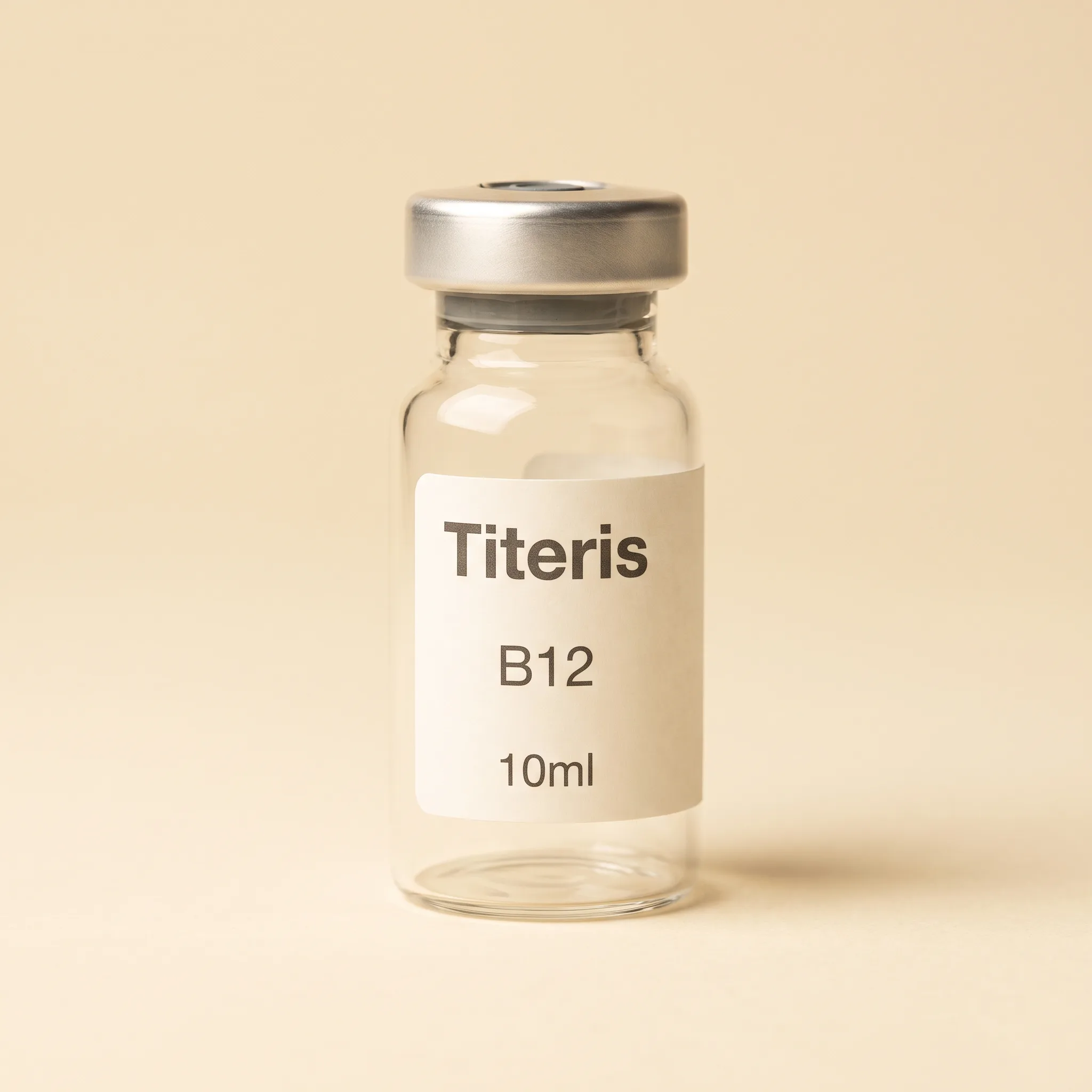
Methylcobalamin is the directly biologically active form of vitamin B12 (cobalamin). Vitamin B12 exists in several chemical forms: cyanocobalamin (the common synthetic form used in supplements and food fortification), hydroxocobalamin (a pharmaceutical form used for B12 deficiency treatment), adenosylcobalamin, and methylcobalamin. The last two are the coenzyme forms actually used inside cells.
Methylcobalamin functions as the coenzyme form for methionine synthase, the enzyme that catalyses the remethylation of homocysteine to methionine using a methyl group from 5-methyltetrahydrofolate. This single reaction sits at the intersection of the methionine cycle and the folate cycle, making methylcobalamin a central player in one-carbon metabolism.
Adenosylcobalamin is the other active coenzyme form, required for methylmalonyl-CoA mutase in mitochondria. These two active forms have entirely separate enzymatic roles. Methylcobalamin is the relevant form for methionine cycle research; adenosylcobalamin for methylmalonic acid metabolism research.
The 10ml solution offered here is a laboratory substance and reconstitution supply, not a dietary supplement or pharmaceutical product. It is part of the Titeris accessories and laboratory supplies range alongside bacteriostatic water and related materials.
Why methylcobalamin rather than cyanocobalamin for laboratory use
The distinction between methylcobalamin and cyanocobalamin matters for laboratory research in ways that do not apply to dietary contexts.
Cyanocobalamin is chemically stable and inexpensive, which is why it is used in most supplements and food fortification. In the body, cyanocobalamin must be converted intracellularly to either methylcobalamin or adenosylcobalamin before it can function as a coenzyme. This conversion process works adequately in an intact organism with normal cellular machinery.
In cell culture settings, the conversion of cyanocobalamin to methylcobalamin inside cells is a variable that can differ between cell types, culture conditions, and experimental settings. For research protocols that require direct coenzyme activity without the intracellular conversion step, methylcobalamin provides a cleaner experimental condition. The coenzyme form is delivered directly, and its activity is not dependent on the cell's capacity to perform the conversion.
This distinction is relevant in two main laboratory contexts: first, when studying methionine synthase activity or the methionine cycle directly, where the coenzyme form availability needs to be defined; second, when methylcobalamin is being added to a reconstitution mixture or cell culture medium and direct cofactor activity is desired from the outset of the experiment.
What the research literature shows about methylcobalamin
Methylcobalamin has a well-established biochemical literature as a coenzyme and laboratory substance:
Methionine synthase cofactor research
Methionine synthase is one of only two cobalamin-dependent enzymes in humans. Its reaction, remethylating homocysteine to methionine, is essential for maintaining the methionine cycle and for regenerating tetrahydrofolate from its 5-methyl form. Research into this enzyme's kinetics, regulation, and response to cofactor availability is a classical area of biochemistry. Methylcobalamin as the purified coenzyme form is used in direct enzyme assays and in cell-based experiments examining methionine synthase function.
Homocysteine metabolism research
B12 deficiency leads to homocysteine accumulation because methionine synthase cannot complete its reaction without its coenzyme. Elevated homocysteine is an established experimental variable in cardiovascular basic research, where it has been studied for effects on endothelial cells, smooth muscle cells, and coagulation parameters. In these experimental models, B12 status (and specifically methylcobalamin availability) is manipulated as one variable. Methylcobalamin supplementation in deficiency models serves as the reversal condition for experimental control.
Neurobiological cell studies
Methylcobalamin has been examined in neuronal cell models for effects independent of its methionine synthase cofactor role. Some research has examined its effect on nerve cell cultures, though this work is largely preclinical and the mechanistic basis remains an area of ongoing investigation. These are cell biology studies rather than clinical research.
Cell culture supplement applications
Some cell types require cobalamin for optimal growth in culture. Methylcobalamin added to culture media is used in protocols where direct cofactor availability is preferred over relying on cyanocobalamin conversion. This is a practical laboratory application rather than a pharmacological research question.
One-carbon metabolism research network
One-carbon metabolism refers to the interconnected reactions involving folate and methionine cycles that transfer single-carbon units for biosynthesis and methylation. Methylcobalamin is a key node in this network. Research into one-carbon metabolism as a whole, including its connections to epigenetics, the metabolic activity of proliferating cells, and neurological function, frequently involves methylcobalamin as one of the experimental variables alongside folate cycle intermediates and methionine cycle components.
Laboratory use contexts for B12 methylcobalamin
The 10ml solution format is suited to multiple laboratory applications:
As a component of reconstitution mixtures: methylcobalamin is included in some lipotropic combination formulations (such as Lipo-C + B12) where its cofactor activity complements the other components. When preparing such combinations from individual components, a defined methylcobalamin solution allows precise addition of the B12 component.
As a cell culture medium supplement: in experiments examining methionine cycle function or homocysteine metabolism, defined methylcobalamin addition to culture medium provides controlled cofactor availability without relying on cyanocobalamin conversion kinetics.
As a reference standard for B12 coenzyme research: when running enzyme assays for methionine synthase or related enzymes, methylcobalamin as the substrate/cofactor needs to be of defined form and concentration. The laboratory-grade solution provides this.
As a control condition in B12 deficiency models: creating experimental B12 deficiency in cell culture and then reversing it with methylcobalamin supplementation is a common approach for studying the effects of B12 status on cell function.
UK regulatory context
Methylcobalamin as a dietary supplement is widely available in the UK and is not a controlled substance or prescription medicine in the nutritional supplement context. The laboratory solution supplied here is a different category: it is a laboratory-grade solution for research use, not a pharmaceutical injection product, not a food supplement, and not manufactured under GMP conditions for clinical use.
The solution should not be used as a pharmaceutical product or as a dietary supplement. It is supplied for in vitro laboratory research and related laboratory applications. Nothing on this site is an instruction or invitation to administer this solution to a human or animal. Our UK legal status page provides context on the research compound supply framework.
Storage notes
Methylcobalamin is light-sensitive. The solution should be stored away from direct light, in appropriate light-protective conditions. Temperature requirements depend on the specific formulation; follow the storage guidance provided with the product. Avoid repeated freeze-thaw cycles where possible.
As a vitamin B12 coenzyme solution for laboratory use, standard chemical handling procedures apply. This is not a hazardous substance in the ordinary sense, but it should be stored and handled according to institutional laboratory protocols for laboratory solutions.
B12 (Methylcobalamin) in our catalogue
B12B12 (Methylcobalamin), 10ml
Methylcobalamin solution for laboratory research use only. Part of the reconstitution and lab supplies range.
£14.99 Contact us to orderFor laboratory use only. Not for human or veterinary consumption. See our documentation policy. Related products: Lipo-C + B12.
Frequently asked
Why use methylcobalamin instead of cyanocobalamin in laboratory settings?
Methylcobalamin is the active coenzyme form that can directly function as a cofactor for methionine synthase without requiring intracellular conversion. Cyanocobalamin must be converted to methylcobalamin or adenosylcobalamin inside cells before it can act as a coenzyme. For laboratory protocols requiring direct cofactor activity without a conversion step as a confounding variable, methylcobalamin is the appropriate choice.
What are the laboratory uses of this B12 solution?
As a cofactor for methionine synthase assays, as a cell culture medium supplement in protocols examining B12 status effects, as a component of reconstitution mixtures for lipotropic combinations, and as a control/reversal condition in B12 deficiency cell models. The 10ml solution format suits small-scale laboratory applications across these uses.
Is this solution suitable for human injection?
No. This solution is for laboratory use only. It is not manufactured under GMP conditions for pharmaceutical injectable products, does not meet the requirements for injectable pharmaceutical preparations, and is not supplied or intended for human administration. Pharmaceutical B12 injections are prescription medicines available through healthcare providers.
How is B12 methylcobalamin supplied?
As a 10ml solution for laboratory use. Not as a pharmaceutical product, dietary supplement, or food. For research use only.