Compound Guide
Lipo-C + B12: what the lipotropic combination with methylcobalamin is and what the research shows
A plain explanation of Lipo-C with B12: what methylcobalamin contributes to the lipotropic combination, why the B12 component is relevant to one-carbon metabolism research, how this formulation differs from the B12-free version, and the laboratory context for its use. For research use only.
Lipo-C + B12 sold here is a research reference material for in vitro and laboratory research purposes only. It is not licensed for human administration, is not a pharmaceutical product, and has not been approved by the MHRA for any clinical or therapeutic use. It is not a supplement, medicine, or food product. Nothing on this page should be read as instruction for human use of this combination.
What Lipo-C with B12 is
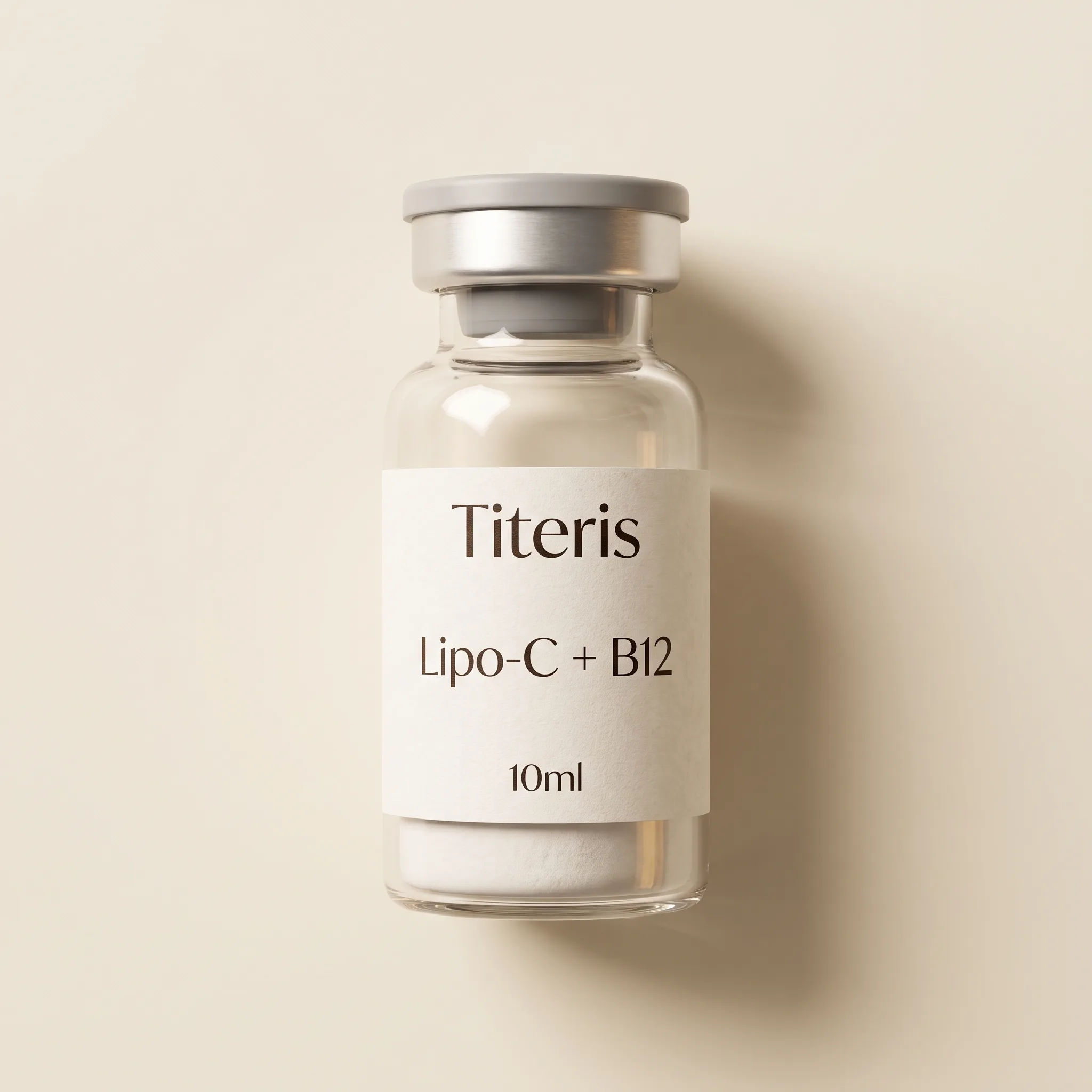
Lipo-C with B12 is the same lipotropic compound combination as the B12-free version, with the addition of methylcobalamin (the active methyl form of vitamin B12). The distinction from the B12-free variant is the methylcobalamin component, which is directly active as a cofactor in the methionine cycle without requiring the activation step that cyanocobalamin needs.
Methylcobalamin is the biologically active coenzyme form of B12 that functions in the cell as a cofactor for methionine synthase, the enzyme that remethylates homocysteine to methionine using a methyl group derived from 5-methyltetrahydrofolate. This reaction is central to both the methionine cycle and the folate cycle, linking B12 status directly to the availability of SAM (the universal methyl donor) and to homocysteine levels.
The combination of lipotropic compounds (choline, inositol, methionine) with methylcobalamin creates a formulation that engages multiple points in the one-carbon metabolism network simultaneously. Choline and methionine both contribute to the SAM/methyl donor pool from different entry points; methylcobalamin supports the methionine synthase step that regenerates methionine from homocysteine. For research protocols examining the combined effects on the one-carbon metabolism network, this combination is relevant as a research tool.
Lipo-C + B12 is not a pharmaceutical product, supplement, or food. It is a research reference material for laboratory use.
What methylcobalamin contributes: the B12 component
Methylcobalamin is one of two active coenzyme forms of vitamin B12 used in mammalian cells (the other being adenosylcobalamin, which functions in mitochondria for a different metabolic reaction). The distinction from cyanocobalamin, the commonly used synthetic B12 form in supplements, is that methylcobalamin is already in the active coenzyme form and does not require intracellular conversion before it can act as a cofactor.
The primary enzymatic reaction requiring methylcobalamin is catalysed by methionine synthase (also called 5-methyltetrahydrofolate-homocysteine methyltransferase). This enzyme transfers the methyl group from 5-methyltetrahydrofolate (a folate cycle intermediate) to homocysteine, regenerating methionine and releasing tetrahydrofolate. Methylcobalamin is the carrier of the methyl group in this transfer.
When B12 is deficient or when methylcobalamin is unavailable, methionine synthase cannot complete its reaction. The consequences are twofold: homocysteine accumulates (since it cannot be remethylated), and the folate cycle is partially blocked (the 5-methyltetrahydrofolate that cannot be demethylated backs up, creating what is sometimes called the "folate trap"). Both consequences affect one-carbon metabolism across the cell.
Methylcobalamin versus cyanocobalamin in research
For cell biology research where direct cofactor activity is required without an activation step, methylcobalamin is the preferred form. Cyanocobalamin added to cell culture media must be converted to adenosylcobalamin or methylcobalamin intracellularly before it can act as a coenzyme. This conversion step, while it occurs in intact organisms, may be a variable in cell model experiments. Researchers who need to study direct B12 cofactor effects use methylcobalamin to eliminate the activation step as a confounding variable.
B12 and homocysteine research
Elevated homocysteine resulting from B12 deficiency is an established experimental model in cardiovascular basic research. Cell and animal models examining the effects of homocysteine accumulation on vascular cells, coagulation pathways, and related systems use B12 deficiency as one method of elevating homocysteine. Methylcobalamin supplementation in these models is used to reverse the deficiency and normalise homocysteine, serving as an experimental control or intervention variable.
The combined formulation: research considerations
Lipo-C + B12 combines components that interact at multiple points in the one-carbon metabolism network. Choline can donate a methyl group via betaine; methionine is a direct SAM precursor; methylcobalamin supports methionine regeneration from homocysteine; inositol connects to phospholipid signalling and insulin signalling pathways.
For research purposes, the complexity of a multi-component formulation requires careful experimental design. When using a combination, researchers generally also need single-component conditions and a vehicle control to identify which component or combination of components is responsible for any observed effect. Without these controls, attribution of any observed result to a specific component is not possible.
The B12-free version (Lipo-C without B12) allows researchers to conduct direct comparisons with the B12-containing version, making the B12 contribution experimentally separable. This kind of controlled comparison design is standard good practice in cell biology research with multi-component materials.
Research on the individual components of this combination, particularly choline and its role in hepatic lipid metabolism, and methylcobalamin's role in the methionine cycle, has a well-established literature. Research specifically on Lipo-C as a defined formulation is more limited, and researchers should design their experiments with this evidence hierarchy in mind.
Neurobiological research context for methylcobalamin
Beyond its well-characterised role in the methionine cycle, methylcobalamin has independent research interest in neurobiological contexts. Cell culture and animal studies have reported effects of methylcobalamin on neuronal viability, axonal regeneration, and myelination that appear to extend beyond simple cofactor function in the methionine synthase reaction. The precise mechanisms underlying these additional observations are an area of ongoing basic research.
In cell culture models of neuronal injury, methylcobalamin has been investigated as a potential cytoprotective agent. The hypothesised mechanisms include effects on SAM-dependent methylation of myelin components, and potential direct effects on nitric oxide pathways. These are cell biology research questions examined at the level of in vitro experiments. The published literature in this area consists of preclinical studies and provides mechanistic hypotheses rather than clinical evidence.
For researchers studying neuronal biology or myelination, the B12 component of Lipo-C + B12 means this combination formulation engages pathways relevant to that research area, in addition to the hepatic lipid metabolism and one-carbon metabolism pathways relevant to the lipotropic components. Experimental designs for such research would need appropriate controls including single-component methylcobalamin conditions to separate neuronal effects from lipotropic component effects.
Researchers should consult the primary literature for methylcobalamin in cell models of interest before designing protocols, as the relevant cell types, concentrations, and endpoints vary substantially across published studies. Titeris also offers standalone B12 (methylcobalamin) as a separate research material for protocols that require the cofactor without the lipotropic combination components.
UK regulatory status
Lipo-C + B12 is not a licensed medicine in the UK. It is not approved by the MHRA for any clinical or therapeutic use. As a research reference material for in vitro laboratory research, it is supplied strictly for legitimate scientific purposes.
Nothing on this site constitutes an instruction or invitation to administer Lipo-C + B12 to a human or animal. Every listing here is for research use only. Our UK legal status page provides further context.
Storage and handling
Lipo-C + B12 is supplied as a 10ml solution for laboratory use. Methylcobalamin is light-sensitive and storage away from light is particularly important for formulations containing it. Follow the temperature and light-protection requirements appropriate for the most sensitive component in the combination. General guidance: store at the specified temperature, away from direct light, and avoid repeated freeze-thaw cycles.
Standard laboratory precautions apply. Not a pharmaceutical product. Researchers follow their institutional safety guidelines and operating procedures.
Lipo-C + B12 in our catalogue
LPC2Lipo-C + B12, 10ml
Supplied for laboratory research use only. Lipotropic combination including methylcobalamin.
£29.99 Contact us to orderFor laboratory use only. Not for human or veterinary consumption. See our documentation policy and UK legal status page. For the B12-free version, see Lipo-C without B12.
Frequently asked
What is the difference between Lipo-C with and without B12?
The B12-containing version includes methylcobalamin (the active coenzyme form of B12), which is a cofactor for methionine synthase. This directly affects the methionine cycle by supporting the remethylation of homocysteine to methionine. The B12-free version excludes this component, which is relevant for research protocols that need to study the lipotropic components separately from B12's contribution to one-carbon metabolism.
Why use methylcobalamin rather than cyanocobalamin?
Methylcobalamin is already in the active coenzyme form that functions directly as a cofactor for methionine synthase. Cyanocobalamin requires intracellular conversion to methylcobalamin or adenosylcobalamin before it can act as a coenzyme. For cell biology research where direct cofactor activity is needed without a confounding activation step, methylcobalamin is the appropriate choice.
How is Lipo-C + B12 supplied?
As a 10ml solution for laboratory use. Not for human or veterinary consumption. For research use only.