Compound Guide
Lipo-C (without B12): what the lipotropic compound combination is and what the research shows
A plain explanation of Lipo-C without B12: what lipotropic compounds are as a pharmacological category, which components are typically present in Lipo-C combinations, what the research literature shows about those individual components, and the difference between studying the components separately and studying a combination. For research use only.
Lipo-C sold here is a research reference material for in vitro and laboratory research purposes only. It is not licensed for human administration, is not a pharmaceutical product, and has not been approved by the MHRA for any clinical or therapeutic use. It is not a supplement, medicine, or food product. Nothing on this page should be read as instruction for human use of this combination.
What Lipo-C (without B12) is
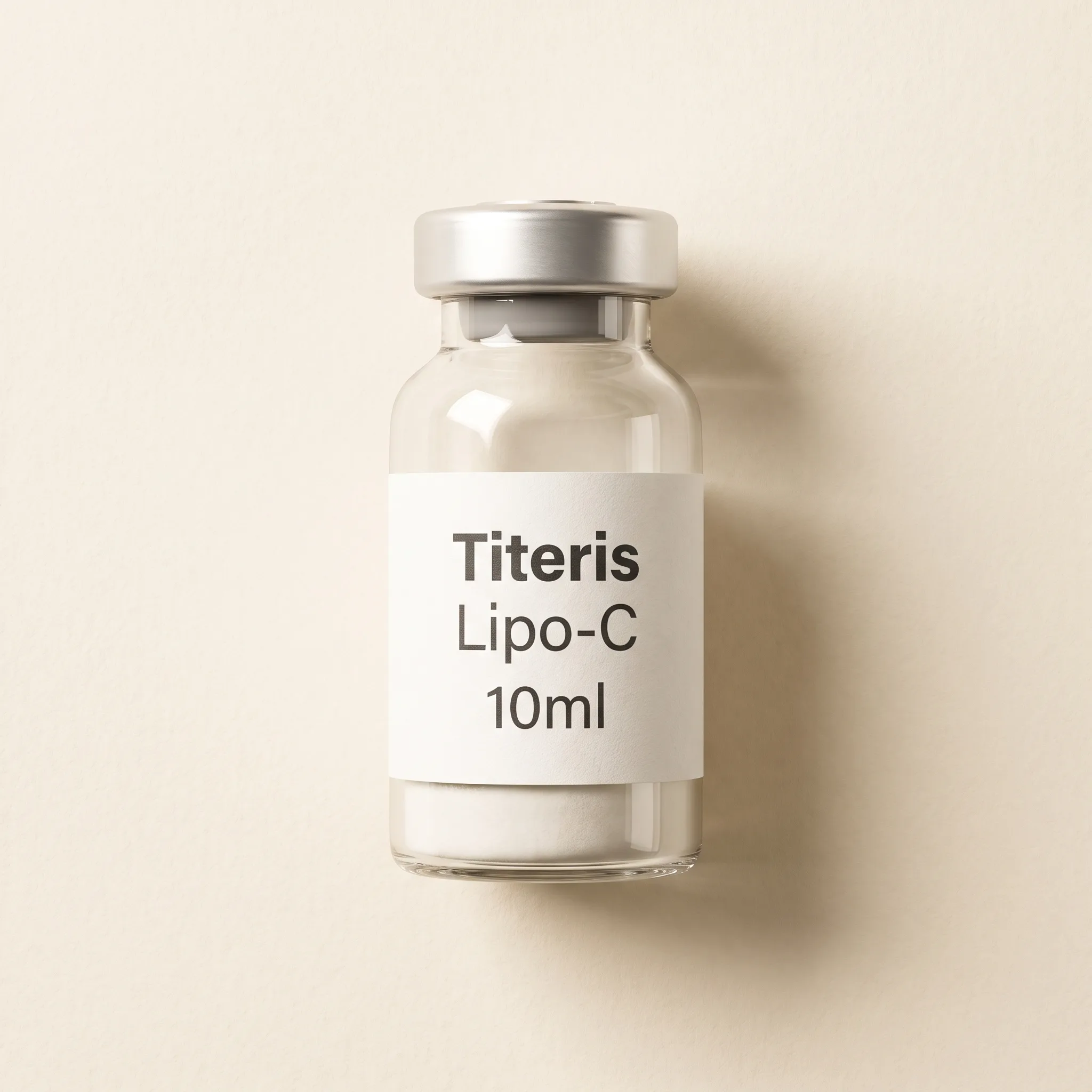
Lipo-C refers to a combination of lipotropic compounds, typically including methionine, inositol, choline, and related substances involved in fat metabolism signalling pathways. Lipotropic substances are a pharmacological category for compounds that support fat mobilisation from the liver and modulate hepatic metabolism.
The B12-free variant is distinguished from Lipo-C with B12 by the absence of a methylcobalamin component. This distinction is relevant for research protocols that aim to separate the effects of the lipotropic components from those of a B12 cofactor. When B12's contribution to one-carbon metabolism needs to be controlled for or excluded from an experimental design, the B12-free variant is the appropriate choice. For protocols where the combined B12 and lipotropic effects are of interest, the Lipo-C + B12 formulation is available separately.
Lipo-C is not a compound with a single defined molecular structure. It is a combination of several substances. This has methodological implications for research: the combined effects of the components may differ from the sum of individual component effects, and researchers should design protocols with appropriate controls to account for the contribution of each component.
As a research reference material for laboratory use, Lipo-C is supplied in 10ml vial form for in vitro experiments. It is not a pharmaceutical product, not a food, and not a dietary supplement.
The biology of lipotropic compounds
Understanding Lipo-C requires understanding what lipotropic compounds do individually, as the combination's properties emerge from those of its components:
Choline and hepatic fat metabolism
Choline is an essential nutrient for phosphatidylcholine synthesis and for VLDL (very low-density lipoprotein) secretion from the liver. In cell and animal models, choline deficiency is a well-established model for hepatic steatosis (fatty liver). The mechanism involves impaired phosphatidylcholine synthesis reducing the liver's capacity to package and export triglycerides as VLDL particles. Choline's role in hepatic lipid metabolism is among the better-characterised aspects of lipotropic compound biology.
In one-carbon metabolism terms, choline intersects with the methionine cycle. Choline can be oxidised to betaine, which then donates a methyl group to remethylate homocysteine to methionine. This connects choline to the SAM/SAH balance and to methylation capacity in the cell.
Inositol research
Inositol is a sugar alcohol with roles in cell inositol phospholipids and signal transduction. Phosphatidylinositol and its phosphorylated derivatives are central components of PI3K signalling pathways, which regulate glucose uptake, cell growth, and survival. The relevance to fat metabolism research comes partly from the role of insulin signalling (mediated through PI3K) in lipogenesis and lipolysis. Inositol has been examined in various metabolic research contexts including studies on insulin sensitivity at the cell biology level.
Methionine and one-carbon metabolism
Methionine is a sulphur-containing amino acid and the precursor for SAM (S-adenosylmethionine), the universal methyl group donor. Its metabolism is tightly connected to choline metabolism through the methionine cycle and the folate cycle. When methionine availability is adequate, SAM can be produced for methylation reactions. When the cycle is disrupted, both methylation capacity and the disposal of homocysteine are affected. Methionine is included in lipotropic combinations because of its role in maintaining hepatic methyl group availability and its connection to choline's methyl group contribution through betaine.
Combination effects and methodological complexity
Research into combinations of lipotropic substances is methodologically more complex than studying single compounds. Components can act synergistically, where the combined effect exceeds what either would do individually, or they can have redundant effects on the same pathway. Some components may have opposing effects on certain pathways. Designing experiments with appropriate controls, including single-compound conditions, is necessary for interpreting combination results.
Published research into Lipo-C as a defined formulation is limited compared to research into the individual components. Most of the scientific literature on these components exists for individual substances or for the one-carbon metabolism pathway generally, not specifically for lipotropic injection combinations as a category.
Why the B12-free variant matters for research design
The availability of both Lipo-C without B12 and Lipo-C with B12 allows researchers to use controlled comparison protocols. If a research question concerns the specific contribution of the lipotropic components (choline, inositol, methionine) independently of B12's cofactor effects on the methionine cycle, the B12-free version provides a cleaner experimental condition.
Methylcobalamin (B12) is a cofactor for methionine synthase, the enzyme that remethylates homocysteine to methionine. This means B12 directly participates in the methionine cycle and affects SAM availability. In protocols examining the effects of the lipotropic components on methylation or hepatic metabolism, the presence of B12 introduces another variable that could confound interpretation. Using the B12-free variant and comparing to the B12-containing variant is one way to experimentally separate these contributions.
For researchers interested in the combined effect of lipotropic compounds together with B12's contribution, the Lipo-C with B12 formulation is available as a separate catalogue item.
UK regulatory status
Lipo-C is not a licensed medicine in the UK. The individual components of lipotropic combinations, including choline and methionine, are generally treated as nutrients or food-grade substances in their usual dietary contexts, but a combination formulated for injection or laboratory research is a different category of product. Titeris supplies Lipo-C as a research reference material for in vitro laboratory use only.
Nothing on this site constitutes an instruction or invitation to administer Lipo-C to a human or animal. Every listing here is for research use only. Our UK legal status page provides further context on the regulatory framework.
One-carbon metabolism: the wider research context
The components found in lipotropic combinations like Lipo-C are not isolated actors. They operate within a connected biochemical network often called one-carbon metabolism, which encompasses the methionine cycle, the folate cycle, and the transsulphuration pathway. Understanding this network helps researchers frame what lipotropic compound studies are actually measuring.
Methionine enters the cycle and is converted to SAM (S-adenosylmethionine) by methionine adenosyltransferase. SAM donates a methyl group in numerous transmethylation reactions, producing S-adenosylhomocysteine (SAH) which is then hydrolysed to homocysteine. Homocysteine has two fates: remethylation back to methionine (via either methionine synthase using 5-methyltetrahydrofolate and B12 as cofactors, or via betaine-homocysteine methyltransferase using betaine derived from choline) or transsulphuration to cysteine.
This means choline, methionine, and B12 all converge on the same central node: homocysteine disposal and methionine regeneration. Lipotropic combinations target multiple points in this network simultaneously, which is part of the pharmacological rationale for combining them rather than using a single compound.
For researchers studying any aspect of methylation biology, hepatic lipid metabolism, or SAM availability, the lipotropic compound category is a relevant area of the literature to be familiar with, even when the specific research question does not involve these compounds directly. The one-carbon metabolism network is also central to epigenetics research (since DNA and histone methylation depends on SAM), cancer biology, and cardiovascular basic science.
The B12-free version of Lipo-C, supplied here, removes the methylcobalamin cofactor from this network while retaining the methionine, choline, and inositol components. This creates a condition where the methionine synthase step is not supported by direct B12 cofactor addition, while the other entry points into one-carbon metabolism remain present. This is a specific experimental state that may be relevant for protocols examining what happens when one cofactor is withheld while other pathway inputs remain constant.
Storage and handling
Lipo-C is supplied as a 10ml solution for laboratory use. Storage conditions for the combination will reflect those of the most sensitive component. General guidance for laboratory solutions of this type: store away from light, at the temperature specified by the supplier, and avoid repeated freeze-thaw cycles. Check specific storage requirements against the product documentation and institutional protocols.
Standard laboratory precautions apply when handling this material. It is not a pharmaceutical product and does not carry pharmaceutical-grade safety data sheets. Researchers follow their institutional safety guidelines.
Lipo-C in our catalogue
LPC1Lipo-C (without B12), 10ml
Supplied for laboratory research use only. B12-free lipotropic combination.
£29.99 Contact us to orderFor laboratory use only. Not for human or veterinary consumption. See our documentation policy and UK legal status page. If you need the B12-containing version, see Lipo-C + B12.
Frequently asked
What are lipotropic compounds?
Lipotropic compounds are substances that support fat mobilisation from the liver. The category includes choline, methionine, inositol, and related substances involved in hepatic fat metabolism signalling pathways. Choline is the most studied individual component, with a well-characterised role in phosphatidylcholine synthesis and VLDL secretion from the liver.
Why is the B12-free version offered separately?
For research protocols where the effects of the lipotropic components need to be studied independently of B12's contribution to the methionine cycle, the B12-free variant provides a cleaner experimental condition. Methylcobalamin (B12) is a cofactor for methionine synthase and directly affects the methionine cycle. Using the B12-free version and the B12-containing version as separate experimental conditions allows researchers to distinguish between contributions.
How is Lipo-C supplied?
As a 10ml solution for laboratory use. Not as a pharmaceutical product, supplement, or food. For research use only.